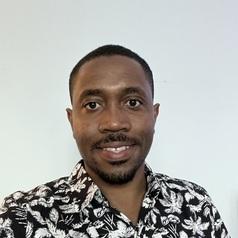
Freigeist Fellow, Institute of Photogrammetry and Remote Sensing (IPF), Karlsruhe Institute of Technology My work combines (big) data science with geospatial data to study the impacts of urbanization and climate change on society and nature. I am particularly interested in the role of the built environment on atmospheric, surface, and subsurface temperature disparities. Because of my trans-disciplinary background in physics, hydrogeology, geospatial data science, and public policy I use a variety of tools such as remote sensing, machine learning, and analytical and statistical models. A common thread in my projects is the use of large geospatial datasets and the development of tools for decision making that incorporate both built and natural environments. My research to date focuses on four main areas: Environmental Justice Subsurface Heat Recycling Subsurface Temperatures Urban Heat
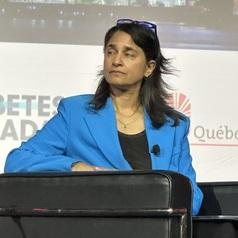
Associate Vice-President Global Health, McMaster University Dr. Anand is Professor of Medicine and Epidemiology, and a vascular medicine specialist at Hamilton Health Sciences in Canada. She holds the Canada Research Chair in Ethnic Diversity and Cardiovascular Disease, and is the Heart and Stroke Foundation of Ontario/Michael G DeGroote Chair in Population Health Research. Dr. Anand is a senior scientist at the Population Health Research Institute. Her present research focuses on the environmental and genetic determinants of vascular disease in populations of varying ancestral origin, and women and cardiovascular disease.
Research Professional, Université Laval I hold a PhD in agricultural economics. My areas of interest include food systems, agricultural policies, agricultural markets, behavioural economics, and new institutional economics.
Director of Education Initiatives, School of Physical Sciences, University of California, San Diego Sherry Seethaler leads education initiatives and teaches research communications at the University of California, San Diego, and was the Science Questions Answered columnist for the San Diego Union-Tribune for more than seven years. Her books Lies, Damned Lies, and Science (FT Press Science) and Curious Folks Ask 1 & 2 (FT Press Science), have been translated into several languages. Her most recent book, Beyond the Sage on the Stage: Communicating Science and Contemporary Issues Effectively (University of Toronto Press, 2024), bridges the gulf between scholarship and practice to inform communication about science, health, the environment and other complex, sometimes controversial, issues. She is trained in the physical sciences (B.Sc. in chemistry and biochemistry, University of Toronto), life sciences (M.S. and M. Phil. in neurobiology, Yale University) and learning sciences (Ph.D. in science education, University of California, Berkeley).
Professor of Psychology and Neuroscience, Trinity College Professor Sarah Raskin graduated from Johns Hopkins in 1984 with a B.A. in Behavioral Biology and from the City University of New York Graduate Center in 1990 with a Ph.D. in Neuropsychology. She held a clinical appointment in the Department of Rehabilitation Medicine at Mount Sinai Medical Center in New York City from 1988-1991. She held a clinical appointment at Good Samaritan Neuropsychological Services and an academic appointment in the Department of Psychosocial Nursing at the University of Washington from 1991-1994. She has been a member of the faculty at Trinity College since 1994. She was board certified in Clinical Neuropsychology by the American Board of Professional Psychology in 1997. Professor Raskin's scholarly interests focus on investigating techniques to improve cognitive functioning after injury to the brain. In particular, she is interested in applying knowledge from studies of basic neuroscience to rehabilitation models. Her work focuses on the ability to remember intentions and ways to both identify deficits and create rehabilitation approaches for people with traumatic brain injury, stroke and disorders such as Parkinson's disease. Professor Raskin brings her desire to tie together knowledge from different sources to the classroom. She tries to encourage her students to look for information in many varied sources and then synthesize that into new knowledge. So students often teach class sessions, having done their own research to prepare for the lecture or class discussion. In addition, this leads to a strong community learning portion in all of her classes. In the same way that she feels basic research needs to translate to clinical applications, she tries to guide the students in bringing the basic content of her courses to the community. Thus, her classes include activities at the nearby Hartford Hospital, Institute of Living or Connecticut Children's Medical Center, nursing homes, domestic violence shelters, clinics, lead safe houses and nearby farms with farmworkers.
Intern Psychologist, Researcher – Te Puna Toiora (Mental Health and Nutrition Research Lab), University of Canterbury Siobhan is a Te Puna Toiora (Mental Health and Nutrition Research Lab) alum and an intern psychologist completing training in clinical psychology. Siobhan has a PhD in nutritional psychology and has a passion for maternal mental health and infant development. In addition to her work with the University of Canterbury, she has worked in mental health for the past decade working in youth and adult services, both in the community and inpatient units across Aotearoa.