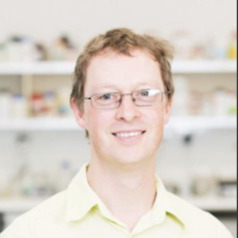
ARC Future Fellow, School of Biomedical Sciences, The University of Queensland Sebastian is from Adelaide and received his BSc(Hons) and PhD. from the University of Adelaide, where he worked on the Aryl Hydrocarbon receptor in the lab of Murray Whitelaw. He then did postdoctoral research on haematopoitic stem cell differentiation in Kelly McNagny’s lab at the Biomedical Research Centre at the University of British Columbia before joining Patrick Sexton to work on G protein-coupled receptors at Monash University . Sebastian is now an ARC Future Fellow developing his own research program in the School of Biomedical Sciences at the University of Queensland. He remains an adjunct member of MIPS DDB as well as CCeMMP. Sebastian has honours and PhD positions for motivated students who have a strong desire to assume ownership of a project and work independently.
Professor of Molecular Evolution, School of Life and Environmental Sciences, University of Sydney As a computational evolutionary biologist, my research interests include molecular clocks, evolutionary rates, and phylogenetic methods.
Professor of History and African and African Diaspora Studies, Florida International University Professor Saheed Aderinto, a filmmaker and the founding president of the Lagos Studies Association, is the author of Animality and Colonial Subjecthood in Africa: The Human and Nonhuman Creatures of Nigeria (Ohio University Press/New African Histories Series, 2022), Guns and Society in Colonial Nigeria: Firearms, Culture, and Public Order (Indiana University Press, 2018), and When Sex Threatened the State: Illicit Sexuality, Nationalism, and Politics in Colonial Nigeria, 1900-1958 (University of Illinois Press, 2015), which won the 2016 Nigerian Studies Association's Book Award Prize for the “most important scholarly book/work on Nigeria published in the English language." His current book project, Fuji: An African Popular Culture, is under contract with the University of Chicago Press. The first episode of his debut documentary film, The Fuji Documentary, premiered in February 2024. In 2023, he won the $300,000 Dan David Prize—the largest history prize in the world—in recognition of his “outstanding scholarship that illuminates the past and seeks to anchor public discourse in a deeper understanding of history.”
PhD student, Psychology, University of the Witwatersrand I am a third-year PhD student in psychology at Wits University and a research assistant at the Health Communication Research Unit. My PhD research focuses on adolescent mental health. My PhD topic, ‘Mhealth services for adolescent mental health: a focus on Soweto’, looks at how technology can be leveraged to provide mental health services to adolescents. My research interests are in health communication, mental health and migration. Before starting my PhD, I worked as a research assistant and sessional lecturer in the School of Human and Community Development at Wits University. I have been involved in collaborative multidisciplinary projects, including research on African migration and health communication in diverse contexts.
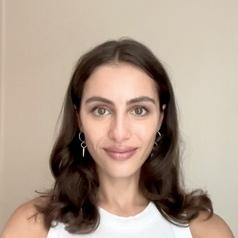
Research Officer, Curtin University I graduated from the Master of Public Health at the University of Melbourne in 2023. During my studies, I developed an interest in qualitative research methods and community-based approaches to public health responses and research. Since graduating, I have been working at the Melbourne School of Population and Global Health and the National Drug Research Institute at Curtin University in Indigenous health research. I also have experience working in sexual and reproductive healthcare and Victorian Government public health programs.
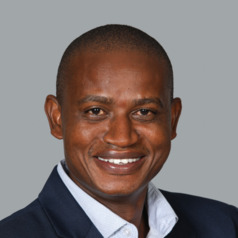
Senior Lecturer at the African Energy Leadership Centre, Wits Business School, University of the Witwatersrand Dr Steven Mathetsa is a senior lecturer at the African Energy Leadership Centre, Wits Business School. He is a professionally registered scientist with over 18 years’ experience in the fields of sustainable development, environmental management, climate change, water, and energy resources management. Prior to joining the AELC, he worked for private and public entities such as Eskom, Transnet and Anglo Coal. Dr Mathetsa has a BSc in natural and environmental sciences (UJ), BSc Honours and MSc in environmental management (UNISA), Postgraduate Diploma in energy leadership and PhD in environmental studies (Wits University). His research interest lies within the water-energy-food (WEF) nexus within the discourse of climate change and how the supply of these key resources can be sustained through formulation of integrated policies and systems thinking approaches.