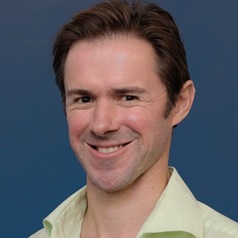
I hold degrees in Music and Psychology from the University of New South Wales in Australia. I am currently Professor of Cognitive Science and leader of the ‘Music Cognition and Action’ research program in the MARCS Institute for Brain, Behaviour and Development at Western Sydney University. I conduct research aimed at understanding the behavioural and brain bases of human interaction in musical contexts.
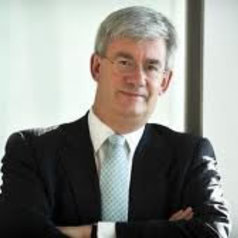
In 2016, Saul Eslake was appointed as the University of Tasmania's inaugural Vice-Chancellor’s Fellow. A focus of his efforts in the role will be the University’s Institute for the Study of Social Change, where he will provide advice and leadership on new research programs designed to analyse and address the social and economic challenges facing our local community and nation as a whole. His work also will centre upon the importance of education to Tasmania. This is a part-time role; Saul is also an independent consulting economist. Saul Eslake has worked as an economist in the Australian financial markets for 25 years, including 14 years as Chief Economist at the Australia & New Zealand Banking Group (ANZ). After leaving ANZ in mid-2009, Saul was Director of the Productivity Growth program at the Grattan Institute, a non-aligned public policy 'think tank' affiliated with the University of Melbourne, and a part-time Advisor in PricewaterhouseCoopers' Economics & Policy practice. From 2011 to 2015, Saul was Chief Economist at the Australian arm of Bank of America Merrill Lynch, before establishing a private consultancy in Tasmania. Saul is a non-executive director of Hydro Tasmania (the Tasmanian state-owned electricity generator), and Chair of the Board of Ten Days on the Island (Tasmania's biennial multi-arts festival). He has previously been a member of the National Housing Supply Council and the Australian Statistics Advisory Committee; Chair of the Tasmanian Arts Advisory Board; and a non-executive director of the Australian Business Arts Foundation. He was also a member of the Howard Government's Foreign Affairs and Trade Policy Advisory Councils, and of the Rudd Government's Long-Term Tourism Strategy Steering Committee.
Robert Kelchen's research interests focus on higher education finance and accountability policies, including areas such as student financial aid, college rankings, and program evaluation. His teaching interests include financial administration, research methods, institutional research and planning, and organization and governance. His research has recently been published in The Journal of Higher Education, Journal of Education Finance, and Journal of Student Financial Aid. Kelchen’s research and commentary has been covered by outlets including The Wall Street Journal, The Washington Post, NPR, Politico, and Newsweek, in addition to appearances on MSNBC, Al Jazeera America, and KABC radio. His work as the methodologist for Washington Monthly magazine’s annual college rankings recently won an award for best data journalism from the Education Writers Association.
Robert is a Research Fellow at Australian National University, College of Asia and the Pacific and a Visiting Research Fellow in the School of Geography at the University of Leeds. He obtained his doctorate from Leeds’ with the Thesis “Ideology and the Production of Landscape in the Democratic People’s Republic of Korea”. Rowman and Littlefield’s Lexington Press published Robert’s monograph “Environment, Politics and Ideology in North Korea: Landscape as Political Project” in November 2014. Robert's new monograph "New Goddesses of Mt Paektu: Gender, Violence, Myth and Transformation in Korean Landscapes" co-authored with Victoria Ten will be published in winter 2016/2017 with Lexington Press. Robert is currently researching the Historical Geographies of Korean forestry, Colonial Mineralogical landscapes/inheritances, the place of topography within Pyongyang's charismatic narrative of the life of Kim Jong-suk and Animal/Creaturely Geographies of North Korea.
Research Professor: Energy Institute, Cape Peninsula University of Technology, Cape Town; Fellow: SA Acad of Engineering ; Fellow & Past President, SA Institution of Chemical Engineers; Fellow, SA Institute of Mining & Metallurgy; Fellow: SA Chemical Institute (SACI);
Jeff Borland is Professor of Economics at the University of Melbourne. In 2010 he was Visiting Chair of Australian Studies at Harvard University, and he has also held visiting positions at ANU, University of Iowa and University of Wisconsin-Madison. His main research interests are the operation of labour markets in Australia, program and policy evaluation, economics of sport, and Australian economic history. He currently teaches subjects in Introductory Microeconomics, Australian Economic History, and World Economic History.