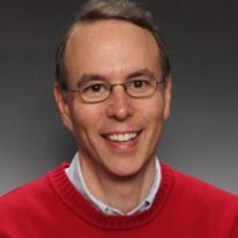
Professor David Stebenne teaches American legal history in the Moritz College of Law and modern U.S. political history in The Ohio State University History Department. He graduated from Yale magna cum laude in 1982 and then earned a J.D. and Ph.D. in history from Columbia University through a joint-degree program that produces legal historians. He is a member of the Maryland Bar who moved directly into teaching, first at Yale (1991-1993) and then Ohio State (since 1993). Professor Stebenne’s dissertation on the life and work of former labor lawyer and U.S. Supreme Court Justice Arthur J. Goldberg was published by Oxford University Press in 1996 under the title Arthur J. Goldberg: New Deal Liberal. While doing research on that project, Professor Stebenne worked with Goldberg directly during the last nine years of his life. His second book was a study of the life and work of Arthur Larson, the legal academic who wrote the leading treatise on workers’ compensation law and also held three high-ranking posts in the administration of Dwight D. Eisenhower. Indiana University Press published this book under the title Modern Republican: Arthur Larson and the Eisenhower Years in 2006. Professor Stebenne’s third book (co-authored with Joseph Mitchell) was a history of Columbia, Md., the planned suburban “new town” created by Baltimore lawyer and real estate developer James Rouse. This book was published by The History Press under the title New City Upon A Hill: A History of Columbia, Maryland in 2007. He is at work on his fourth book, which is a political and legal history of the U.S. from the 1930s through the 1960s. The book’s working title is An Era of Moderation: The United States, 1933-1968. Professor Stebenne also has written many articles, essays, and book reviews for a variety of legal and historical publications. Among the most recent is one titled “Who Really Won the Election of 1960?” which was first published on the Election Law @ Moritz website, and then on the History News Network (HNN) website and in print in the Columbus Bar Lawyers Quarterly. He is interested in the history of American elections and in contemporary national politics. He serves the Election Law @ Moritz team as its “elections historian.” He comments regularly on national politics for both local and national media. Professor Stebenne co-chaired (along with law professor Edward B. Foley and former political science professor Paul Beck) the Democracy Studies Speakers Series during 2012 and 2013. He served on the editorial board that oversaw the writing of a history of the Ohio General Assembly by historian David Gold. It was published in 2009 by Ohio University Press under the title Democracy in Session: A History of the Ohio General Assembly. Professor Stebenne serves as the chair of the committee overseeing the Ohio General Assembly Oral History Project, which is interviewing present and former Ohio lawmakers. He also is assisting the Ohio Supreme Court in its efforts to create an Ohio Supreme Court Historical Society. Professor Stebenne is serving a three-year term on the Littleton-Griswold Prize Committee of the American Historical Association. The prize is awarded annually to author of the best book on American legal history. He has won awards for his research, teaching and service.
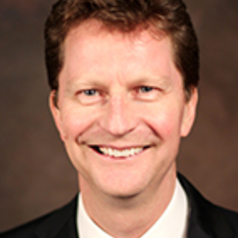
Timothy J. Jorgensen is associate professor of Radiation Medicine, and Director of the Health Physics and Radiation Protection Graduate Program, at Georgetown University in Washington DC. His scientific expertise is in radiation biology, cancer epidemiology, and public health. He is board certified in public health by the National Board of Public Health Examiners (NBPHE). He serves on the National Council on Radiation Protection (NCRP), he chairs the Georgetown University Radiation Safety Committee, and he is an associate in the Epidemiology Department at the Bloomberg School of Public Health at the Johns Hopkins University. His research interests include the genetic determinants of cellular radiation resistance, and the genes that modify the risk of cancer.
I was born in Germany while my father was on sabbatical there, but grew up in Melbourne and then Adelaide, where I did my undergraduate studies in Mathematical Physics and Pure Mathematics. I went to Oxford to do graduate study with Roger Penrose on general relativity and conformal field theory (although both of these reduce to differential equations if you stare at them hard enough!) Since my return to Australia I've lectured at Adelaide University, worked as a radar signal processor at DSTO, and bayesian analyst at CSIRO before joining CSEM to work on iterative optimisation of parametric bayesian models for medical image analysis. Since then I have also found fun people to work on mathematical models of high-rate algal ponds and lithium polymer batteries.
John Affleck, a journalist and leader at The Associated Press who has served most recently as sports enterprise editor/interim deputy sports editor for the news organization that produces content seen by half the world’s population on a given day, was named the Knight Chair in Sports Journalism and Society at Penn State on Aug. 6, 2013. Affleck served as a reporter, editor and national manager at the AP, working regularly with all of the organization’s major editorial departments during his 22-year career. In his most recent role before joining the University faculty, he helped manage day-to-day operations for the roughly 70-member domestic sports team. He directed coverage of the Lance Armstrong saga, coordinated efforts with the news department as the Jerry Sandusky case unfolded and guided the U.S. sports report last summer when the AP’s sports team was split between Olympic and non-Olympic coverage. Affleck has directed coverage of college football and the last five Bowl Championship Series national title games. He also oversaw the wire service’s 2013 Final Four coverage and was a key editor at the World Cup in South Africa. He also represented the AP at the 2012 Associated Press Sports Editors convention and at APSE’s sessions this year with commissioners from major pro sports leagues. He has also covered the Super Bowl and the World Series. Reporters and projects under Affleck’s direct supervision have been honored in dozens of regional and national contests, and have earned awards from a wide array of groups, including the nation’s education writers, religion reporters and the lesbian and gay journalists association. Work under his guidance has captured the AP’s top internal prizes for news enterprise, sports enterprise and sports features. As the Knight Chair, Affleck will serve as director of the John Curley Center for Sports Journalism, housed in the College of Communications. The Curley Center, a first-of-its-kind academic endeavor in U.S. higher education when founded in 2003, explores issues and trends in sports journalism through instruction, programming and research. As Affleck transitions to higher education, he brings a lifelong passion for education and sports journalism to the position. He worked for the AP in Albany, N.Y., Buffalo, N.Y., and Cleveland before moving to the organization’s main office in New York. Along with his leadership and mentoring young reporters, Affleck also has earned writing awards himself. He brings an appreciation of journalism fundamentals and an understanding of the need for innovation in the changing multimedia journalism environment to the position. As director of the Center, Affleck will: teach several courses, including sports writing; serve as a voice about sports journalism issues and trends; and coordinate the Center’s programming, which includes a variety of partnerships at Penn State and off campus for guest lectures and special events. Guests for Center programming have included Christine Brennan, Bob Costas, John Feinstein, Brent Musburger, Bob Ryan and more. Affleck grew up in Syracuse, N.Y., and has been a competitive runner for most of his life, once finishing in the Top 500 at the Boston Marathon. He was ranked nationally as a master’s competitor by USATF in four events (800 meters, 1,500 meters, 3,000 meters and the mile) as recently as 2005. He is married to Jessica Ancker, an assistant professor at the Center for Healthcare Informatics and Policy at Weill Cornell Medical College in New York City.
Amy Auster is the Executive Director of the Australian Centre for Financial Studies. A respected economist and commentator, Amy has worked in the banking and finance industry in Australia, Asia, the United States and South America. Previous appointments include senior executive and research roles at ANZ Banking Group, JPMorgan Chase and Merrill Lynch as well as consultancy assignments to the World Bank and Asia Development Bank. Her research interests include the ongoing development of banking and financial markets across the Asia Pacific region; the opening of China’s economy and its impact on Australia and the region; economic regulation of and funding models for infrastructure development; and most recently the digitisation of banking and finance. She has published numerous papers and provided advice to government assessing the impact of banking and capital account regulation on monetary policy settings and financial flows. Amy is a member of the Investment Advisory Committee at Australia National University, the Advisory Committee to Deakin University Public Policy Institute and the Australian-American Leadership Dialogue. She holds a bachelor’s degree in journalism and arts from Northwestern University in Chicago and a master’s degree in economic and finance from Columbia University in New York.
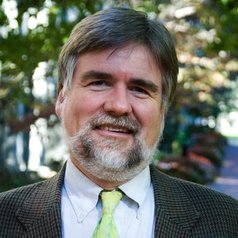
Professor Geyh teaches and writes in the areas of judicial conduct, ethics, procedure, independence, accountability and administration. He is the author of Courting Peril: The Political Transformation of the American Judiciary (Oxford University Press, forthcoming 2015); When Courts and Congress Collide: The Struggle for Control of America's Judicial System (University of Michigan Press 2006) and Disqualification: An Analysis Under Federal Law (2d ed. Federal Judicial Center 2011); coauthor of Judicial Conduct and Ethics (5th ed., Lexis Law Publishing 2013) (with Alfini, Lubet and Shaman); and Understanding Civil Procedure (5th ed. 2013) (with Shreve and Raven-Hansen); and editor of What's Law Got to Do With it? What Judges Do, Why They Do It, and What's at Stake (Stanford University Press 2011). His scholarship has appeared in over 60 books, articles, book chapters, reports and other publications. Geyh has served a number of governments and governmental organizations. He has been a consultant to: the Parliamentary Development Project on Judicial Independence and Administration for the Supreme Rada of Ukraine; the United States Department of Justice in the corruption trial of Pennsylvania Judge Mark Ciavarella; the Administrative Office of California Courts Task Force on Judicial Campaign Practices; the Pennsylvania House of Representatives on the impeachment and removal of Pennsylvania Supreme Court Justice Rolf Larsen; and the National Commission on Judicial Discipline and Removal. In addition, he has served as an expert witness in the United States House and Senate on the impeachment and removal of District Judge G. Thomas Porteous and as legislative liaison to the Federal Courts Study Committee. Geyh has also assisted a range of other organizations on issues relating to the administration of justice. He has served the American Bar Association as director of and consultant to its Judicial Disqualification Project and as Reporter to four Commissions (the Joint Commission to Evaluate the Model Code of Judicial Conduct, the Commission on the 21st Century Judiciary, the Commission on the Public Financing of Judicial Campaigns, and the Commission on the Separation of Powers and Judicial Independence). He has also served on the Board of Directors of the Justice at Stake Campaign; as Reporter to the Constitution Project Task Force on the Distinction between Intimidation and Legitimate Criticism of Judges; as Director of the American Judicature Society's Center for Judicial Independence; and as chair of the editorial committee for the journal Judicature. He is a member of the American Law Institute, and a Fellow of the American Bar Foundation and of the Pound Civil Justice Institute. A recipient of the Leon Wallace Teaching Award and a two-time recipient of the IU Trustees' Teaching Award, Geyh has taught courses on civil procedure, legal ethics, federal courts, judicial conduct, and the relationship between courts and legislatures. Following graduation from University of Wisconsin Law School, Geyh clerked for Judge Thomas A. Clark of the U.S. Court of Appeals for the Eleventh Circuit. He then worked as an associate at Covington & Burling in Washington, D.C., and served as counsel to the U.S. House of Representatives Committee on the Judiciary. Professor Geyh began his teaching career in 1991 at the Widener University School of Law and joined the law faculty at Indiana in 1998.