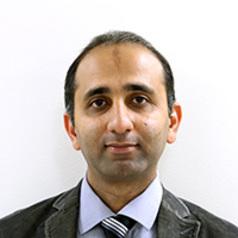
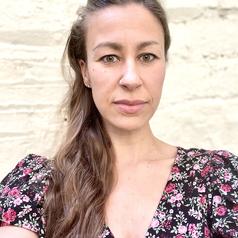
Principal Research Fellow, Institute for Risk and Disaster Reduction, UCL Susannah Fisher is a Principal Research Fellow at University College London and holds a UKRI Future Leaders Fellowship. She works across research, policy and practice on adaptation policies, programmes and finance. Her interest is in ensuring these processes support effective and equitable adaptation, and that adaptation is at the scale and ambition we need for the escalating impacts of climate change. Before taking up her Fellowship, she was a Lecturer in the Bartlett Development Planning Unit and worked with philanthropic foundations, multilateral climate funds, bilateral donors and research institutes to provide technical inputs into practical climate change projects and programmes. In previous roles, she led research across the European innovation agency for climate change where she developed a cross-cutting research and thought leadership portfolio on the role of innovation and policy experimentation in the systems change needed to address the urgent climate challenge. Prior to this she was a Team Leader and Senior Researcher at the International Institute for Environment and Development, where she led action research projects supporting national and sub-national governments to adapt to climate change in different contexts.
Lecturer, Redeemer's University Susan Olubukola Badeji obtained her B.A (Hons), 1995 and M.A., 2000, in Theatre Arts at the University of Ibadan. She is at present on the verge of completing her Ph.D in Theatre Arts, at the same institution. She began the university teaching career with Distance Learning students at the University of Ibadan in 2010 and began full-time teaching career in the Department of Theatre Arts, Redeemer's University, Ede, Nigeria in 2011. Between 2013 and 2019, she was an Associate Lecturer at the Department of Communications and Performing Arts, Bowen University, Iwo, Nigeria. She is at present in Lecturer I position. Her areas of specialization include, Costume, Make up and Special Effects. She also teaches African Theatre History, African Culture and Performance, Feminism and Production Workshop. She is affiliated to the Women Forward Innovative Development Initiative (WFID), a non-profit organisation, aimed at empowering women.
Professor and Co-Director of the Institute of Metabolic Science and Director of the Medical Research Council Metabolic Diseases Unit, University of Cambridge Professor Sir Stephen O'Rahilly FRS, is Co-Director of the Institute of Metabolic Science and Director of the Medical Research Council Metabolic Diseases Unit at the University of Cambridge which is part of the broader University of Cambridge Metabolic Research Laboratories which he also directs. On the wider Cambridge Biomedical Campus, he is Scientific Director of the NIHR Biomedical Research Centre and Head of the University Department of Clinical Biochemistry. He was elected FRS in 2003, to the National Academy of Sciences, USA in 2011, has received five honorary doctorates and numerous scientific awards including the 2002 Heinrich Weiland Prize, the 2005 Luft Prize, the 2007 Feldberg Prize, the 2010 InBev-Baillet Latour Prize for Health, the 2014 Debrecen Prize, the 2014 International Prize for Translational Neuroscience of the Gertrud Reemtsma Foundation, the 2015 Edward K Dunham Lectureship, Harvard Medical School and in 2015 was the first recipient of the EASD/Novo Nordisk Foundation Diabetes Prize for Excellence. More recently he was the 2016 Harveian Orator RCP of London, in 2019 received the Taubman Prize for Excellence in Medical Science, University of Michigan, USA, the Banting Medal for Scientific Achievement, American Diabetes Association and the Manpei Suzuki International Prize for Diabetes Research, Japan. In 2020 the Rank Prize for Nutrition and in 2022 the Royal Society Croonian Medal (jointly with Professor Sadaf Farooqi). In 2013 he was made Knight Bachelor "for services to medical research". His main research area is the aetiology and pathophysiology of human metabolic and endocrine disease and how such information might be used to improve the diagnosis, therapy and prevention of these diseases.
Wellcome Trust Clinical PhD Fellow, Institute of Metabolic Science and Medical Research Council Metabolic Diseases Unit, University of Cambridge Sam is trainee diabetes and endocrinology doctor and a Wellcome Trust Clinical PhD student at the Institute of Metabolic Science, University of Cambridge. His work uses human genetics and model systems to discover novel causes and risk factors for human disease. He completed his undergraduate medical training at Queen's University Belfast followed by a visting studentship in Joslin Diabetes Centre, Harvard Medical School before returning to the UK to begin his clinical academic training in Belfast as an Academic Foundation Doctor and then in Cambridge as an NIHR Academic Clinical Fellow in Diabetes and Endocrinology.
Professor of Safe AI and Autonomy | Director of Connected Autonomous Vehicles Lab at the University of Surrey, University of Surrey Saber Fallah is Professor of Safe AI and Autonomy at the University of Surrey He is the founder and director of Connected Automated Vehicles Research Lab (CAV-Lab) where, he leads several CAV research activities funded by the UK government (e.g. EPSRC and innovate UK) in collaboration with companies active in this domain. Prof Fallah's research has contributed significantly to the state-of-the-art research in the areas of connected autonomous vehicles and advanced driver assistance systems.He is also co-author of a textbook entitled Electric and Hybrid Vehicles: Technologies, modeling and control, (A mechatronics approach) which has been published by John Wiley publishing company in 2014. The book addresses the fundamentals of mechatronic design in hybrid and electric vehicles. Moreover, He is the co-editor of the book of conference proceedings resulted from the organisation of the TAROS 2017 conference published by Springer in 2017.
Associate Professor in Policy and Intersectionality, UCL & Honorary Senior Researcher, United Nations University Assoc Prof Sonja Ayeb-Karlsson's research is broad and interdisciplinary with a particular focus on policy, intersectionality, and violence, as well as their overlaps with migration, refugees and trapped populations, trafficking or health and mental wellbeing. She is based at the Institute for Risk and Disaster Reduction where she leads the ‘Everyday Disasters and Violences Research Group’ and two modules on humanitarian policy and responses to violence and marginalisation. Assoc Prof Ayeb-Karlsson is also an Honorary Senior Scientist at the UN University’s Migration Section in Bonn, Germany, she leads the mental health work of the Lancet Countdown, and was part of the ‘Royal College of Psychiatrist’s Climate Emergency and Mental Health Task and Finish Group’. She is a core member of the SHERA research group and on the Hague Mothers UK steering committee. She is an associate editor for and on the editorial boards of four international high impact academic journals. Her work is well-published and widely covered by media outlets across the world. Currently, she is particularly interested in furthering our understanding of policy protection vs. lack of protection, psychologically ‘trapped’ populations or legal entrapment, and safeguarding through specific legal systems and policy tools (such as Family and Criminal Law, the Human Rights Act, the Istanbul Convention, and the Convention on the Rights of the Child). Assoc Prof Ayeb-Karlsson is available for PhD supervision in any of these research areas as well as work linked to the study of (im)mobility, gender-based and structural violence, conflict and disasters, non-economic loss and damage and other policy areas focused on the climate-violence-health loss nexus, Violence Against Women and Children (conflict, interpersonal, and domestic), child sexual abuse, exploitation and human trafficking, as well as policy and legal weaponisation or lawfare such as through the use of so-called 'parental alienation' or Hague parental ‘abduction’ proceedings to continue legal abuse and coercive control.