
Tharina Guse
Professor of Psychology and Head of Department of Psychology, University of Pretoria
Professor of Psychology and Head of Department of Psychology, University of Pretoria
0 articlesOur contributors
Meet the researchers, writers and practitioners bringing perspective to the global conversation.
Join the conversation14545 contributors
Professor of Psychology and Head of Department of Psychology, University of Pretoria
Professor of Psychology and Head of Department of Psychology, University of Pretoria
0 articles
Lecturer, Redeemer's University
Lecturer, Redeemer's University Susan Olubukola Badeji obtained her B.A (Hons), 1995 and M.A., 2000, in Theatre Arts at the University of Ibadan. She is at present on the verge of completing her Ph.D in Theatre Arts, at the same institution. She began the university teaching career with Distance Learning students at the University of Ibadan in 2010 and began full-time teaching career in the Department of Theatre Arts, Redeemer's University, Ede, Nigeria in 2011. Between 2013 and 2019, she was an Associate Lecturer at the Department of Communications and Performing Arts, Bowen University, Iwo, Nigeria. She is at present in Lecturer I position. Her areas of specialization include, Costume, Make up and Special Effects. She also teaches African Theatre History, African Culture and Performance, Feminism and Production Workshop. She is affiliated to the Women Forward Innovative Development Initiative (WFID), a non-profit organisation, aimed at empowering women.
0 articles
Research Associate - Brexit and UK devolved politics, Cardiff University
Research Associate - Brexit and UK devolved politics, Cardiff University I joined the Wales Governance Centre in October 2016 to undertake research into Brexit and UK devolved politics. Building on my background in EU politics and governance, I am now addressing questions surrounding the UK's withdrawal from the EU and the implications this will have for the politics and governance of a post-devolution UK. I'm particularly interested in exploring Brexit from a governance perspective, beyond focusing exclusively on what Brexit will mean in legal terms. I have recently been undertaking research into European networks and what Brexit will mean for UK-based actors who currently participate within these. Most recent conference presentation: 'Advancing UK agendas through European networks: Agency, opportunity structures and the hidden European Polity', Political Studies Association: Theorising Brexit, 28th March 2018, research with Dr Paul Copeland (Queen Mary University of London) Prior to joining the Wales Governance Centre, my research focused on EU politics and governance, as part of the Centre for European Law and Governance. From January 2013, I was a Research Associate on the project “Law, Science and Interests in European Policy-making” (LASI), an interdisciplinary research project funded by the European Research Council (PI: Prof. Stijn Smismans). As part of this project, I focused on horizontal governance practices, specifically the Commission's Integrated Impact Assessment, policy evaluation and mainstreaming. I also undertook some sector-specific work for the project, focusing on processes of participation and the use of different types of expertise within European employment policy; including the creation and use of employment indicators. As a complement to this governance research, I have a particular interest in gender and equality. This research builds largely on my PhD thesis on gender mainstreaming in the EU.
0 articles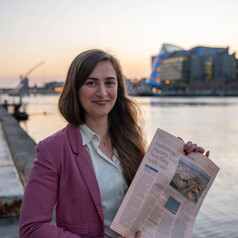
Assistant Professor, Dublin City University
Assistant Professor, Dublin City University Fabiola Schneider is Assistant Professor in Finance at the Dublin City University (DCU) Business School and co-lead at the GreenWatch initiative. She is Sherpa to the European Commission's Platform on Sustainable Finance. Her research interests include greenwashing in financial markets, corporate transitions, climate finance and risks and sustainability reporting with a special focus on emission disclosure. Fabiola is also passionate about promoting equality, diversity and inclusion.
1 articles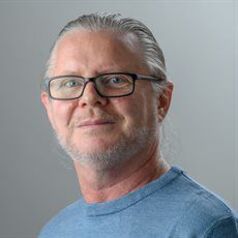
Professor of Molecular Endocrinology, University of Birmingham
Professor of Molecular Endocrinology, University of Birmingham Professor Hewison’s work focuses on different facets of vitamin D physiology, including classical skeletal effects and non-classical extra-skeletal effects. He has a particular interest in the interaction between vitamin D and the immune system, where antigen-presenting cells such as dendritic cells and macrophages synthesize active vitamin D (calcitriol) and also express the nuclear receptor for calcitriol (VDR). Vitamin D can therefore act as an endogenous regulator of both innate and adaptive immunity by enhancing antibacterial activity, and modulating antigen presentation and T lymphocyte function. Crucially these responses are highly dependent on the bioavailability of vitamin D, and Professor Hewison has hypothesized that immune function is influenced by vitamin D status in humans. His group is using a variety of models to test this hypothesis including basic molecular and cell analyses, and vitamin D supplementation trials in human cohorts. A key objective of his work is to increase awareness of vitamin D-deficiency in the UK population.
1 articles
Professor and Co-Director of the Institute of Metabolic Science and Director of the Medical Research Council Metabolic Diseases Unit, University of Cambridge
Professor and Co-Director of the Institute of Metabolic Science and Director of the Medical Research Council Metabolic Diseases Unit, University of Cambridge Professor Sir Stephen O'Rahilly FRS, is Co-Director of the Institute of Metabolic Science and Director of the Medical Research Council Metabolic Diseases Unit at the University of Cambridge which is part of the broader University of Cambridge Metabolic Research Laboratories which he also directs. On the wider Cambridge Biomedical Campus, he is Scientific Director of the NIHR Biomedical Research Centre and Head of the University Department of Clinical Biochemistry. He was elected FRS in 2003, to the National Academy of Sciences, USA in 2011, has received five honorary doctorates and numerous scientific awards including the 2002 Heinrich Weiland Prize, the 2005 Luft Prize, the 2007 Feldberg Prize, the 2010 InBev-Baillet Latour Prize for Health, the 2014 Debrecen Prize, the 2014 International Prize for Translational Neuroscience of the Gertrud Reemtsma Foundation, the 2015 Edward K Dunham Lectureship, Harvard Medical School and in 2015 was the first recipient of the EASD/Novo Nordisk Foundation Diabetes Prize for Excellence. More recently he was the 2016 Harveian Orator RCP of London, in 2019 received the Taubman Prize for Excellence in Medical Science, University of Michigan, USA, the Banting Medal for Scientific Achievement, American Diabetes Association and the Manpei Suzuki International Prize for Diabetes Research, Japan. In 2020 the Rank Prize for Nutrition and in 2022 the Royal Society Croonian Medal (jointly with Professor Sadaf Farooqi). In 2013 he was made Knight Bachelor "for services to medical research". His main research area is the aetiology and pathophysiology of human metabolic and endocrine disease and how such information might be used to improve the diagnosis, therapy and prevention of these diseases.
0 articles