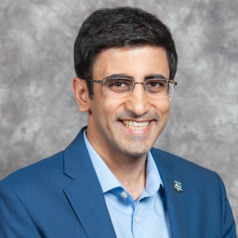
Assistant Professor of Computing and Information Sciences, Florida International University M. Hadi Amini is an Assistant Professor at the Knight Foundation School of Computing and Information Sciences at the College of Engineering and Computing, Florida International University (FIU). He is the founding director of Sustainability, Optimization, and Learning for InterDependent networks laboratory (www.solidlab.network), director of the ADvanced education and research for Machine learning-driven critical Infrastructure REsilience (ADMIRE) Center (funded by the US DHS), and Associate Director of the US DOT Transportation Center for Cybersecurity and Resiliency (TraCR). He received his Ph.D. in Electrical and Computer Engineering from Carnegie Mellon University in 2019, where he received his M.Sc. degree in 2015. He also holds a doctoral degree in Computer Science and Technology. Since founding solid lab, his research on advanced machine learning algorithms/optimization and their applications has been extensively funded by various federal and state agencies, with a total funding of $4.7M ($2.92M as PI and $1.78M as Co-PI). His research interests include distributed machine learning/optimization algorithms, federated learning, interdependent networks, and cyber-physical-social resilience and cybersecurity. Application domains include smart cities, intelligent transportation systems, healthcare, and energy systems. Hadi is a Senior Member of IEEE, and a life member of IEEE-Eta Kappa Nu (IEEE-HKN), the honor society of IEEE. He served as President of Carnegie Mellon University Energy Science and Innovation Club; as a technical program committee of several IEEE and ACM conferences; and as the lead editor for a book series on ‘‘Sustainable Interdependent Networks’’ since 2017. He also serves as Associate Editor of Data Science for Communications (Frontiers in Communications and Networks). He has published more than 150 refereed journal and conference papers, and book chapters. He edited/authored eight books. He is the co-recipient of the best paper award from “2019 IEEE Conference on Computational Science & Computational Intelligence”, 2021 best journal paper award from “Springer Nature Operations Research Forum Journal”, the Excellence in Teaching Award from FIU School of Computing and Information Sciences in 2020, 2023 Faculty Senate Excellence in Teaching Award from the Office of Faculty Leadership and Success at Florida International University, best reviewer award from four IEEE Transactions, the best journal paper award in “Journal of Modern Power Systems and Clean Energy”, and the dean’s honorary award from the President of Sharif University of Technology.
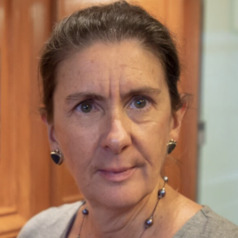
Professor of Political Science, Tulane University Nancy Maveety is Professor of Political Science at Tulane University in New Orleans, Louisiana, where she teaches courses in constitutional law, judicial decision-making, and her latest special topics class “Booze, Drugs and the Courts.” She is the author of" Justice Sandra Day O'Connor: Strategist on the Supreme Court" and "Glass and Gavel: the U.S. Supreme Court and Alcohol," as well as many scholarly works on the U.S. Supreme Court and American judicial politics, most recently Picking Judges (2016), a study of federal judicial selection politics styled as a presidential briefing book. She has also written an academic satire novel set in the Crescent City, The Stagnant Pool: Scholars Below Sea Level (2000).
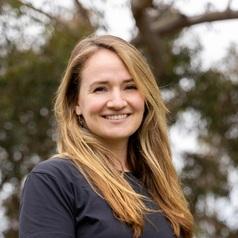
Ph.D. Candidate in Computational Neuroscience, University of California, San Diego As a Neuroscience PhD candidate at UC San Diego, I specialize in neural signal analysis. Our brains produce many different kinds of signals--chemical, magnetic, electrical--and the ways that neuroscientists use these signals is essential to how we research the brain. I'm specifically interested in the brain's electrical signals, or "brain waves" that we can measure using tools like the electroencephalogram (EEG). When these electrical signals are measured in research experiments, neuroscientists use complex mathematical methods to extract information from their brain waves. This is where my research comes in: how does the math we use influence how we think about the brain? What happens when we're using that math incorrectly or misinterpreting it? These are the questions I face every day in my research. So far, I've been able to answer some pretty big questions about brain waves and how they change in patients receiving treatment for severe depression. By challenging our assumptions about brain waves, I hope to help settle long-standing mysteries about the brain and uncover new, exciting discoveries that help us better understand how the brain works in healthy cognition and disease. Currently, I'm a PhD candidate in the Neurosciences Graduate Program, supervised by Dr. Bradley Voytek in the Neural and Data Analytics Lab at the University of California, San Diego. I have a B.S. in Biopsychology from UC Santa Barbara and also volunteer as a writer for Stories of Women in Neuroscience, a blog and podcast that features women neuroscientists, their research, and journeys in academia.
Professor of Philosophy, University of South Carolina For a couple of decades, I worked in philosophy of physics, especially quantum theory. After a (too-long) stint as an administrator, I have returned to civilian life, and am developing a new research expertise in philosophy of music. This new interest grows out of a lengthy training as a classical pianist and French horn player, a brief career as a professional musician before becoming a philosopher, and a continued abiding and serious interest in both musicology and musical performance. I am currently studying existing work in the field, and developing a few projects of my own. In addition, I am reviving an old interest in medieval philosophy, originally developed as a graduate student, and subsequently as a teaching avocation at Indiana University, where I worked for ten years in the Department of History and Philosophy of Science. Specifically, I have an interest in medieval theories of truth and medieval aesthetics (and the connections between them), among other things. I have also done some research in game theory, especially variations of signaling games. This work has included both analytical results and simulations of multi-agent systems. Finally, I have done some work in what we might as well call 'epistemology of of philosophy', focused on the role that so-called 'intuitions' in fact play in contemporary philosophy (which is prominent in some areas) as compared to the role that I believe they should play (which is nil). My view in a nutshell is that rather than citing 'intuition' as a form of evidence, we should admit that we don't know, and just leave such things as 'thoughts deserving of further investigation'.
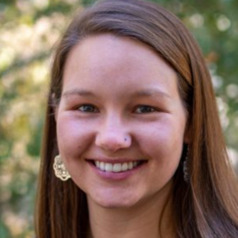
Assistant Professor of Cooperative Extension, University of California, Berkeley Carly Hyland is an Assistant Professor of Cooperative Extension in Environmental Health Sciences and UC ANR whose work focuses on mitigating the health effects of climate change among agricultural and food systems workers.
Dean of Arts, Sciences, and Humanities and Professor of Sociology, Shaw University Dr. Valerie Ann Johnson is the Dean of Arts, Sciences, and Humanities and Professor of Sociology at Shaw University in Raleigh, North Carolina. Previously, she was the Mott Distinguished Professor of Women’s Studies and Director of Africana Women’s Studies at Bennett College in Greensboro, North Carolina. She holds a Ph.D. in Medical Anthropology from the University of California, Berkeley and San Francisco; M.A. in Sociology from Atlanta University (now Clark-Atlanta University); and B.A. in Sociology from Spelman College in Atlanta, Georgia. Dr. Johnson has also completed doula training focused especially on women of color. Her research conducted in Costa Rica, Zimbabwe, Tanzania, the Seychelles Islands and the US, center on gender, bioethics, disability, the health of women and girls, and environmental justice. In addition, she has published and given lectures in these research areas. In North Carolina, Dr. Johnson conducts research on both African American foodways, and African Americans attitudes toward and experiences with “nature spaces” with special emphasis on Black women’s garden clubs. Her speaking engagements include this work as well as public commentary on the issue of confederate monuments on public lands. Other scholarly projects include work with Dr. Karima Jeffrey (Hampton University), on a joint collection of essays on the speculative and science fiction work of Black women and girls and with Dr. Crystal Moten (Macalester College), on compiling and editing an interactive, intersectional database on women, gender, and slavery. Dr. Johnson chairs the North Carolina African American Heritage Commission, serves on the North Carolina Historical Commission, National Register Advisory Committee and is member of the North Carolina Environmental Justice Network (NCEJN), North Carolina League of Conservation Voters (NCLCV) Board of Directors, Scarritt Bennett Center Board of Directors (Nashville, Tennessee), the Ms. Committee of Scholars and an advisor on the Humanities Action Lab’s initiative on climate change, immigration/migration and environmental justice. Dr. Johnson is also active on the board of directors for both NARAL Pro-Choice NC and Preservation North Carolina and serves as an advisory member for Scarritt Bennett Center’s Racial Justice Initiative.