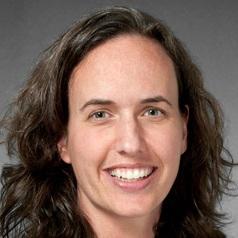
Assistant Professor, Department of Kinesiology, University of Waterloo Cognition abilities are critical to educational and occupational achievement, daily function, and even movement. Unfortunately, cognitive performance declines on average in late life and the prevalence of dementia nearly doubles every five years after the age of 65 years. My research identifies has two focuses: 1) to optimize cognition across the life course and to prevent dementia in late life; 2) to promote strategies to 'live well' with dementia. In particular, I investigate the role of physical activity in the prevention of dementia and improvement of well-being among people living with dementia.
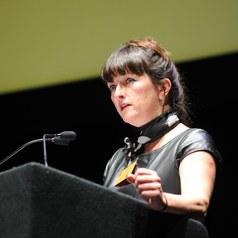
Senior Lecturer in Black, Caribbean, and African History, The Open University Katie Donington is a Senior Lecturer in Black, Caribbean, and African History at the Open University. She researches the history and legacies of British Caribbean transatlantic slavery. She is also interested in the representation of slavery in public history. She has a PhD in History (UCL), MA in Art Gallery and Museum Studies (University of Leeds) and BA in English Literature and History (University of Leeds). Between 2009-2015 her doctoral and post-doctoral research was with the Legacies of British Slave-ownership project (UCL) with a focus on slave-ownership in Britain and Jamaica. Her publications include (co-authored with Catherine Hall, Nick Draper, Keith McClelland and Rachel Lang) Legacies of British Slave-ownership: Colonial Slavery and the Formation of Victorian Britain (Cambridge University Press, 2014); (coedited with Ryan J. Hanley and Jessica Moody) Britain's History and Memory of Transatlantic Slavery: The Local Nuances of a "National Sin" (Liverpool University Press, 2016); The Bonds of Family: Slavery, Commerce and Culture in the British Atlantic World (Manchester University Press, 2019). She has worked with a variety of local and national museums, art galleries and heritage organisations as a curator and an advisor. In 2018 she co-curated 'Slavery, Culture and Collecting' at the Museum of London Docklands. She served as an advisor on the National Trust project 'Colonial Countryside' between 2018-21. She is regularly invited to offer expert opinion to the press and has contributed to radio and television programmes on the topic of slavery. Her research and public engagement have been funded by the Economic and Social Research Council, Arts and Humanities Research Council, Arts Council England, and the British Academy.
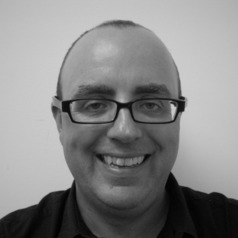
Research Associate in History and Philosophy of Science, King's College London Lena Springer gained her Dr. phil. in Sinology at the University of Vienna. She researches the transmission of scientific and medical heritage. In the project team “Cosmological Visionaries” www.cosmovis.uk, Springer investigates scientists’ and shamans’ efforts at reforestation in Southwest China and Siberia to tackle climate change. As a research fellow of Sichuan University, she investigated multi-ethnic folk medicines in China’s West. In a database team at Charité Medical University Berlin, she contributed to the translation, scientific identification, and interdisciplinary accessibility of Chinese historical pharma-recipes. Springer publishes on ethnicity in Western China, on ethnographic archivers and medical-history-writers in China, on spatial and social migration to Europe and on the anthropology of science. She has taught Sinology, organised summer schools for Sinologists and pharmacognosists in China, and provided consultancy service based on her research and fieldwork throughout China`s diverse regions. Lena is also an Affiliate of the Lau China Institute. Research interests and PhD supervision Environmental Sciences and Forestry in China To tackle global climate change, developments in China are crucial. The involved environmental sciences fall into different disciplines of science, which include forestry and philosophy and have national and ethnic histories in countries, such as in China. Based on its biological diversity, as well as ethnic knowledge and technology of nature preservation, Southwest China is a global hotspot of this crucial human project. History of Science, Chinese Medicines, and Botany in China Materia Medica are a unique case that challenges the current Euro-centred academic mainstream and its historiography. This undercurrent in world science, and the early, medieval and folk history in this multi-disciplinary field, are easily overlooked and still understudied, especially in the vast West of present-day China. Ethnography and Oral history in China The available historical record in Western China is more focussed on pre-modern sources and scattered surveys than in the East of China. As a consequence, Chinese folk culture and multi-ethnic regional dynamics shed light on heritage and history of science in China, even in the modern and contemporary context. Spatial and Social Mobility in Higher Education and Academia Elite and outcasts are most often researched in separate projects of migration studies. Academic migrants from China in Austria are one case where China plays a strong role on both levels, especially through mobility in healthcare and higher education, both as a source of tradition and of scientific innovation.
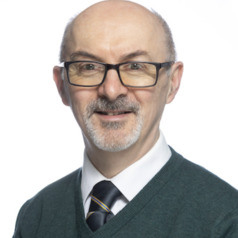
Co-Director of the ESRC Centre on Digital Futures at Work, University of Sussex I am the Principal Investigator and Co-Director for the Digital Futures at Work Research Centre (2020-2024), together with Professor Mark Stuart. I joined the University of Sussex Business School in 2017 as Professor of Comparative Human Resource Management and I am the UK lead on the EU Horizon 2020 EUROSHIP project on social protection in Europe (2020-23). Background After completing my doctorate at Nuffield College, University of Oxford on an Anglo-French comparison of employment practices in the banking sector, I worked for ten years at the Social Science Research Centre Berlin (WZB), Germany. I have also held teaching and research posts at Sciences Politiques in Paris, and at London, Manchester and Brighton Universities in the UK. In 2000, I was awarded a Jean Monnet Research Fellowship at the European University Institute in Florence and appointed Fellow of the Academy of Social Sciences (FAcSS) in 2019. The ESRC, the Leverhulme Trust, the European Commission, the European Science Foundation and Santander Bank have funded my research. This includes coordinating a EU FP7 funded large-scale research project STYLE: Strategic Transitions for Youth Labour in Europe (www.style-research.eu) (2014-17) and being the UK lead on the EU Horizon 2020 project NEGOTIATE on Overcoming early job-insecurity in Europe (www.negotiate-research.eu) (2015-18). Currently, I am on the editorial board of Zeitschrift für Sozialreform (De Gruyter) University of Bremen, Germany. I have provided consultation services to HM Treasury, Full Employment Team and the UK Cabinet Office Open Innovation Unit; I am an Evaluation Rapporteur for the European Commission Horizon 2020 research programme. Formerly, I have acted as an advisor to the ILO Work4Youth programme funded by The MasterCard Foundation; and twice as an evaluator for the German Excellence Initiative of the Deutsche Forschungsgemeinschaft (€151 million investment). My most recent research focuses on the digital transformation of work international comparisons in political economy gender and ethnic labour market transitions across the life cycle for youth, parents and older workers. http://orcid.org/0000-0001-6223-154X https://www.researchgate.net/profile/Jacqueline_Oreilly
Lecturer in Civil and Structural Engineering, Munster Technological University Kieran Ruane is a Chartered Civil and Structural Engineer and a lecturer in the Department of Civil, Structural and Environmental Engineering at MTU. Kieran is a former director of RPS where he was Head of Bridges and he has 30 years’ experience in the design and delivery of civil engineering works of all scales. Kieran has an extensive industry and academic network in the engineering sector in Ireland. He was Chair of the Institution of Structural Engineers, Republic of Ireland Group in 2018 and 2019 and he is currently President of the Civil Engineering Research Association of Ireland. Kieran has active research projects in the area of repurposing composite materials including a recent award from SEAI. He designed and oversaw the fabrication and construction of the BladeBridge for Cork County Council.
Principal Investigator and Senior Post Doctoral Researcher in Energy Finance, Environmental Research Institute, University College Cork Peter Deeney is a senior post doctoral researcher in University College Cork, and the Principal Investigator of the Wind Value project. The Wind Value project is funded by the Irish Research Council. It aims to produce two decision-support tools, one for wind-farm owners to assist with end-of-life decisions for their wind farms (decommissioning, life extension or repowering), and one for community investors to estimate risk. Peter also works on the XROTOR project examining the use of a novel vertical axis offshore wind turbine, and with colleagues in IEA Wind Task 45 investigating methods to recycle used wind-turbine blades. He is a member of the Re-Wind Network.