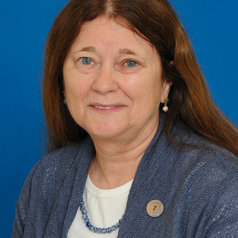
Professor of Oceanography, Old Dominion University Eileen Hofmann is a Professor and Eminent Scholar in the Department of Ocean and Earth Sciences and a member of the Center for Coastal Physical Oceanography at Old Dominion University. Her primary research focuses on understanding physical-biological interactions in marine ecosystems. Her research has taken her to many parts of the ocean, including Antarctic coastal regions and the Southern Ocean. Her recent research focuses on understanding and predicting harmful algal blooms in Chesapeake Bay and understanding controls on shellfish population dynamics. Eileen’s interest in modeling shellfish populations began with a study of the effects of deepening and widening the Houston Ship Channel on eastern oyster populations in Galveston Bay. From this initial study, Eileen and her colleagues expanded their models to other oyster species, several clam species, abalone, and ocean quahogs. Along the way, the models for shellfish population dynamics were extended to include disease and disease transmission processes and the effects of climate change. Her current shellfish modeling studies consider the competing effects of climate change and offshore wind energy development on commercial shellfish species on the Middle Atlantic Bight continental shelf along the U.S. east coast. These model applications represent a progression that links shellfish population dynamics with climate change, fishing economics, and management. Eileen has been involved in several international global environmental change programs and serves as Co-Chair of the Southern Ocean Observing System. She is also Chair of the National Academies of Sciences, Engineering, and Medicine committee to evaluate the effects of offshore wind energy development on the hydrodynamics of the Nantucket Shoals region.
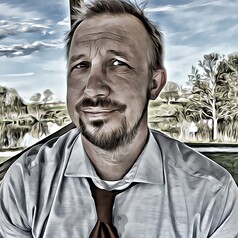
Professor of Conservation Technology in Environment and Engineering, Duke University Doug Nowacek’s activities represent a mixture of research tool development, coupled closely with the science driving the need for those tools, and the dissemination of resulting research to students at all levels as well as the broader society. Since starting graduate school and continuing to the present, Nowacek has pioneered several marine research tools and methods that, inter alia, seek to create knowledge as well as integrate and transfer it. Some examples of these activities include: i) combined overhead video/audio for cetacean research that has been used for research and conservation; ii) multi-sensor acoustic tags that were pioneered when Nowacek was a graduate student for his project and have added significantly to the creation and transfer of knowledge; iii) Nowacek has worked to apply the tools and teachings of basic science to conservation driven research, including teaching innovative and experiential courses such as ‘the history and future of ocean energy’ and ‘ocean engineering’; iv) Nowacek’s commitment to STEM education extends to all levels of students, from the undergraduate and graduate students at Duke (including successfully mentoring undergraduates, masters and Ph.D. students through their degree requirements, advising numerous undergraduates in their independent study projects and guiding them through to preparing manuscripts for publication) to elementary and middle school students in the local school system where he routinely presents to and interacts with students, including organizing an ‘Antarctic mini-module’ with a local 7th grade science class; v) in 2015 Nowacek testified to Congress on the use of seismic airgun surveys and their potential impacts on marine life; and vi) Nowacek has served on the Western Gray Whale Advisory Panel, convened by the International Union for the Conservation of Nature for >10 years, and this work has resulted in numerous publications, recommendations, and practical guidance on industry/nature coexistence.
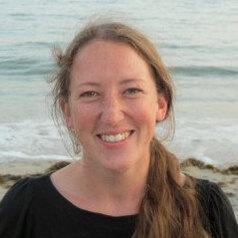
Assistant Professor of Earth, Ocean & Environment, University of South Carolina Erin is an Assistant Professor in the School of the Earth, Ocean and Environment at the University of South Carolina. She earned a BS in Physics at the University of Notre Dame and a PhD in Earth and Atmospheric Sciences at Cornell University. She is a quantitative marine ecologist that uses statistical, demographic and spatial models to understand how marine species respond to environmental processes. Many of Erin's research projects focus on human impacts to threatened or economically valuable species. Erin also serves on the Justice, Equity, Diversity & Inclusion (JEDI) committee for The Oceanography Society and edits a quarterly JEDI column in Oceanography magazine.
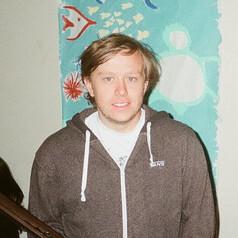
Visiting Assistant Professor of Religious Studies, University of Iowa My main area of focus is American religion, particularly its intersection with popular culture. I have taught a wide variety of classes including courses on comics and religion, death and dying, religion in America, medieval religion, modern religion, sport and religion, and the New Testament.
Postdoctoral Scholar in Physics, University of California, Merced I do research in the fields of both astroparticle physics and cosmology, and I specifically focus on developing statistical tools to test LambdaCDM, a theory known as the standard model of cosmology. As a cosmologist, I use observations of astrophysical systems, like galaxies, to test our understanding of the fundamental laws of physics. As an astroparticle physicist, I work to identify the particle nature of dark matter and how it might interact with the standard model of particle physics. I’ve worked on developing tests of dark matter, dark energy, inflation, and modified gravity. I am am a postdoctoral researcher at the University of California, Merced working with Anna Nierenberg. I also have an associate member status at the Center for the Gravitational-Wave Universe. I was a postdoctoral researcher studying cosmology at the Korea Astronomy Space Science Institute with Arman Shafieloo. Previously, I earned my PhD at UC Irvine working with Kevork Abazajian and also collaborating with Manoj Kaplinghat.
Professor of Physiology, Texas A&M University I am a Professor of Physiology at Texas A&M University. My independent research program focuses on the interface between pregnancy and epigenetics, trying to understand how environmental exposures before conception or early in development cause disease later in life. Through this research, my lab seeks to define the biochemical mechanisms of epigenetic inheritance through sperm, determine how exposure to alcohol influences these processes, and identify the capacity of these heritable changes to contribute to the development of fetal alcohol spectrum disorders (FASDs). My long-term goals are to change the narrative on the origins of alcohol-induced birth defects, define epigenetic mechanisms of paternal inheritance, and provide an entertaining yet impactful learning experience to future professionals in the biomedical sciences. My research is supported by the NIH (R01AA028219) and a Medical Research Grant from the W.M. Keck Foundation and focuses on defining the epigenetic mechanisms by which paternal drinking influences the development of alcohol-induced congenital disabilities.