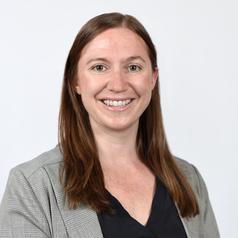
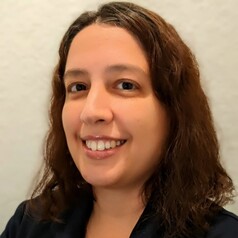
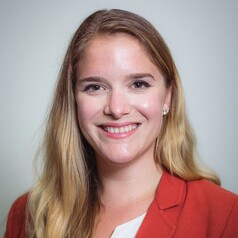
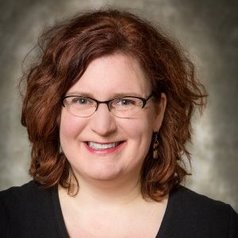
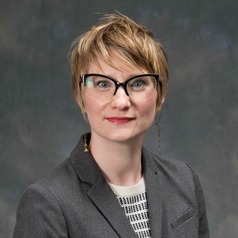
Assistant Professor of Educational Leadership and Innovation, Arizona State University Lydia Ross (she/her) is an assistant professor for the Division of Educational Leadership in the Mary Lou Fulton Teachers College at Arizona State University. Her research broadly centers on issues of equity, access, and inclusion in K-12 and post-secondary education, focusing on STEM. Specifically, she aims to understand 1) how students access educational systems and opportunities, 2) student experiences within educational systems, and 3) fostering professional development (PD) opportunities for people facilitating educational experiences (i.e., faculty or school counselors). Dr. Ross’ work has been published in national and international journals, including Research in Higher Education, AERA Open, Teachers College Record, Journal of Women and Minorities in Science and Engineering, and the Journal of Higher Education Theory and Practice.
Ph.D. Candidate in Chemistry, Florida International University Olutobi Daniel Ogunbiyi is an environmental analytical chemist with interests in targeted and non-targeted analysis of per-and poly fluoroalkyl substances (PFAS) in environmental samples using liquid chromatographic in tandem mass spectrometry techniques.
Assistant Professor of Chemistry, Florida International University Dr. Natalia Soares Quinete's specialities include: Environmental and Bioanalytical Chemistry, Mass Spectrometry, PFAS analysis, Emerging Contaminants, Metabolites and Biomarkers. Her areas of reserach include: Method development based on mass spectrometry for targeted and non-targeted approaches with applications in environmental (exposomics) and bioanalytical chemistry (lipidomics and metabolomics); Monitoring and assessment of the occurrence, fate and transport of PFAS in environmental and biological samples Biomonitoring of endocrine disruptor contaminants such as phthalates, hormones, PFAS, PCB metabolites, and other emerging compounds; and Study of biomarkers of exposure to a variety of environmental organic contaminants.
Speech Language Pathologist and Cognitive Rehabilitation Specialist, Marcus Institute for Brain Health; Instructor, University of Colorado Anschutz Medical Campus Hilary Diefenbach, MA, CCC-SLP, CBIST is a licensed Speech Language Pathologist at the Marcus Institute for Brain Health (MIBH) and Instructor in the University of Colorado (CU) School of Medicine. Hilary specializes in brain injury rehabilitation for adults. Hilary began her Speech Pathology career in inpatient rehabilitation serving at the Kessler Institute for Rehabilitation for patients recovering from stroke, traumatic brain injury, and other complex medical problems. Hilary joined the MIBH in 2018, where she leads the Speech Pathology Department as part of an interdisciplinary team specializing in intensive outpatient rehabilitation for U.S. Military Veterans and Emergency Responders with a history of mild-to-moderate traumatic brain injury, psychological health changes, and related health sequelae. Hilary is passionate about medical education, precision and preventative medicine, and interdisciplinary care design within her clinical and academic work at the University of Colorado. In her free time, Hilary enjoys time outdoors in the Rocky Mountains, music performance, and FaceTiming her nieces and nephews back home in Washington DC.
Assistant Professor of Nonprofit Management, University of Wisconsin-Whitewater Ruth K. Hansen is an assistant professor at University of Wisconsin-Whitewater’s College of Business and Economics, and director of the Institute for Nonprofit Management Studies. She teaches classes in nonprofit organizations, fundraising, organizational behavior, and research methods. Her research focuses on the theory & practice of fundraising, and equity and inclusion in resource mobilization. Dr. Hansen has more than 20 years’ professional experience as a fundraiser, and is a former board member of AFP-Chicago. Recent publications include “Applying a stakeholder management approach to ethics in charitable fundraising,” and “Researching fundraising relations: Interpretivist research practices and practitioner researchers in fundraising and nonprofit studies” with Lesley Alborough, both in the Journal of Philanthropy and Marketing. She contributed the chapter, “Theory in Fundraising,” to the new edition of Achieving Excellence in Fundraising. A chapter with with Gregory Witkowski introducing the Cross Sectoral Bias Theory is included in the book Reimagining Nonprofits: Sector Theory for the 21st Century, edited by Eva Witesman and Curtis Child, coming in early 2024. Her work with Lauren Dula, supported in part by a grant from the AFP Foundation for Philanthropy, focuses on charitable giving appeal letters and giving on impulse. She holds a BA in Music (Rutgers College), an MJ in Business Law (Loyola University Chicago), and a Ph.D. in Philanthropic Studies (Indiana University).
Assistant Professor of Public Administration, Binghamton University, State University of New York Prof. Dula’s work concentrates on public and nonprofit management with a particular focus on governance, philanthropy, and gender and equity issues. She works to combine traditional public administration theories such as representative bureaucracy and institutionalism with theories from sociology and economics in the study of nonprofits and the public sector. She is currently working on research within the realm of philanthropy, intersectionality, bureaucracy, and gender theory. Dula is a co-recipient of the Inaugural Association of Fundraising Professionals Foundation’s Wilson C. “Bill” Levis Research Grant. She also received a fellowship from the Women’s Philanthropy Institute (WPI) at the Indiana University Lilly Family School of Philanthropy. The Institute works to better understand women’s giving behaviors.