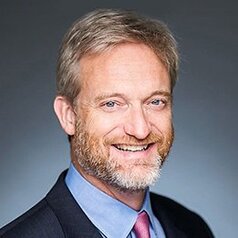
Non-resident fellow, United States Studies Centre, University of Sydney Lester Munson is a non-resident fellow at the United States Studies Centre at the University of Sydney and a principal in the international practice at BGR Group, a leading government relations firm in Washington, D.C., where he consults with foreign governments, corporations, and advocacy groups. Lester leads BGR’s foreign assistance practice, which provides advisory and government relations services to companies, advocacy groups, and nongovernmental organizations in the international aid policy area. Before joining the private sector, he was most recently staff director of the Senate Foreign Relations Committee. Lester also served as chief of staff to U.S. senator and representative Mark Kirk (R-IL). During the George W. Bush administration, Lester served as deputy assistant administrator at the U.S. Agency for International Development, where he focused on legislative affairs as well as global health issues. He also serves as adjunct faculty at Johns Hopkins University and speaks regularly on the foreign policy role of Congress and on U.S. foreign assistance issues. He is a cochair of the executive committee of the Modernizing Foreign Assistance Network, a senior fellow at George Mason University's National Security Institute, and a commentator on several news channels. In addition, Lester is the host of the weekly podcast Fault Lines, a bipartisan discussion of foreign policy issues associated with the National Security Institute. Lester is a graduate of the College of the University of Chicago and holds a master’s degree from St. John’s College in Annapolis.
PhD candidate, Curtin University I have a background as an analytical chemist and over 12 years of working experience as a forensic chemist. This includes crime scene investigation, latent fingermark chemistry, and analysis and interpretation of physical trace evidence. I am currently a PhD candidate at Curtin University, Australia, where my research focuses on sustainable forensic science provision, particularly fingermarks detection provision in small and remote-location jurisdictions.
Senior Lecturer, Curtin University I am a teaching and research academic at Curtin University, with expertise in environmental and conservation physiology. I am interested in how terrestrial vertebrates meet their energetic, water and temperature requirements. My work involves both laboratory and field studies throughout Australia and globally. I teach undergraduate and postgraduate classes, and supervise postgraduate research students, in areas relevant to my expertise, including animal physiology, zoology, statistics, conservation and wildlife management.
Associate Professor, Department of Anthropology, University of Toronto The focus of Tracey Galloway's research program is the assessment of chronic disease risk and the reduction of the impact of chronic disease through applied and health policy research to reduce health inequities and promote health system improvement in northern Indigenous populations.
Ph.D. Candidate in Gerontology, UMass Boston Molly Wylie is a Gerontology PhD candidate and Research Associate at the LeadingAge LTSS Center @UMass Boston. Her work focuses on the ways older adults and their caregivers navigate options for long-term, home- and community-based services (HCBS), paying particular attention to the influence of health literacy and self-efficacy. She has used mixed-method research to evaluate the effectiveness of programs across the service continuum, including supportive housing models, Councils on Aging, adult day health centers, and nursing homes. Wylie holds her M.S. in Gerontology from UMass Boston's McCormack Graduate School of Policy and Global Studies. She is the inaugural Equity in Aging Research Fellow at the National Council on Aging (NCOA), examining financial insecurity and health among older Americans. Wylie served as an Aging Services Access Point (ASAP) Care Advisor coordinating the provision of supportive services to older adults in Massachusetts. She has supported various organization-wide efforts at LeadingAge, including hosting The Mentor’s Voice podcast and evaluating the student internship program designed to increase diversity, equity, and inclusion in aging services.
Director of the Jenner Institute, University of Oxford Adrian Hill is a Professor of Human Genetics at the Jenner Institute, University of Oxford. He trained in medicine at Trinity College Dublin and the University of Oxford, qualifying in 1982. He undertook a DPhil with Sir David Weatherall and John Clegg at the MRC Molecular Haematology unit on the molecular population genetics of thalassaemia in Pacific Islanders. Following further clinical posts in London he returned to the newly opened Institute of Molecular Medicine in 1988 to study genetic susceptibility to malaria as a Wellcome Trust Senior Fellow. In 1995 he was awarded a Wellcome Trust Principal Research Fellowship and in 1996 the title of Professor of Human Genetics. He participated in the founding of the Wellcome Trust Centre for Human Genetics in 1994, and in 2003 co-founded the Oxford Centre for Clinical Vaccinology and Tropical Medicine, which he now chairs. In 2004 he participated in the restructuring of the Edward Jenner Institute for Vaccine Research and in 2005 was appointed director of the new Jenner Institute. He is a Fellow of the Royal College of Physicians, of Magdalen College, Oxford, and of the UK Academy of Medical Sciences. Research Dr Hill’s detailed analyses of HLA polymorphism and malaria susceptibility in African children led to an interest in vaccine development, particularly assessing T cell-inducing vaccines against malaria. In murine studies he identified the enhanced T cell immunogenicity of non-replicating poxviruses as boosting agents in vaccination protocols. This led to phase I clinical trials of both DNA and MVA vaccines for malaria starting in 1999. His group showed the first T cell mediated protection of human vaccinees by using DNA-MVA and fowlpox-MVA prime-boost regimes against malaria. To achieve greater levels of protective efficacy his group is currently developing more immunogenic prime-boost regimes involving recombinant adenoviruses are priming agents and MVA as a boosting agent. This regime has shown excellent immunogenicity in pre-clinical studies in mice and macaques. More immunogenic vectored vaccines are being developed as part of a major grant from the Foundation for NIH and the Gates Foundation addressing one of the Grand Challenge in Global Health. In this work several internal adjuvants have been identified that enhance the immunogenicity of vectored vaccines. To avoid the problem of anti-vector immunity associated with use of common human serotypes of adenovirus as vaccine vectors, extensive studies of simian adenoviruses have been undertaken. This has led to the identification of a lead simian vector that entered phase I clinical trials in 2007 using the ME-TRAP insert. Studies of correlates of immunity in both vaccinated and challenges volunteers and natural immunity in field studies have identified memory T cells to TRAP as a correlates of immunity in humans and the TRAP antigen has been found to be more immunogenic for T cell induction in clinical trial of vectored vaccines than the circumsporozoite protein. Detailed studies of blood-stage antigens have shown that vectored vaccines can also induced substantial protection against blood-stage malaria when used in heterologous prime-boost regimes. This protection is mediated by high titre antibodies against the blood-stage as well as T cell immune responses against the liver-stage parasite. Clinical trials of blood-stage antigens in adenovirus and MVA vectors are planned for 2008 to evaluate this new approach. Prof Hill’s immunogenetics programme currently focuses on genome-wide association studies of bacterial diseases, particularly tuberculosis and pneumococcal disease, and he is a participant in the Wellcome Trust case-control consortium that aims to identify new susceptibility genes using large scale approaches.