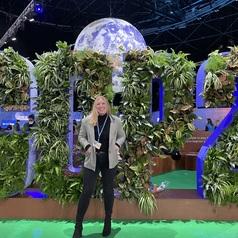
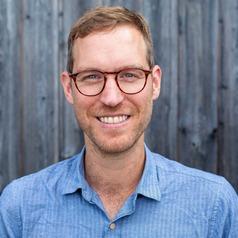
Ph.D. Candidate, Department of Geography and Planning, Queen's University, Ontario I have 11 years of international and Canadian experience with specialized knowledge in Mediation, Conflict Resolution, Qualitative research, Facilitation, Peace-building, Restorative Justice and Reconciliation. As a Educator, Mediator and Circle Keeper I bring a unique and highly diverse set of experiences to my teachings, research, project management and trainings. Being trained in International and cross-cultural settings in Canada, Haiti and Ireland. I bring a set of highly attuned skills to the projects I work with. I am competent in grant writing, conflict transformation process design, power rebalancing, Indigenous rights advocacy, consensus building and conflict coaching. I have completed my Masters of Philosophy in International Peace Studies from Trinity College in Ireland and have obtained Advanced Dispute resolution training from York University, and the GlenCree Centre for Peace and Reconciliation. I have worked with and for NGO's, Government, and Communities. I am fluent in English, Portuguese, Spanish and can speak some Haitian Creole. I learned to speak both Spanish and Portuguese while living abroad in South America after completing my undergraduate degree in Philosophy and Environmental Studies. My experiences abroad and especially in Latin America, have created a passion for reconciling relations to our natural world and one another. I am currently in my forth year of my PhD at Queens University working in Human Geography in the Heath, Environment and Communities lab working with Dr. Heather Castleden. My research is examining decolonial knowledge production, power in neocolonial extractive landscapes, feminist political ecology and geographies of peace in the Ecuadoran Amazon. I am working in collaboration and partnership with members of the Indigenous Shuar Community through community-based participatory research to preserve their ancestral territory and traditional ecological knowledge. My research is also working to support their Community Based Eco-Tourism Projects, and broader Foundation founded by the Shuar for Indigenous peoples of the Ecuadorian Amazon and stewardship of their forests. Visit the project at: Inishanunka.org Having travelled to 42 countries across the globe all of my experiences, studies, and have shaped my commitment to social and environmental justice. As of right now I am available for part-time consulting work at home in Toronto, remotely, and internationally. Over the next few months you will find me back and forth from the Ecuadorian Amazon, the site of my field research as I finish my disseration.
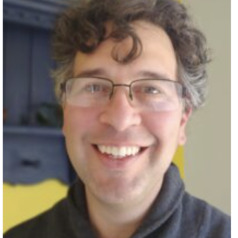
Assistant Professor, Faculty of Medicine, Université Laval Cristoforo Silvestri received a Bachelor’s degree in Genetics from York University in Toronto in 1998, and pursued graduate studies at the Institute of Medical Sciences of the University of Toronto where he received his PhD in 2009. From 2009 to 2014, he completed a postdoctoral fellowship with Dr. Vincenzo Di Marzo at the Institute of Biomolecular Chemistry of the National Research Council in Italy on endocannabinoids (and related compounds) and phytocannabinoids in obesity and associated metabolic disorders. Since 2017, Dr. Silvestri has been an Assistant Professor in the Faculty of Medicine at Université Laval. Furthermore, he holds the Sentinel North partnership research chair on the gut microbiome-endocannabinoid system as an integrator of extreme environmental influences on bioenergetics. Dr. Silvestri has extensive experience in collaborating with world-renowned pharmaceutical industries in the field of intestinal microbiota and endocannabinoids. He has also been involved in a number of collaborations with institutes associated with Université Laval (i.e. INAF and CERVO) on projects ranging from neuronal development and behaviour to the metabolic benefits of probiotics. His laboratory is located at the Quebec Heart and Lung Institute and focuses on the molecular and cellular actions of the endocannabinoid system on metabolism.
Doctoral student, molecular medicine, Université Laval Besma Boubertakh is a post-graduate student in the Faculty of Medicine at Université Laval. Her research focuses on investigating the molecular pathways and mechanisms that are linked to obesity. She studies the endocannabinoid system, which is a lipid signaling pipeline in our bodies that regulates white fat development and whole-body homeostasis.
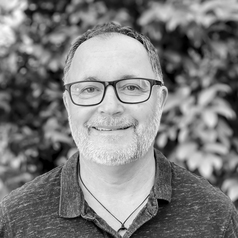
Professor of Marine Science, National Marine Science Centre, Southern Cross University I am a marine benthic ecologist with primary interests in the amazing biodiversity that can be found in our marine and estuarine environments. Much of this diversity is under threat from a wide range of human impacts and I am dedicated to understanding these impacts with a view to fostering long-term sustainability. Because little is known about the distribution and dynamics of marine biodiversity in Australia, especially in subtidal environments, much of my research focuses on measuring and monitoring diversity and determining the main factors that cause it to change - this includes both natural and human-induced impacts. This is a very broad area of research and my specific interests lie in the following key areas: - Developing methods to measure and monitor biodiversity in a rigorous and cost-effective way; - Measuring natural variation in communities - it is only by measuring this that we can effectively detect changes caused by human activities; - Measuring and monitoring the effects of different types of human impact on marine communities (especially marine debris); and - Identifying biodiversity hotspots (areas of high diversity that are also under threat) and, in collaboration with management agencies, facilitating their sustainable management; Much of my work focuses on the highly diverse communities associated with subtropical reefs on the east coast of Australia. However, I am also actively involved in research in Indonesia and SE Asia. My main interest is in marine invertebrates and especially the molluscs which are not only highly diverse, occurring in most if not all marine habitats, but also an excellent model group for studies of biodiversity and human impact. Over the last decade I have focused strongly on developing citizen science programs to both develop community capacity and to deliver data to support marine management at a range of scales. This has included assessments of marine debris, as well as biodiversity assessments of charismatic groups of organisms (e.g. the Sea Slug Census program). Publications: A list of my publications is available here https://scholar.google.com/citations?user=7sHMyEMAAAAJ&hl=en
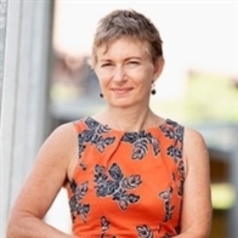
Professor and Chair of the Human Research Ethics Committee, Charles Darwin University Professor Marilynne N Kirshbaum is Chair of the Human Research Ethics Committee and was previously Head and Professor of Nursing at CDU. She remains strongly committed to promoting excellence in nursing research and teaching. Throughout a long career, she has amassed 100 research articles, books, book chapters and international conference presentations, 15 PhD completions and has led doctoral programs for health care professionals. Her area of clinical and research expertise is in cancer and palliative care, specifically in exploring how people who suffer from debilitating fatigue can summon up sources of vitality and energy. Research interests: -cancer-related fatigue -chronic fatigue -physical exercise in cancer care -energy medicine/integrative health and wellbeing -art, music and dance for wellbeing -development of theory.
Senior Lecturer in Cultural Studies and Media, Macquarie University Chris Muller is a Senior Lecturer in Cultural Studies and Media at Macquarie University, Sydney.