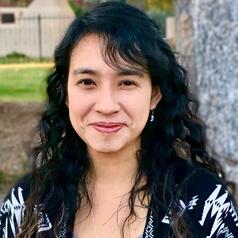
Political science lecturer, Santa Clara University Fiorella Vera-Adrianzén attended law school at the Universidad Católica of Peru and received her Ph.D. in Political Science from the University of New Mexico. She teaches courses in Comparative Politics, International Relations, and Research Methods at Santa Clara University. She specializes in transitional justice, participatory politics, and social mobilization in Latin America. Her research examines how victim participation affects the subnational implementation and effectiveness of reparations within indigenous communities in Peru. She is also engaged in various participatory research efforts working with communities affected by conflict in Colombia.
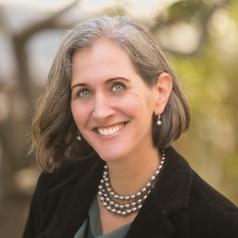
Professor of Political Science & Public Policy and Executive Director, Possibility Lab, University of California, Berkeley Amy E. Lerman is the Michelle Schwartz Chair and Professor of Public Policy and Political Science at the University of California, Berkeley, and Executive Director of the Possibility Lab at the University of California. Her research is focused on issues of equity, public opinion, and political behavior, especially as they relate to public safety and social inequality in America. Professor Lerman’s scholarship can be found in a wide variety of academic journals and has been featured in numerous media outlets including the New York Times, Washington Post, USA Today, CNN, and NPR. Professor Lerman is the author of several award-winning books, including work on the American criminal justice system in The Modern Prison Paradox and Arresting Citizenship. Her most recent book, Good Enough for Government Work examines how perceptions of government shape citizens’ attitudes toward privatization and public programs. In addition to her research, Lerman previously served as a speechwriter and communications consultant for national nonprofits and members of the United States Congress, a community organizer in Latin America and Southeast Asia, and an adjunct faculty member of the Prison University Project at San Quentin State Prison. In 2023, Lerman was elected to the American Academy of Arts and Sciences.
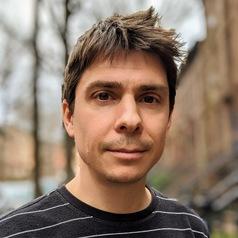
Associate Professor of Practice, Negotiation and Conflict Resolution, Columbia University Peter Dixon is an Associate Professor of Practice in Negotiation and Conflict Resolution at the School of Professional Studies at Columbia University. He received his PhD in sociology from the University of California, Berkeley in 2015. In his research, Dr. Dixon uses mixed methodologies to understand how local knowledge can influence transformative solutions toward peace and justice in conflict-affected communities. Currently, he is researching community-based transitional justice in Colombia and bottom-up approaches to public safety and restorative justice in urban America. He has received support for this work from foundations including the National Science Foundation, United States Institute of Peace, Inter-American Foundation, and Humanity United. His writing has been published in journals including the International Journal of Transitional Justice, the Journal of Human Rights Practice, and Law and Social Inquiry, and in a number of edited volumes. Dr. Dixon collaborates with diverse organizations in his work, always with the goal of making his research useful for addressing social problems and respectful of the communities who these problems ultimately affect. As a former evaluation specialist at the United Nations in New York and at the International Criminal Court in The Hague, he also continues to support international organizations on monitoring, evaluation and strategy. He serves on the Boards of the NGO Everyday Peace Indicators and the Davis Collaborative in Conflict Transformation at Middlebury College. He is also a Faculty Affiliate at the University of California Berkeley Possibility Lab and fellow of the Salzburg Seminar.
Postdoctoral Researcher, Lawrence Livermore National Laboratory I have spent years studying the composition and expression of human scent from its use as a forensic identifier to the underlying indications it yields about human health. I completed my doctoral studies at Florida International University where I established an instrumental method (using gas chromatography- mass spectrometry) that allows human scent samples to be associated to one another. Further development of tools like these will eventually allow us to quantify the similarity between two samples of human scent evidence and say how similar or dissimilar they are to one another.
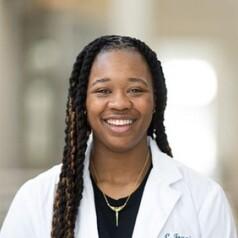
Assistant Professor of Chemistry and Food Science, Framingham State University Dr. Frazier is the first African-American woman to earn a PhD in Biochemistry from Florida International University. Her research has focused on the application of human scent forensics in subject identification.
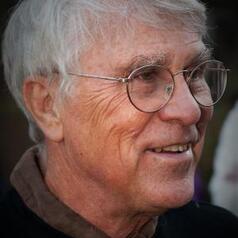
Professor of Sociology and Global Studies, University of California, Santa Barbara Mark Juergensmeyer is Distinguished Professor of Sociology and Global Studies and the founding director of the Orfalea Center for Global and International Studies at the University of California, Santa Barbara. He is an expert on religious violence, conflict resolution and South Asian religion and politics, and has published more than three hundred articles and thirty books. His widely-read Terror in the Mind of God: The Global Rise of Religious Violence (University of California Press, 4th edition 2017), is based on interviews with religious activists around the world--including Buddhist extremists in Myanmar, leaders of Hamas, imprisoned activists associated with al Qaeda and the Islamic State, and Christian militants in the United States--and was listed by the Washington Post and the Los Angeles Times as one of the best nonfiction books of the year. A previous book, Global Rebellion: Religious Challenges to the Secular State (University of California Press, 2008) covers the rise of new nationalisms in response to the global decline of the secular state. It was named by the New York Times as one of the notable books of the year. His book on Gandhian conflict resolution has been reprinted as Gandhi's Way (University of California Press, Revised Edition, 2005), and was selected as Community Book of the Year at the University of California, Davis. He has co-edited The Encyclopedia of Global Religions (Sage Publications 2007), The Oxford Handbook of Global Religions (Oxford University Press 2007), and co-edited with Saskia Sassen and Manfred Steger the Oxford Handbook of Global Studies (Oxford University Press 2019). He co-edited with Craig Calhoun and Jonathan vanAntwerpen Rethinking Secularism (Oxford University Press 2011). His latest book is God and War: A Meditation on Religion and Warfare (Oxford University Press 2020). He has received research fellowships from the Wilson Center in Washington D.C., the Harry Frank Guggenheim Foundation, the U.S. Institute of Peace, and the American Council of Learned Societies. He is the 2003 recipient of the Grawemeyer Award for contributions to the study of religion, and is the 2004 recipient of the Silver Award of the Queen Sofia Center for the Study of Violence in Spain. He received an Honorary Doctorate from Lehigh University in 2004 and a Distinguished Teaching Award from the University of California, Santa Barbara in 2006. Since the events of September 11 he has been a commentator in the news media, including CNN, NBC, CBS, BBC, and NPR.