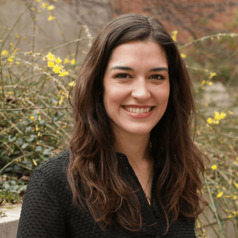
PhD Candidate, Interdisciplinary Centre for Conservation Science, University of Oxford I am a post-growth economist broadly focused on themes of ecological compensation, no net loss/net gain, environmental and conservation psychology, social justice, and human well-being. I am particularly interested in (i) improving the effectiveness of incentive-based conservation instruments such as payment for ecosystem services and biodiversity offsetting, (ii) developing conservation strategies that can lead to the desired outcomes from both nature and people perspectives, and (iii) understanding the socio-psychological mechanisms behind human attitude and behaviour towards the environment.
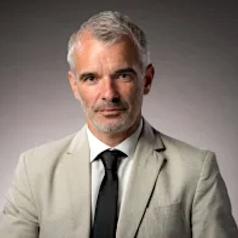
Professor in Political Violence, University of Bath Professor Brad Evans is a political philosopher, theorist, and writer, who’s work focuses on the problem of violence. He is the author of twenty books and edited volumes, along with over a hundred and fifty academic and international media articles. Brad is the founding director of the Centre for the Study of Violence, which was launched in 2023, and holds a Chair in Political Violence & Aesthetics at the University of Bath, United Kingdom. He has previously held academic positions at the University of Bristol and the University of Leeds, while also teaching at Columbia University. Throughout 2015-17, he led a dedicated series of discussions on violence for The New York Times opinion section (The Stone). Brad later continued the conversation as lead editor in a column dealing with violence and the arts/critical theory with the Los Angeles Review of Books, which he ran from 2017-2022. He has recently been co-directing an international collaborative project titled, “State of Disappearance” (with Chantal Meza), which brings together the arts, humanities and social sciences to rethink what disappearance means in the 21st Century. A recipient of a number of grants and scholarships, in 2018, Brad's Portraits of Violence book won a prestigious Independent Publishers Award. His works have been translated into many languages including, Spanish, Italian, French, German, Russian, Finnish, Dutch, Chinese, Turkish and Korean. Launched in 2011, Brad is founder of the Histories of Violence project, which has a user base spanning 148 different countries. While producing its educational content and managing its online presence, he has also directed its global research projects on dedicated themes related to the problem of violence and its implications. These have included “Disposable Life,” which interrogated the meaning of mass violence in the 21st Century, along with the “Ten Years of Terror” project, which notably received international acclaim, including the screening of its associated film at the Solomon K. Guggenheim Museum, New York, during the commemorative events that marked the 10th anniversary during September 2011. Committed to education in the public interest, Brad works in consultation with a number of global organisations in both the policy and cultural fields, most recently including Save the Children. In 2016 he co-directed a forum in collaboration with the International Committee of the Red Cross in Geneva titled “Old Pain, New Demons”, on the occasion of the International Day in Support of Victims of Torture. Brad has also worked with cultural organisations such as Opera North, UK, co-directing initiatives on the theatrical and performative nature of violence. Recently he has hosted and led a series of discussions under the rubric of a “Century of Violence” to mark the 100th anniversary of the journal The Philosopher by interrogating with leading authorities the most important books on violence during that period. Brad has been a visiting fellow at the Committee on Global Thought at Columbia University, New York (2013-14) and distinguished society fellow at Dartmouth College, New Hampshire (2017). More recently, he has been a visiting fellowship at the Käte Hamburger Centre for Apocalyptic and Post-Apocalyptic Studies (CAPAS) at Heidelberg University in Germany (2023). Brad regularly makes television and radio appearances discussing his research and wider political, philosophical, and cultural concerns. He continues to write for many prominent international news outlets such as the New York Times, Newsweek, the Times (U.K.), the Guardian, the Independent, The Times Higher Education, World Financial Review, Al Jazeera, TruthOut, Counterpunch and Wales Arts Review. His projects have been featured in various outlets including NME, Business Standard, The Telegraph, Metro, The Indian Times, Pakistan Today, Hamilton Spectator, CBS news, ABC news, El Pais, Art Review, and Art Forum to name a few. In terms of broadcast conversation and more popular forms of entertainment, Brad was the inaugural guest on Russell Brand's podcast show Under the Skin, which debuted at No.1 on the iTunes charts in United Kingdom and Australia & No. 3 in USA and Canada. It held its No.1 download positions in both respective countries for over a week. Brad would later feature several times on the podcast covering a variety of topics from terrorism, the pandemic onto fascism. Together, they also co-hosted a 4 part series “Books with BraNd” in which they discussed timely and timeless classics. Alongside this, Brad would also appear numerous times on Brand's "True News" series The Trews and his YouTube videos, where they analysed worldly events. These podcasts and videos have been downloaded over 8 million times. Working alongside the comedian Jimmy Carr, Brad was a credited academic advisor for the Netflix show The Fix launched in December 2018. Brad's published books include Ecce Humanitas: Beholding the Pain of Humanity (Columbia University Press, 2021); When the Towers Fell: Commemorating the 20th Anniversary of 9/11 (The Los Angeles Review of Books Press, 2021) Conversations on Violence: An Anthology (Pluto Press, 2021); The Quarantine Files: Thinkers in Self-Isolation (The Los Angeles Review of Books Press, 2020); The Atrocity Exhibition: Life in the Age of Total Violence (The Los Angeles Review of Books Press, 2019); Violence: Humans in Dark Times (with Natasha Lennard, Citylights, 2018); Histories of Violence: Post-War Critical Thought (with Terrell Carver, Zed Books, 2017); Portraits of Violence: An Illustrated History of Radical Thinking (with Sean Michael Wilson, New Internationalist, 2016); Disposable Futures: The Seduction of Violence in the Age of the Spectacle (with Henry Giroux, Citylights: 2015), Resilient Life: The Art of Living Dangerously (with Julian Reid, Polity Press, 2014), Liberal Terror (Polity Press, 2013), and Deleuze & Fascism: Security - War - Aesthetics (with Julian Reid, Routledge, 2013). Forthcoming books include the co-curated State of Disappearance (with Chantal Meza, McGill-Queens University Press, 2023) and How Black was my Valley: Life & Fate in a Post-Industrial Heartland (Repeater/Penguin Random House, 2024).
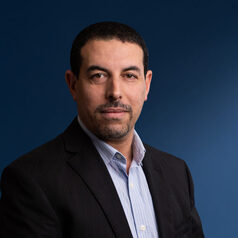
Professor in Data Science applied to the Environment and Environmental Health, Institut national de la recherche scientifique (INRS) Les intérêts de recherche du professeur Chebana portent principalement sur la science des données, en mettant l’accent sur les applications en environnement et en santé environnementale. Son expertise se situe dans une grande variété de recherches interdisciplinaires avec des approches de science des données (y compris, mais sans s’y limiter, l’hydrologie, les sciences de l’eau, la climatologie, l’épidémiologie climatique, les effets du changement climatique). Il s’intéresse au développement de nouvelles méthodologies de science des données, ainsi qu’à l’adaptation ou à l’application d’approches récentes/avancées.
Adjunct professor, Institut national de santé publique du Québec, Université Laval Expert in environmental public health and climate change. Institut national de santé publique du Québec, Université Laval et Institut national de recherche scientifique.
Étudiant-chercheur au doctorat en science des données et santé environnementale, Institut national de la recherche scientifique (INRS) Je suis actuellement étudiant-chercheur au doctorat en science des données et santé environnementale au Centre Eau Terre et Environnement de l'Institut national de la recherche scientifique (INRS) et Boursier d'impact sur le système de santé (BISS) en intelligence artificielle à l'Institut national de santé publique du Québec (INSPQ), à Québec, au Canada. Mes recherches portent sur la modélisation des impacts du changement climatique, tels que les chaleurs extrêmes et les inondations, sur les personnes et les écosystèmes, à l'aide d'approches basées sur la science des données.
Assistant Professor of Art History, Southern Methodist University Abbey Stockstill received her B.A. in Near Eastern languages and civilizations from the University of Pennsylvania and her Ph.D. in the history of art and architecture from Harvard University. Her most recent work focuses on the intersection of architecture, landscape, urbanism and identity in the medieval Mediterranean, particularly in the region of the Islamic West known as the Maghrib (comprising present-day Morocco, Algeria and Tunisia). Her first book manuscript, Marrakesh & the Mountains: Landscape, Identity, and Urban Planning in the Medieval Maghrib (forthcoming), addresses the way the landscape of Marrakesh helps define the ethnosocial identities of two medieval dynasties, the Almoravids and the Almohads. This research has been supported by a number of international institutions including the American Institute of Maghrib Studies, the Oxford Research Centre for the Humanities (TORCH), Dumbarton Oaks Research Library and Collections and the École Nationale d’Architecture du Maroc. She welcomes applications from prospective M.A. and Ph.D. students with interests in Islamic art and architecture, especially those whose topics may fall under the research categories listed below.