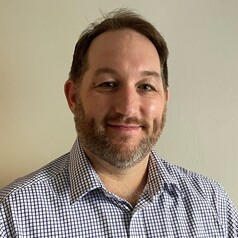
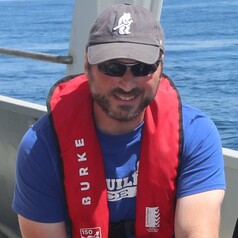
Professor, James Cook University Dr Richard Franklin PhD, is a pracademic who uses an evidence-based approach to developing real world solutions to improving health, safety, and wellbeing with a focus on health services, rural populations, those working in agriculture, disasters and drowning. He is a Professor of Public Health and Director of the World Safety Organization Collaborating Centre - Injury Prevention and Safety Promotion and Co-Director of the WSO Collaborating Centre - Disaster Health, Resilience and Emergency Response at James Cook University, within the College of Public Health, Medical and Veterinary Sciences where he teaches, undertakes research and outreach work. His research interests include epidemiological, qualitative, translational, program evaluation, product evaluation, and surveillance. Current projects include heatwave impacts on health services; travel safety; rural road safety; drowning prevention; mitigating the impact of flooding and cyclones; and disaster preparedness and resilience.
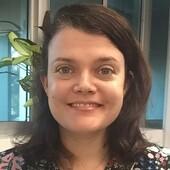
Research assistant, James Cook University Miss Hannah Mason is a lecturer, researcher, and HDR student at the College of Public Health, Medical, and Veterinary Sciences at James Cook University. Hannah has worked on a broad range of public health and safety research projects, including exploring the impact of heatwaves on health systems, arc flash safety, mobile plant safety, and rural road safety. Hannah’s research interests include health systems management, climate resilience, and rural and remote health.
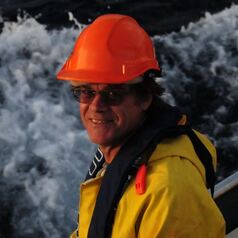
Professor at the Centre for Marine Science and Technology, Curtin University Professor Robert McCauley is a research scientist at the Centre for Marine Science and Technology at Curtin University, Perth, Western Australia. Professor McCauley has been studying how the noise from seismic survey signals impacts marine fauna since 1992 and has been involved with experiments of seismic impacts on plankton, scallops, lobster, squid, octopus, fish, sea turtles and whales. McCauley has spent a career listening to Australia's ocean: trying to understand the numerous biological signals recorded, how they are made and detected by the animals concerned, why they are made and how us humans can use the sounds to study or monitor fauna; plus understanding the myriad of complexities of how sound behaves in the ocean and natural physical ocean noise.
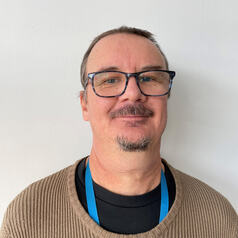
Professor, Sustainable Marine Research Collaboration, University of Tasmania Jayson Semmens is a Professor at the Fisheries and Aquaculture Centre (FAC), Institute for Marine and Antarctic Studies (IMAS), University of Tasmania (UTAS). His research has an overall theme of conservation/sustainability, where he focuses his research activities on biotelemetry; biologging and ecophysiology and more specifically, elasmobranch biology, spatial ecology, ecophysiology, and energetics; and cephalopod biology, ecology, and ecophysiology. He also has a strong interest and capability in examining the impact of anthropogenic change, often using an ecophysiological approach, particularly research examining effects of seismic surveys, as focused on its this application, and hypoxia and developing ways of mitigating impacts and rebuilding populations. Additionally, he conduct fisheries research on scallops and cephalopods.
Senior research fellow, University of Tasmania Ryan Day is one of the Animal Ethics committee Chairs and a Research Fellow in Marine Animal Physiology and Biochemistry at University of Tasmania’s Institute for Marine and Antarctic Studies. One of his primary research areas are in measuring the impact of seismic surveys on marine invertebrates. In this field, his research has used quantification of acid-base physiology, haemolymph electrolyte and mineral homeostasis, immune function and oxidative stress to assess the health status of marine invertebrates including lobster, scallops to evaluate the impact of exposure to seismic air gun signals. The outcomes of this research have been incorporated by the federal regulatory body (NOPSEMA) for impact assessments to minimise harm to marine life. In his second primary research area, Ryan investigates approaches for reducing post-harvest loss in marine fisheries, with a current focus on the live export southern rock lobster fishery. This research developed in response to reports of large-scale mortalities within the lobster processing industry. In conducting an assessment of haemolymph physiology, including biochemistry and immune function, his research in collaboration with a veterinary epidemiology team, determined the cause of mortality was sub-optimal holding and handling conditions, rather than a pathogen as was initially feared. In response, Ryan authored an industry best practices guide with recommendations on handling and water quality management. Implementation of these recommendations has been attributed to eliminating mass mortality events and halving mortality rates by industry partners. This work has recently been extended to the fishing vessel component of the industry and projects to apply this research to other marine invertebrate fisheries are in development. In addition to his recent work with invertebrates, Ryan’s PhD research focused on digestive physiology in marine fishes, in which he characterised digestive strategies in fishes that lack a stomach.