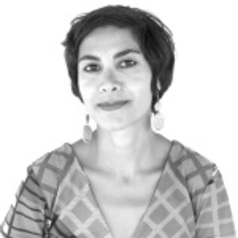
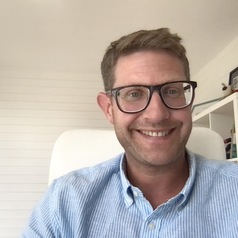
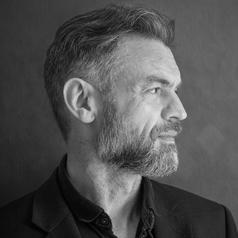
Senior Lecturer in Sociology, University of Manchester I have been educated in Iran (University of Tehran), India (Jawaharlal Nehru University), South Africa (University of KwaZulu-Natal) and Germany (University of Freiburg). I worked at Humboldt University of Berlin for several years before moving to the UK. My books include: Social Movements in Iran: Environmentalism and Civil Society (Author, Routledge 2012), Understanding Southern Social Movements (Editor, Routledge 2016), Contemporary Megaprojects: Organization, Vision and Resistance in the 21st Century (Co-editor, Berghahn 2021) and Marxism, Religion and Emancipatory Politics (Co-editor, Palgrave-Macmillan 2022). I am currently president of the International Sociological Association's Research Committee on Social Classes and Social Movements.
Associate Professor for Tourism and Event Management, MCI Management Center Innsbruck I am Associate Professor for Tourism and Event Management at the Mangement Center Innsbruck, Austria. My PhD investigated knowledge management and knowledge practices within festival organisations, a topic I have widely published on over the last decade. Other research interests and areas of expertise include knowledge management, community events and festivals, power and empowerment, events and wellbeing/quality-of-life.
Senior Lecturer and Researcher, University of Hertfordshire I am a multidisciplinary researcher interested in contemporary leisure experiences and wellbeing. This includes research in gerontology, tourism, festivals and events, family sociology, family management, marginalisation, mental health and wellbeing, neurodiversity, equity of experiences and human rights.
Assistant Professor of Global Studies, Sacred Heart University Zhen Han is an Assistant Professor in the Political Science and Global Affairs Department of the Sacred Heart University. He was previously a Postdoctoral Research Scholar at The Fletcher School at Tufts University, where research for this paper was conducted. He has also served as a Lecturer in the Political Science Department at the University of British Columbia and Research Fellow in the Canadian Centre of International Peace and Security Studies. His research focuses on rising powers, China and economic interdependence, and he has published on these topics in journals including Asian Security, Chinese Journal of International Politics and World Economy and Politics.
Adjunct Lecturer in the International Studies Program, Boston College Frank O’Donnell is a Nonresident Fellow in the South Asia Program at the Stimson Center and incoming adjunct lecturer in the International Studies Program at Boston College. He was previously a Postdoctoral Research Scholar with the Rising Power Alliances research project at The Fletcher School at Tufts University. His research focuses on political and security developments in southern Asia, and international governance of emerging and strategic technologies. He has published on these themes in several journals, including Asian Security, Asian Survey, Comparative Strategy, Contemporary Security Policy, International Affairs, Nonproliferation Review, Orbis and Survival. He is the co-author of India and Nuclear Asia: Forces, Doctrines, and Dangers (with Yogesh Joshi, 2018).
Professor of history, University of Reading “The philosophers have only interpreted the world in various ways; the point, however, is to change it.” Thesis Eleven of Karl Marx’s Theses on Feuerbach (1845) is both a call to action and a demand that we situate philosophical thinking about the world within history. This sums up my interests as an intellectual historian. My research and teaching explore the ideas, concepts, and ways of thinking about the world that dominated nineteenth and early twentieth century thought, and situates these ideas, concepts, and ways of thinking within their historical context. My work ranges across both the history of the left, especially early nineteenth century radicalism, Chartism, and the life and writings of John Stuart Mill, and the history of science, especially phrenology, Darwinism, and eugenics. In each of these areas I seek to understand how ideas and concepts developed within the context of their own time - radicalism in dialogue with contemporary conservatism, Darwinism in interaction with capitalism and imperialism - in order to understand them historically. This is a relevant and urgent activity because ideas and concepts formed in very different historical circumstances continue to frame our thinking today. History is the present interrogating the past in order to shape the future. The first step is to understand the past.