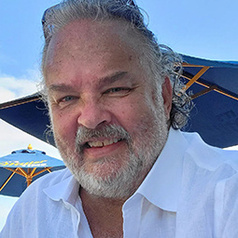
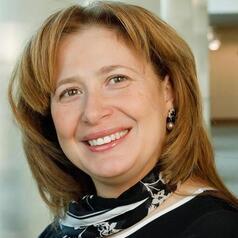
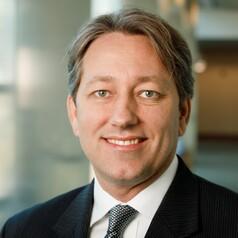
PhD Research Fellow, Maastricht Economic and Social Research Institute on Innovation and Technology (UNU-MERIT), United Nations University I am currently enrolled as a PhD fellow at the United Nations University - MERIT, in Maastricht Netherlands. I research on the subjects of innovation diffusion in poverty context and private sector sustainability.
Lecturer in Law, Cardiff University Dr Cram is Lecturer in Law at the School of Law and Politics and Director of the Centre for Crime, Law and Justice at Cardiff University. His research interests are in the fields of policing, offender management, criminological theory, procedural justice, and legitimacy. Dr Cram has authored a number of significant Integrated Offender Management (IOM)-focused publications, including his most recent book: Integrated Offender Management and the Policing of Prolific Offenders (Routledge, 2023). His current work on IOM involves a Ministry of Justice funded national evaluation of the implementation of new arrangements introduced under the 2021 'Refresh’ of IOM.
Research Professor of Hospitality and Tourism and Director, International Tourism Research Institute, University of South Carolina Rich Harrill has a strong record of success in and an international reputation for leveraging his academic and professional experience combining tourism with economic development and urban planning to drive local, regional, national and international business, tourism and economic growth. Harrill brings an industry-driven business mode and academic entrepreneurship to the university level. Currently, in his role as director of the International Tourism Research Institute (ITRI) at the University of South Carolina, Harrill conducts studies on applied research to provide practical solutions to increase U.S. and international tourism industry competitiveness, resulting in additional revenues and strong economic development opportunities. Harrill has focused extensively on international tourism and economic development. He collaborated with the U.S. Travel Association and the U.S. Department of Commerce, Office of Travel and Tourism Industries on the definitive study of future Chinese outbound tourism to the U.S., potentially leading to additional tourism dollars for both China and the United States. In doing this research, he directly influenced both U.S. and China federal policies to enable cultural and research exchanges. He is currently working with the U.S. Department of Commerce, Office of Travel and Tourism on a study of the recent decline in Japanese tourists to the United States. He also has conducted additional research in the Dominican Republic on tourism development, and accepted a two-month appointment as a visiting professor at the University of Aruba. Harrill earned his Ph.D. in parks, recreation, and tourism management and his master's degree in city and regional planning from Clemson University. He holds a B.A. in political science from the College of Charleston. He has published his research in urban planning's top three journals: the Journal of American Planning Association, Journal of Planning Education and Research and Journal of Planning Literature. The Journal of the American Planning Association is the top-ranked journal for urban studies and number-two ranked journal for planning and development. Harrill edited Fundamentals of Destination Management and Marketing (American Hotel and Lodging Association, 2005), the first comprehensive textbook for the destination management industry. He is also co-editor of the International Journal of Culture, Tourism and Hospitality Research and research notes editor of Tourism Analysis.
Assistant Professor of Dermatology, University of Colorado Anschutz Medical Campus My laboratory is dedicated to studying the regulation of the transcription factor p53. Mutations in p53 are found in more than 50% of human cancers, making this tumor suppressor the subject of extensive basic and preclinical research. Our studies focus on 3 main topics: 1- p53 in tumorigenesis: Through the utilization of mouse models of cancer, we to unravel the role of p53 mutations in driving tumorigenesis. By understanding the underlying mechanisms that initiate and promote skin cancers like squamous cell carcinomas and melanoma, we strive to enhance cancer therapies. 2- p53 and development: Our investigation involves studying mouse models that express elevated levels of p53, which exhibit developmental abnormalities, particularly lymphatic defects. By characterizing these mice phenotypically and molecularly, we aim to identify crucial factors contributing to the pathogenesis of associated diseases. Furthermore, we are exploring the potential of certain drugs in treating the debilitating disorder of lymphedema. 3- p53 and pigmentation: Our research focuses on the activation of the p53 pathway in skin stem cells with the goal of developing treatments for pigmentary disorders such as vitiligo and giant congenital nevi. We have identified a drug that targets the p53 pathway and shows promise in promoting melanocyte proliferation and repigmentation of depigmented vitiligo skin. We are currently analyzing the mode of action of this drug in preparation for future clinical trials. These research areas represent our ongoing efforts to deepen our understanding of the working of p53 and contribute to the advancement of cancer and lymphatic disease therapy.
Associate Clinical Professor of Dermatology and Epidemiology, University of Colorado Anschutz Medical Campus Neil Box is a cancer researcher and community educator with expertise in p53 pathway biology as it applies to skin, hematologic and other cancers who is passionate about increasing public awareness for cancer prevention. Interests include using human subjects and model systems to understand how gene variants work together with environmental exposures to influence normal and disease phenotypes in humans.
Assistant Research Professor of Dermatology, University of Colorado Anschutz Medical Campus We study how the fidelity of cell division (e.i., the formation of two genetically identical daughter cells) is regulated during increased proliferation in normal tissues or can be compromised in cancer to contribute to tumor progression. We are focusing on three questions: 1. How is mitosis regulated in highly proliferative conditions? 2. How is mitotic fidelity maintained during highly proliferative conditions? 3. How does mitotic infidelity contribute to cancer progression and metastasis? We use physiological models coupled to basic biochemical and cell biology techniques as well as new emerging single cell and bioinformatic approaches. We have defined the role of the mitotic kinase AURORA A in skin cancers and shown how enhanced genomic instability can accelerate metastasis prone skin cancers. We have also described mechanisms that regulate mitosis in rapidly diving tissues under normal (e.g., development) and precancer conditions using genetically engineered animal models.