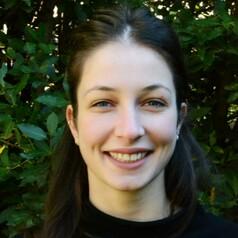
Researcher, Institute of Development Studies Celeste is a Research Officer at the International Centre for Tax and Development, primarily working in the Tax Administrations and Compliance and DIGITAX programmes. She is researching several projects regarding tax administration, from technology adoption to data management and revenue collection strategies in Sub-Saharan Africa. She has experience with quantitative and qualitative data analysis and fieldwork experience in Uganda, Rwanda and Ghana. Before joining the ICTD, Celeste worked as Trainee at the UNDP Regional Bureau for Africa in New York. Celeste holds an MSc in Development Economics from the University of Sussex and is a PhD candidate in Economics at the University of Sussex.
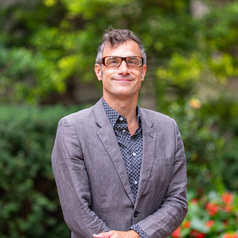
Director of Public Scholarship, Arts & Sciences at Washington University in St. Louis PhD in English and Critical Theory from the University of California, Davis. Specializes in contemporary literature, cultural studies, environmental humanities, and air travel. Author of nine books, including most recently "Adventure: An Argument for Limits" (Bloomsbury, 2023). Directing the Program in Public Scholarship at Washington University in St. Louis. Founding series co-editor of Object Lessons.
Associate Professor of Biological Sciences & Environmental Conservation, Clemson University Michael Childress, Ph.D., is an evolutionary behavioral ecologist studying the impact of climate change and behavioral adaptations in marine animals. His research has explored the impacts of (1) mass sponge mortality on the social behaviors of juvenile Caribbean spiny lobsters, (2) drought on blue crab habitat use and disease, and (3) marine heat waves on the interactions between coral health and coral reef fishes. He teaches courses in marine ecology and climate sustainability and supervises a marine science research program for graduate and undergraduate science divers in the Florida Keys National Marine Sanctuary. He created a marine science - musical theatre STEAM program called Something Very Fishy to engage elementary school children in the wonders of our oceans and to raise awareness and interests in marine conservation.
Chancellor's Professor in Engineering, Climate Change and Civil and Environmental Engineering, University of Tennessee Joshua S. Fu is Chancellor's Professor, John D. Tickle Professor of Engineering, James G. Gibson Professor in Climate Change, and Professor in the Department of Civil and Environmental Engineering and the Inaugural Professor of the UT-ORNL Bredesen Center for Interdisciplinary Research and Graduate Education, Joint Appointment Professor in Computational Earth Sciences Group in Computational Sciences and Engineering Division at Oak Ridge National Laboratory. The focus of Fu’s research work includes climate change impacts on energy infrastructure, air pollution, water availability, and extreme events like heatwaves, floods and droughts, wildfires, and human health. The additional focus is to utilize artificial intelligence (AI) and machine learning techniques on climate change, human health, and mapping global total atmospheric deposition. Currently, my research team is utilizing a petascale supercomputer to simulate Arctic ice melting and improve the model on coupling chemistry and climate modules in a global (1 degree) scale and downscaling to a regional scale (4 km) and participating in developing the new chemistry solver for the US DOE’s Energy Exascale Earth System Model (E3SM). Fu has served Vice-Chair of the Measurement-Model Fusion for the Global Total Atmospheric Deposition (MMF-GTAD) of the new initiative in the World Meteorological Organization (WMO), contributed as a co-author of the Final Report of the Hemispheric Transport of Air Pollution for the United Nations Economic Commission for Europe (UN Task Force Hemispheric Transport of Air Pollution) and reviewing committee member for air quality status in East Asia for the EANET, a governmental consortium in East Asia and located in Japan. He also was a co-author of the Technical Report, Climate Change, and Infrastructure, Urban System, and Vulnerability, to the Department of Energy in support of the National Climate Assessment in 2012. He served as an international adviser/expert on East Asia/China air quality modeling assessments such as the Beijing and Shanghai air quality modeling assessment for the 2008 Olympic Games and the 2010 Shanghai World Expo, a modeling lead of the Model Intercomparison Study (MICS-Asia), and a modeling member for HTAP on air quality and climate change. He contributed climate modeling results for IPCC AR5 based on RCP 4.5 and 8.5 scenarios. He develops and provides scientifically sound, cost-effective analysis tools to design and develop complex climate and environmental model applications. There is an example, he is one of the initiators for the Air Benefit and Attainment Assessment Cost System (ABaCAS) that has been used internationally. Fu has published more than 160 referred journal articles and 110 peer-reviewed conference proceedings. He has been an invited speaker including keynote and lecture for more than 100 times in Asia, Europe, and the US. Also, and has been interviewed or reported on the Wall Street Journal, New York Times, Science Daily, @EurekAlert!, Red Orbit, and more than 30 media to discuss issues of international and national importance on climate change/extreme events and air quality. Fu obtained his Ph.D. from North Carolina State University, MS from UCLA, and BS from Taiwan’s National Cheng Kung University. His areas of research include: Wildfires and human health AI/Machines learning in air quality, climate, forest/crops, health, socioeconomic data Global and regional climate, energy, and air quality Peta-scale computing on coupled climate and air quality modeling Climate downscaling toward impacts of air quality, water resources, human health Assessment of hemispheric transport and climatic effects of air pollutants: Global and Regional Modeling of Ozone and Particular Matter Agricultural Air Quality (ammonia, methane) Transportation conformity and air quality Air Toxics Modeling – link to the homeland and international security Develop environmental modeling and decision support tools for complex multi-discipline ecosystem Genetic algorithm and stochastic-based optimization applications in a high-performance computing Data management/data mining and information technology applications in environmental management systems Reliability, uncertainty, and risk analysis in environmental systems The human dimension in environmental systems
Assistant Professor of Mathematics, University of Pennsylvania Mona is an Assistant Professor in the Department of Mathematics at the University of Pennsylvania. Before joining Penn, she was a J.J. Sylvester Assistant Professor in the Department of Mathematics at Johns Hopkins University. She has also been a Research Member at the Mathematical Sciences Research Institute in Berkeley and a guest at the Max Planck Institute for Mathematics in Bonn. Mona received her Ph.D. in Mathematics at the University of Chicago under the supervision of Peter May in 2014. Her research interests include algebraic K-theory, its applications to number theory and manifold theory, and equivariant stable homotopy theory.
Associate Professor of Physics, University of California, Santa Barbara Hugh Lippincott has been a professor at the University of California Santa Barbara since 2019. His research focuses on the direct detection of dark matter, having worked on a variety of experiments and techniques at SNOLAB and elsewhere. Lippincott received his PhD from Yale University for work on liquid argon and neon detectors, including with the MiniCLEAN and DEAP collaborations. He was a Lederman Postdoctoral Fellow at Fermilab working on the COUPP bubble chamber experiments, before becoming a Wilson Fellow at Fermilab as a member of the PICO collaboration. Lippincott joined the LUX-ZEPLIN (LZ) experiment in 2014, for which he has served in many capacities, including as Spokesperson from 2021-2023.