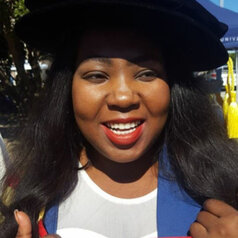
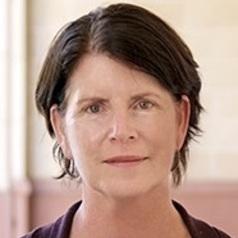
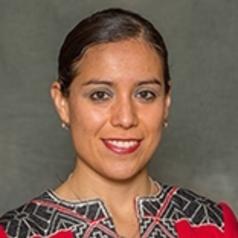
Senior lecturer in Languages and Literature, Nelson Mandela University I am an IsiXhosa lecturer at Nelson Mandela University and a Xhosa language translator. I am the author of two books, "IsiXhosa for Beginners" and "IsiXhosa For Beginners 2". I was also a board member of the Unako community-based movement. I got accepted for the GNOME outreach programme internship as a software translator. I translate English to Xhosa. In 2011, I worked as an IsiXhosa language practitioner at Translate.org. I have been involved in substantial translation projects like the ABSA translation project as a Xhosa specialist. I also had the privilege to be involved in a reading week project for Nelson Mandela Bay Municipality Library as a judge for the Xhosa novel year 2014 and 2015 as a facilitator. I hold a doctoral degree (DLitt, isiXhosa), master's degree in IsiXhosa (2011), a BA honours degree in IsiXhosa (2009), and BA degree in media, culture and communications (2008) from the Nelson Mandela Metropolitan University. During my university studies, I served as a Sergeant at Arms and public relations officer for the Toastmasters Society.
Director General, National Institute for Pharmaceutical Research and Development Obi Peter Adigwe is a Nigerian pharmacist and a doctor of pharmaceutical policy. He was appointed the director general of the National Institute for Pharmaceutical Research and Development in 2018 by the former president of the Federal Republic of Nigeria, Muhammadu Buhari. His doctorate is from the University of Leeds, United Kingdom.
Visiting Assistant Professor of English, Clark University Dianne Berg specializes in late medieval and early modern English literature. Her research focuses on representations of domestic violence and the literary appropriation of real-life scandals to address contemporary anxieties about treason, obedience, gender, religion, and the state. Professor Berg’s work has appeared in Borrowers and Lenders: The Journal of Shakespeare and Appropriation; Out of Sequence: The Sonnets Remixed (Parlour Press); Treason: Medieval and Early Modern Treachery, Betrayal, and Shame (Brill); and Medieval and Early Modern Murder: Legal, Literary, and Historical Contexts (Boydell). Recent course offerings at Clark University include “Medieval Women's Voices,” “The Arthurian Tradition,” "Chaucer's Canterbury Tales"; "The Secret Life of Books," and "Pulp Non-Fiction: Representations of Domestic Crime in Early Modern England."
Professor of Cinematic Arts, University of Southern California Holly Willis is the Chair of the Media Arts + Practice Division in USC’s School of Cinematic Arts, where she teaches classes on digital media, post-cinema and feminist film. She co-leads USC's Center for Generative AI and Society, which aims to create a space for artists, writers, journalists and others in the humanities to engage both creatively and critically with emerging forms of AI. She is the author of Fast Forward: The Future(s) of the Cinematic Arts and New Digital Cinema: Reinventing the Moving Image, as well of Björk Digital, and the editor of both The New Ecology of Things, a collection of essays about ubiquitous computing, and David O. Russell: Interviews. She is also the co-founder of Filmmaker Magazine dedicated to independent film; she served as editor of RES Magazine and co-curator of RESFEST, a festival of experimental media, for several years; and she writes frequently for diverse publications about experimental film, video and new media, while also exploring experimental nonfiction and poetry. Her work has appeared in publications such as Film Comment, Afterimage, Los Angeles Review of Books, Variety, River Teeth and carte blanche.
Associate Professor of Neuroethics, Penn State Laura Cabrera's interests focus on the ethical and societal implications of neurotechnology and neuroscientific advances. She has been working on projects that explore the media coverage and the attitudes of the general public toward pharmacological and novel neurosurgical interventions for the treatment of psychiatric disorders. She has also worked on the public perceptions towards the use of different modalities of neuromodifiers for enhancement purposes, as well as their normative implications. Her current work also focuses on the responsible governance of neurotechnology.
Associate Professor of Tropical Plants & Soil Sciences, University of Hawaii I am interested in the intersection between genomics, agriculture and ecology. My goal is to examine complex interactions so that everyone can work toward creating food systems that are more productive and sustainable. Currently my research broadly focuses on the breeding and genetics of vegetable crops through the use of crop wild relatives. My lab is interested in the intersection between genomics, agriculture and ecology. The goal is to examine complex interactions so that everyone can work toward creating food systems that are more productive, healthy and sustainable. Currently the lab broadly focuses on the breeding and genetics of vegetable crops through the use of crop wild relatives.