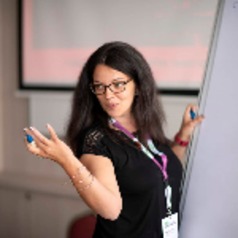
Lecturer in Education, University of Sheffield Abigail Parrish teaches on a range of programmes in the School of Education at the University of Sheffield, UK. A former modern foreign languages teacher, her research focuses on student motivation to learn a language, particularly in school settings, using Self-Determination Theory. She is also interested in student choice and multilingualism.
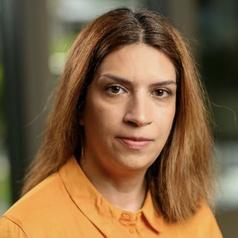
Senior Research Fellow, Materials Science, Queensland University of Technology Mahboobeh Shahbazi holds MSc and PhD degrees in Materials Science and Engineering from the University of Wollongong, where she worked on developing energy materials including iron-based superconductors. After graduating, she joined QUT where she followed her research studies on a variety of topics including perovskite solar cells, superconductors and magnetic materials. In 2017, Mahboobeh was awarded an Advance Queensland Fellowship in partnership with Siemens. In addition, Mahboobeh collaborates effectively with Australian and overseas superconductivity experts and is a co-investigator with her collaborative network at the University of Queensland on ARC Linkage projects investigating nanostructure engineered superconductors for fusion energy and MRI applications. In January 2023, she started a new role as Foundation Fellow for a key project with the Future Energy Exports CRC. In this role, she collaborates on hydrogen-based projects in the CRC’s Programme 2 “Hydrogen Export and Value Chains” including identifying and resolving key issues associated with scaling up electrolysers and the use of magnetocaloric materials for the efficient liquefaction of hydrogen. In addition, she was part of an ARENA-funded team investigating the operational safety of Lithium-ion batteries used in hybrid renewable energy and hydrogen production facilities. Mahboobeh’s research interests have centred on developing new and efficient methods to synthesise a variety of energy materials including superconductors, batteries, electrolysers and magnetocaloric materials. These syntheses are aimed at cost-effective, quality materials for use in applications such as MRI instruments and fusion reactors, hydrogen liquefaction and green hydrogen production systems. She is passionate about understanding the fundamental relationships between material structure, physical and electronic properties of materials and, accordingly, improving their performance in practical applications.
Lecturer in Classics, Australian National University Tatiana is a lecturer in Classics at the Australian National University. Prior to this, she was the Moses and Mary Finley Research Fellow at Darwin College, University of Cambridge. She is a graduate of Trinity College, Cambridge and the University of Sydney. Tatiana is a cultural historian of ancient Greece with particular interests in Greek and Roman technology (especially mechanics), ancient Greek religion, and the intersection of science and religion in Greco-Roman antiquity.
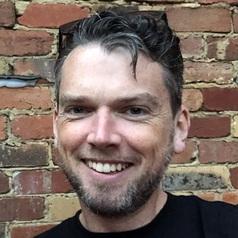
Research Fellow in Literary Studies, Australian Catholic University Killian Quigley completed his PhD in the Department of English at Vanderbilt University, where he was awarded the Robert Manson Myers and John M. Aden Awards, as well as the Drake Scholarship. Having defended his dissertation, he was appointed inaugural postdoctoral fellow at the Sydney Environment Institute, University of Sydney. In 2021, he became a Research Fellow at the Australian Catholic University's Institute for the Humanities and Social Sciences. In 2023, Killian was an invited visiting fellow at the Institute of the Humanities and Global Cultures, University of Virginia.
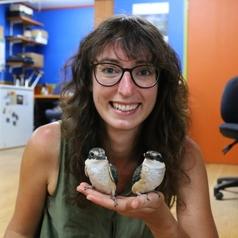
Postdoctoral researcher, Wageningen University I am a behavioural ecologist, often combining intense field work with detailed observations on marked animals. I got my BSc and MSc degree from the University of Groningen, the Netherlands. For my MSc, I travelled to the Seychelles to study interspecific competition between birds, and to the Kimberley (Western Australia) to study benefits of group living in endangered purple-crowned fairy-wrens. I have continued working with the purple-crowned fairy-wrens ever since. For my PhD at Monash University, my research focused on the benefits of cooperation and living in social groups and explains why subordinate fairy-wrens help raise others’ offspring and defend against predators. I continued as postdoctoral research fellow at Monash University, conducting research with a conservation focus, investigating environmental impacts on breeding success and survival. My current research at Wageningen University (the Netherlands), focuses on understanding why many animals stay at home to live in social groups instead of dispersing to breed independently elsewhere.