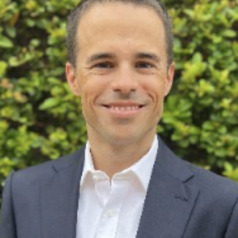
Professor, Child and Adolescent Health, Faculty of Medicine and Health,, University of Sydney Professor Dianne Campbell leads the NACE Training & Innovation Hub, which will support and mentor the next generation of allergy experts through six competitive PhD scholarships and four competitive post-doctoral fellowships. Prof Campbell is an academic Clinical Paediatric Immunologist, with 28 years experience in clinical allergy and immunology. She completed a PhD at the University of Melbourne and subsequently held a postdoctoral position at Stanford University. Prof Campbell served as Chair of Allergy and Clinical Immunology at the Children's Hospital Westmead/Sydney University (2010-2019). She is an author of more than 150 peer-reviewed manuscripts and has a h-index of 44. She has led randomised controlled trials in peanut and egg allergy – the most common cause of food allergy in Australian children. She is a Chief Investigator in NHMRC clinical trials, including OPIA, PrEggNut and OPTIMUM, and is a Chief Investigator in the NHMRC funded Centre for Food & Allergy Research, hosted at the Murdoch Children's Research Institute. She has played major roles in the creation of national prevention of food allergy guidelines, standardisation of food challenges and anaphylaxis education and training for schools and childcare, serving as Chair of the Paediatric Subcommittee for Australian Society for Clinical Allergy and Immunology (2010-2016). Prof Campbell also has extensive experience overseeing and developing paediatric graduate and postgraduate curriculum, previously serving as the Head of Paediatrics and Child Health, Sydney Medical School. She has recent biotechnology experience in her role as SVP, Clinical Development and Medical Affairs at DBV-technologies.
Group Leader, Childhood Allergy & Epidemiology, The University of Queensland A/Prof Jennifer Koplin is Group Leader of Childhood Allergy & Epidemiology at the University of Queensland Child Health Research Centre. She leads the Evidence and Translation Hub of the National Allergy Centre of Excellence (www.nace.org.au) and the Food Allergy Prevention stream of the NHMRC-funded Centre of Research Excellence in Food Allergy (CFAR; www.foodallergyresearch.org.au). A/Prof Koplin has over 15 years of research experience in epidemiology and allergy, and has developed an internationally recognised program of research in the epidemiology of childhood food allergy. Her research has explored the prevalence, natural history, causes and consequences of childhood allergic disease. She has led a series of large population-based allergy cohort studies, is a co-investigator on several food allergy prevention and treatment trials and collaborates on research exploring immunological mechanisms underlying childhood food allergy and improving food allergy diagnosis. A/Prof Koplin has been awarded 6 National Health and Medical Research Council (NHMRC) project grants, 2 consecutive NHMRC fellowships and a Centre of Research Excellence as a chief investigator. She has authored more than 150 peer reviewed journal articles with >4,500 citations and is on the editorial board of the international Journal of Allergy and Clinical Immunology: In Practice. Her recent research focused on using population-based studies to inform the design and implementation of prevention interventions and determine their effectiveness in reducing allergy prevalence at the population level. She also has a strong research interest in the role of infant feeding in allergy prevention and contributed to the development of new Australian and international guidelines on infant feeding for preventing food allergy. In 2018, she received a National Health and Medical Research Council project grant to conduct the first study internationally to measure the impact of these guidelines on infant feeding practices and the population prevalence of peanut allergy.
Post doctoral research fellow, The University of Queensland Dr Julie Hodges is currently a Research Fellow in the School of Psychology at the University of Queensland. She is a clinical psychologist and former teacher. Julie has a track record of success in conducting research relevant to schools and publishing in peer reviewed journals. Twelve years spent ‘at the coal face’ in Queensland primary and secondary schools combined with her work as a trainer in the delivery of parenting programs to parenting practitioners has allowed Julie to develop an understanding of the relationship between home and school from the perspective of both stakeholders. Julie’s research interests draw on her background as a teacher and her more recent experience as a clinical psychologist. She is keenly interested in supporting the wellbeing and self-regulatory capacity of children and adolescents and the influence that developing a positive relationship between schools and families can have on young people’s developmental outcomes.
Deputy Head, Health and Social Care Unit and Senior Research Fellow, Monash University Briony Hill is an ARC DECRA Fellow (2023-25). She completed her PhD in Health Psychology in 2015 at Deakin University, Australia, exploring a psychosocial and behaviour change approach to preventing excessive gestational weight gain. For her thesis, she was awarded an Alfred Deakin Medal for Doctoral Thesis and an Australian Psychological Society (APS) Health College Award for Excellent Higher Degree Thesis in Health Psychology. Briony received an Alfred Deakin Postdoctoral Research Fellowship in 2016 and completed an NHMRC Early Career Fellowship (2017-2022) in the area of preconception wellbeing. She is currently Deputy Head of the Health and Social Care Unit, School of Public Health and Preventive Medicine at Monash University. Research interests Briony's research interests centre on weight stigma before (preconception), during (antenatal) and after pregnancy (postpartum). She is currently leading an ARC Discovery Project, her DECRA and several seeding grants on the topic of weight stigma across the reproductive years. Briony also has a strong interest in health behaviour change and psychosocial wellbeing (including depressive, anxiety and stress symptoms, body image, and coping skills) and understanding the mechanisms that lead to the attainment of healthy diet and physical activity practices and weight for women during their reproductive years. She also applies an Ecological Systems Theory lens to her research to recognise the broader impacts on wellbeing that extend through the community, society and government. As part of this work, Briony is one of only a small handful of researchers globally, pursuing research to understand how we can eradicate weight stigma at all levels to reduce the burden and blame on women across the reproductive life phase. She is an advocate for co-design methods in her research, to ensure relevant stakeholders have their say in the development and implementation of interventions to meet their needs.
Lecturer, Curtin School of Population Health, Curtin University Blake Lawrence (PhD) is a Lecturer & Researcher in obesity, weight stigma and childhood adversity.