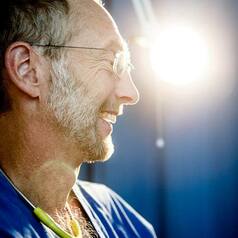
Professor, Department of Medical Epidemiology and Biostatistics. Senior Pediatrician, Örebro University Hospital., Karolinska Institutet Jonas F Ludvigsson is a pediatrician and pediatric gastroenterologist at Örebro University Hospital. He has a professorship at Karolinska Institutet (Sweden) and is adjunct professor at Columbia University, US. Ludvigsson's research emanates from a long-standing expertise in Swedish healthcare registers. He has so far written about 600 papers, often concerning celiac disease, inflammatory bowel disease, cancer, vaccinations, and pregnancy outcomes. Many of his publications are of high societal importance. He has written extensively on COVID-19, but also on the health of Ukrainian children. He was the lead author of a recent government report on hormonal treatment in young people with gender dysphoria. Ludvigsson was the president of the Swedish Society of Epidemiology (2011-14) and chaired the Swedish Society of Pediatrics (2014-16). He is currently Scientific secretary of the Swedish Society of Medicine. In his spare time he coaches a soccer team of 9-10-year old boys.
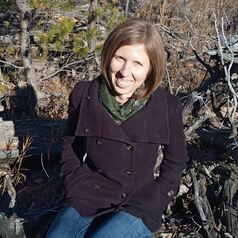
Postdoctoral researcher, Department of Medical Epidemiology and Biostatistics, Karolinska Institutet Weiyao Yin is a clinical doctor in obstetrics, gynecology and reproductive medicine and researcher with a focus on women’s and children’s health. Her research interests include perinatal risk factors, preterm birth, and neuropsychiatric conditions in mothers and children. She holds a PhD in obstetrics and gynecology from the West China School of Medicine/ West China Hospital of Sichuan University, Chengdu, China. Currently, she works at the Department of Medical Epidemiology and Biostatistics at Karolinska Institutet on a multinational research project examining preterm birth and neurodevelopmental disorders in children. The project utilizes registry data from Sweden and other Nordic countries.
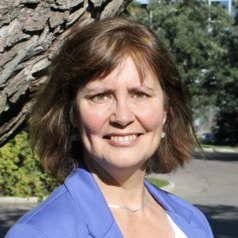
Professor of Geosciences and Director of Luminescence Lab, Utah State University Dr. Tammy Rittenour is the Director of the USU Luminescence Lab and Professor in the Department of Geosciences at Utah State University. Her research combines geomorphology, sedimentology and stratigraphy to reconstruct past climate and landscape evolution from fluvial, eolian, glacial and geoarchaeological records. She developed the USU Luminescence Lab in 2007 and has experience with Luminescence geochronology since 2000.
Research Associate, Natural Resources, University of Manitoba I am currently a Research Associate with the Natural Resources Institute at the University of Manitoba, where I work within an international research collaboration aiming to strengthen the use of qualitative social science research methods in impact assessment processes. Broadly, my research interests relate to the social (including equity) dimensions of climate hazards, climate change adaptation, and impact assessment. I hold a PhD in Environment and Sustainability from the University of Saskatchewan.
Professor, Sociology & Social Studies, University of Regina Amber J. Fletcher is an interdisciplinary social scientist with expertise in gender, environment, climate change, and agriculture. Her current research examines how social inequality affects people's experience of climate disasters (flood, drought, wildfire) in rural and Indigenous communities in the Canadian Prairie region. Dr. Fletcher's research is supported in part by funding from the Social Sciences and Humanities Research Council.
Distinguished Professor and UNESCO Chair in Biocultural Diversity, Sustainability, Reconciliation and Renewal, University of Saskatchewan I am Distinguished Professor and UNESCO Chair in Biocultural Diversity, Sustainability, Reconciliation and Renewal at the University of Saskatchewan, Canada. My research, academic service and teaching focus on the social dimensions of sustainability, gender relations and diversity, collaborative environmental governance, and community engagement. I have conducted research about and with UNESCO Biosphere Reserves (called Regions in Canada) since the early 2000s, working with individual sites and with the national network to support capacity building in conservation, sustainable development, and reconciliation. I also work with rural and Indigenous communities to understand and plan for climate hazards. Presently, I'm leading an international partnership to train graduate students working in transdisciplinary sustainability science professional, relational and intercultural skills and competencies necessary to become sustainability change makers. More details of my research program can be found on my website or via ORCID: https://orcid.org/0000-0002-0860-6395