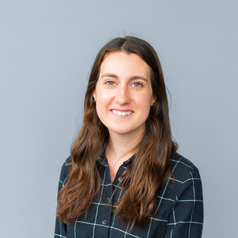
Fellow in Health Metrics Sciences, University of Washington I am a third-year Post-Bachelor Fellow at the University of Washington (UW) Institute for Health Metrics and Evaluation (IHME), and a part-time UW graduate student in the MS Health Metrics Sciences program with graduation in August 2023. At IHME, I am responsible for diabetes mellitus disease burden and high fasting plasma glucose risk burden estimates for the Global Burden of Disease (GBD) study. In 2020, I received my undergraduate degrees in Public Health-Global Health (BS) and Economics (BA). By being able to take courses in both these majors, I was able to explore my interests in global health economics and the crucial intersection between financial stability and health. As an undergraduate, I was able to participate in a study abroad program through the School for International Training (SIT) in India focusing on public health, gender equality, and community-based initiatives. I was also an Undergraduate Research Assistant on the Cost Effectiveness team at IHME before continuing at IHME as a Post-Bachelor Fellow.
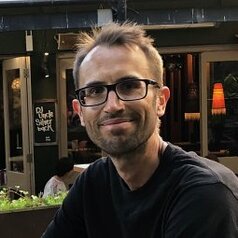
Lecturer in Sport Development, Western Sydney University Andy Grainger is a lecturer in Sport Development, Leisure, and Recreation at Western Sydney University. Prior to Western Sydney, he was a lecturer in Sport Sociology and Sport Development at Massey University in Aotearoa New Zealand. Andy’s research and teaching focuses primarily on the globalisation of sport and the impact of neoliberal ideology and practices on local physical cultural meanings and practices. His current research explores the intersections of sport policy, sport diplomacy, and women’s football in Aotearoa New Zealand. Andy is a co-editor, with Adam Beissel, Verity Postlethwaite, and Julie Brice, of the forthcoming collection ‘The 2023 FIFA Women's World Cup: Politics, Representation, and Management.'
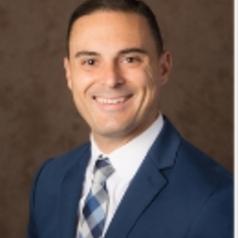
Associate Professor of Sport Leadership and Management, Miami University Dr. Adam S. Beissel is an Associate Professor of Sport Leadership and Management (SLAM) at Miami University (OH). Adam’s research and scholarship interrogates the political economy of international sport events and the geopolitics of sport. In 2023, he published an edited monograph, The 2023 FIFA Women's World Cup: Politics, Representation, and Management in the Routledge Series on Women, Sport, and Physical Activity. The collection features chapters from leading international scholars and explores a range of issues as the world prepares for the 2023 FIFA Women’s World Cup.
Assistant Professor of Anthropology, Bowdoin College William Lempert is an Assistant Professor of Anthropology at Bowdoin College in Brunswick, Maine. He has conducted over two years of ethnographic fieldwork since 2006 in the Kimberley region of Northwestern Australia with Indigenous media organizations. Through collaboration on production teams, he aims to understand the stakes of Aboriginal self-representation embedded within the dynamic process of filmmaking. His research engages tensions between the production of films that vividly imagine hopeful and diverse Indigenous futures, and the broader defunding of Aboriginal communities and organizations. This ethnographic research informs his current work on how critical engagements with settler-colonial histories and Indigenous futurisms can help to reimagine the current era of outer space colonization.
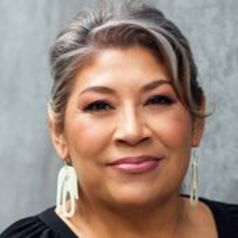
Professor of Native Studies, University of Alberta Kim TallBear, author of Native American DNA: Tribal Belonging and the False Promise of Genetic Science (2013), is Professor in the Faculty of Native Studies, University of Alberta. She is also Canada Research Chair in Indigenous Peoples, Technoscience, and Society. In addition to studying genome science disruptions to Indigenous self-definitions and the colonial ethics historically of genomic and other physical sciences, Dr. TallBear studies colonial disruptions to Indigenous sexual relations. She also studies and promotes Indigenous scientific and cultural challenges to settler-colonial study and objectification of Indigenous populations and our social and cultural practices. You can follow her research group related to Indigenous science, technology and society (Indigenous STS) at https://indigenoussts.com/ that she co-founded with her Faculty of Native Studies colleague, Assistant Professor, Jessica Kolopenuk. TallBear has published research, policy, review, and opinion articles on a variety of issues related to science, technology, environment, sexualities, and Indigenous peoples in academic and popular journals including Wicazo Sa Review, Social Studies of Science; Science, Technology, & Human Values, Journal of Law Medicine & Ethics, Journal of Research Practice, Indian Country Today, Buzzfeed, and High Country News as well as in edited volumes published by University of Chicago Press and Routledge . Dr. TallBear co-founded and co-produces the sexy storytelling and cabaret show, Tipi Confessions, with McMaster University professor Tracy Bear (Nehiyaw’iskwew from Montreal Lake Cree Nation), and with Native Studies PhD student Kirsten Lindquist (Cree-Métis). Tipi Confessions is an offshoot of the popular Austin, Texas show, BedPost Confessions. After seeing the success of the Tipi Confessions show in Edmonton and across Canada, TallBear, Bear, and Lindquist founded a research-creation group, Re-Lab: Restory, Research, and Reclaim, in which faculty, students, and community members produce creation informed research and research informed creative works and performance. Kim TallBear is a citizen of the Sisseton-Wahpeton Oyate in present-day South Dakota and is also descended from the Cheyenne & Arapaho Tribes of Oklahoma, where she is also eligible for citizenship. TallBear "immigrated" across the settler-imposed border between the "USA" and "Canada" in 2015. In reality, she only moved across vast territories inhabited by her Peoples and ancestors for millennia. In addition to the aforementioned Indigenous nations, TallBear has ancestry among Cree, Métis, and Anishinaabe Peoples. But since ancestry alone is not a claim, she would never assert that she is more than a distant relation to individuals among those Peoples. She is grateful to be living now in amiskwaciy-wâskahikan (Edmonton), Treaty 6 territory, a traditional gathering place for diverse Indigenous peoples including Cree, Blackfoot, Métis, Nakota Sioux, Iroquois, Dene, Ojibway/ Saulteaux/Anishinaabe, Inuit, and many others. Dr. TallBear tweets @KimTallBear. You can read her regular pre-academic essays/posts on her Substack newsletter, Unsettle: Indigenous affairs, cultural politics & (de)colonization. Dr. TallBear is also a regular panelist on the weekly podcast, Media Indigena, which is hosted by Rick Harp.
Professor of World Arts and Cultures/Dance, University of California, Los Angeles Dr. David Shorter is a tenured professor at UCLA, where he has taught “Aliens, Psychics, and Ghosts” for over a decade. He has been researching how science helps and doesn’t help us understand the paranormal. He is also the Director of the Archive of Healing, having been raised by a curandera, and learning with healers in Indigenous communities as well as in Japan. Most recently, Dr. Shorter has been named the Editor in Chief for the American Indian Culture and Research Journal, a leading scholarly journal in the field of Indigenous Studies. He has published scholarly essays in anthropology, Indigenous Studies, and the history of the sciences. He has produced films, created digital content, and curated art exhibits.