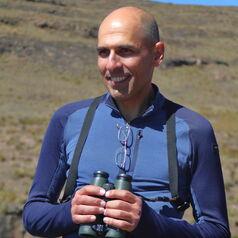
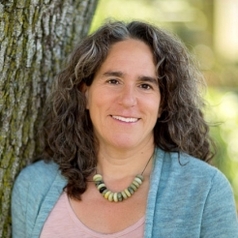
Full Professor in the Department of Biological Sciences, University of Eswatini Ara Monadjem is Full Professor in the Department of Biological Sciences at the University of Eswatini, Eswatini, where he has been lecturing in zoology since 1993, and a fellow of the Mammal Research Institute in the Department of Zoology & Entomology at the University of Pretoria, South Africa. Raised in Eswatini, his research has taken him across much of Africa, and has included ground-breaking expeditions to largely undescribed regions in countries such as Liberia and Mozambique. His academic interests centre upon ecology and conservation, with a special focus on small mammals. He has published over 160 scientific articles, and among his eight books is the landmark Bats of Southern and Central Africa, also published by WUP. In his spare time, Ara enjoys bird watching and cycling.
Postdoctoral research fellow, Hebrew University of Jerusalem Dr. Eden Kamar is a postgraduate in the Evidence-Based Cybersecurity research group at Georgia State University. She received her Ph.D. in criminology specializing in cybercrime and cybersecurity, at the Hebrew University of Jerusalem and Her MPhil in Criminological Research from the University of Cambridge (UK). Her research focuses on cybercrime and cybersecurity, namely, technology-facilitated sexual abuse of minors, phishing attacks, dark markets, malicious codes, and information system vulnerabilities. In her research, she employs innovative approaches and rigorous methods, including but not limited to honeypots, open source intelligence, digital forensics, and experiments, to understand different types of cybercrime, cybersecurity vulnerabilities, and cyber victimization.
Assistant Professor of Finance, Arizona State University Christoph Schiller’s research examines the transmission of information, risks, and regulations in firm networks around the world and the implications for firms and investors. His recent work focuses on the financial risks of climate change and adaptation in global supply chain organizations, and the role of supply chain relationships for firms’ Corporate Social Responsibility performance. He is an assistant professor in the Department of Finance.
Associate Professor of Anthropology, Binghamton University, State University of New York Rolf Quam is a paleoanthropologist whose research focuses on evolutionary aspects of the temporal bone, mandible and teeth in our fossil human ancestors. In particular he has been actively involved in reconstructing the hearing capacities in fossil humans. This marks the first time that an aspect of sensory perception has been reconstructed in our fossil human ancestors, and this line of research represents a new approach to one of the oldest questions in human evolutionary studies: the emergence of language. He also participates in the ongoing fieldwork being carried out at the Pleistocene locality of Atapuerca in northern Spain. These sites contain some of the richest human fossil bearing deposits in the world and have recently yielded the oldest human fossil ever found in Europe. During the course of his research, he has personally studied a wide diversity of original human fossils from Europe, the Middle East and Africa.
Doctoral Candidate in Anthropology, Binghamton University, State University of New York I am a doctoral candidate studying paleoanthropology at (SUNY) Binghamton University in New York with a primary research focus on why our own species and the Neandertals evolved. My research has focused on the mandible bone to identify prehistoric human species and also make inferences on how factors of behavior, diet, and climate can influence the morphology of this bone through evolutionary time. My research interests are in human paleobiology, evolutionary morphology, and mandibular biomechanics.
Visiting Scholar, Social Science Environmental Health Research Institute, Northeastern University, Northeastern University Rudel’s research has been conducted in collaboration with co-investigators at Harvard University, Brown University, Tufts University, University of California, Berkeley, University of Florida, the U.S. Geological Survey, and the U.S. Centers for Disease Control. She has an appointment as a Research Associate in the Department of Pathology and Laboratory Medicine at Brown and is currently serving on the US EPA’s Scientific Advisory Committee on Chemicals for TSCA. Rudel leads the Silent Spring Institute’s exposure and toxicology research programs focusing on endocrine active chemicals and on mechanisms by which chemicals may influence breast cancer risk. Her work in toxicology includes a review of early life exposure to chemicals that alter mammary gland development and implications for testing protocols and risk assessment, published in Environmental Health Perspectives. She also directed a major review of animal mammary gland carcinogens—published in Cancer in 2007—that compiled existing research on these carcinogens, reviewed key issues in study design and animal models, and synthesized information on exposure opportunities. Building on these findings, her 2014 review in Environmental Health Perspectives identifies methods for detecting metabolites of 100 prevalent mammary carcinogens, for use in biomonitoring and in breast cancer cohort studies. She has published on toxicology and risk assessment for metals, indoor air pollutants, and endocrine disruptors. Rudel earned her B.A. in chemistry and neuroscience from Oberlin College, and an M.S. in environmental management and policy from Tufts.