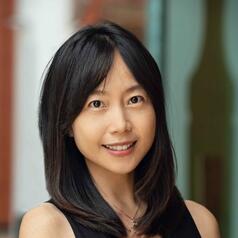
Associate Professor of Learning Sciences and Technology Design in Education, Stanford University My academic career has examined the future possibilities for STEM Education that could be made accessible in current learning spaces. This has involved research and design work that has been in school, libraries, museums, online, and at home. I have been recognized with the three top distinctions in my field for early career research (NSF CAREER Award, National Academy of Education/Spencer Foundation Fellowship, and the AERA Jan Hawkins Award). Currently, I serve as president of the International Society of the Learning Sciences.
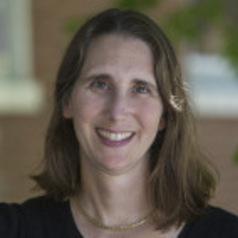
Assistant Professor of Learning Sciences & Technology, University of Michigan Ying Xu's research stands at the intersection of education, psychology and human-computer interaction, focusing on the design and evaluation of technologies that promote language and literacy development, STEM learning and wellbeing for children and families. Xu’s current projects center on the education applications of artificial intelligence, in particular, natural language processing and speech technologies. She explores how these conversational technologies play the role of social partners or learning companions for children. Xu’s research also aims to identify and actively challenge biases inherent in AI technologies used for educational purposes, with the goal of making these technologies more responsive and responsible to children, parents, and teachers from diverse backgrounds.
Professor of Natural Sciences, Bowdoin College Professor Rachel Beane of Bowdoin College holds an endowed chair as the Anne T. and Robert M. Bass Professor of Natural Sciences in the Department of Earth and Oceanographic Science and has been honored with the Bowdoin College Sydney B. Karofsky teaching prize for her “ability to impart knowledge, inspire enthusiasm, and stimulate intellectual curiosity.” She is also the recipient of the National Association of Geoscience Teachers (NAGT) Neil Miner teaching award for “exceptional contributions to the stimulation of interest in the Earth Sciences.” Prof. Beane is a geologist who interprets processes that have shaped our Earth. She has conducted mineral, volcanic, and tectonic research in New Zealand, Russia, Kazakhstan, Greece, western U.S., and Maine, with grant funding from the National Science Foundation (NSF) and Bowdoin. Her approach is to use mineral compositions and textures to interpret solid earth processes using a combination of methods including field work, light microscopy, and scanning electron microscopy (EBSD, CL, EDS, and BSE). She is a fellow of the Geological Society of America. Prof. Beane served as the college’s associate dean for Academic Affairs (2016-20) focusing on faculty development and mentoring. She co-developed and led workshops for faculty search committees with an aim to mitigate bias and broaden faculty diversity. She led a committee that designed mentoring structures to enhance faculty support. She guided the college’s departments and programs to develop learning goals and co-chaired the educational effectiveness standard for the college’s reaccreditation. She also served as Acting Director of the Baldwin Center for Learning and Teaching. She currently chairs Bowdoin's Council of Mentors. She leads national professional development workshops for science educators through the National Association of Geoscience Teachers and On the Cutting Edge, an NSF funded project focusing on geoscience faculty development. She was the lead convener for the annual Workshop for Early Career Geoscience Faculty: Teaching, Research, and Managing Your Career – a five-day workshop for 70 faculty from institutions across the U.S. emphasizing strategic planning and a holistic approach to career development. More recently she has led workshops on "Building Strong Departments" and "Supporting the Success of All Students."
Associate Professor of Hematology and Oncology, Penn State Dr. Monika Joshi’s research focus is in the field of genitourinary tumors, particularly in the field of immunotherapy and targeted therapy. Dr. Joshi developed clinical and translational expertise in genitourinary malignancies. This experience has positioned her to undertake several innovative clinical trials with multiple collaborations and national participation. She is the disease team co-leader for the genitourinary diseases group at Penn State Cancer Institute. In addition she holds regional and national leadership roles as the co-chair for the genitourinary committee for the Big Ten Cancer Research Consortium and is also as a representative for the Pennsylvania Governor's Advisory Panel on Genetics and Genomics. Dr. Joshi has a keen interest in developing clinical trials with novel immunotherapeutic combinations and identifying predictive and prognostic biomarkers.
Associate Professor of Pathology, Penn State My goal is to leverage my training and education in urologic oncology and translational research to facilitate discovery.
Associate Professor of Pathology, Penn State Joshua Warrick is a physician scientist who practices surgical pathology and studies the genomics of bladder cancer.