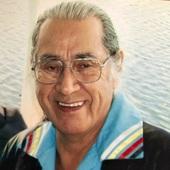
Emeritus Professor Philosophy, Deakin University Stan van Hooft is an Emeritus Professor of Philosophy at Deakin University in Australia. He is the author of Caring: An Essay in the Philosophy of Ethics, (Niwot, University Press of Colorado, 1995) and numerous journal articles on moral philosophy, bioethics, business ethics, and on the nature of health and disease. He is also a co-author of Facts and Values: An Introduction to Critical Thinking for Nurses, (Sydney, MacLennan and Petty, 1995). His Life, Death, and Subjectivity: Moral Sources for Bioethics, was published by Rodopi (Amsterdam and New York) in 2004. Stan published two further books in 2006: Caring about Health, (Aldershot, Ashgate), and Understanding Virtue Ethics, (Chesham, Acumen Publishers). Acumen Publishers published his Cosmopolitanism: A Philosophy for Global Ethics in July, 2009. This book was shortlisted for the Australian Eureka Prize for Research in Ethics in 2010. His current research centres on Global Ethics and Political Philosophy, the concept of caring in contemporary moral theory, and the role of hope in politics and religion. His book, Hope was published by Acumen in 2011 and his edited volume, The Handbook of Virtue Ethics, was published by Acumen (now Routledge) in 2014.
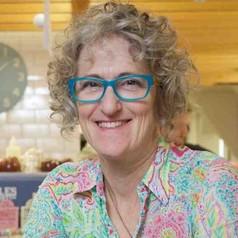
Professor of Health, Te Herenga Waka — Victoria University of Wellington Annemarie trained as a Nurse at l'Ecole d infirmieres in Nantes, France and has practiced in France, the US and now New Zealand. She left clinical work in 2000 to focus on sociological aspects of health and illness. Her ground-breaking work in the sociology of diagnosis focuses on how medical classification interacts with social and cultural interests. Her current interests are in the diagnostic moment and its narratives.
Professor of Psychological Science, University of Bristol An expert in the science of social connection and interaction, Michael has worked as a social neuroscientist for over ten years, producing over 100 publications that have been featured in many media outlets. He studies affection, communication, emotion, empathy, and touch. He has received awards from the British Psychological Society and the European Society of Cognitive Psychology for outstanding contributions to psychological research.
Plant Evolutionary Biologist, The University of Edinburgh The aim of my research is to understand the key innovations that enabled the conquest of the land by plants. In my group The Molecular Palaeobotany and Evolution Group we make the most of all available data to shed light on the origin and evolution of key innovations during plant evolution including evidence from fossils, studies of development from living species and comparative omics approaches. Using this interdisciplinary approach can shed light on the evolution of land plants in a way that would not be possible from isolated approaches alone. Current research interests: 400 Million Years of Food Transport in Plants: unearthing the origin, diversity and genetic toolkit of vasculature. Plants require an internal conducting network to transport food and water around their bodies. This conducting network is termed vasculature and consists of two tissues, water conducting xylem and food conducting phloem. The acquisition of these tissues during plant evolution was key for the origin of trees and crops from tiny moss-like ancestors. Despite the importance of the phloem for transporting sugars throughout plants we know almost nothing about its evolution or how it may respond to climate change. The aim for my fellowship is to study the evolution of the phloem over its 400 million year history.