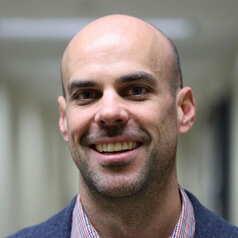
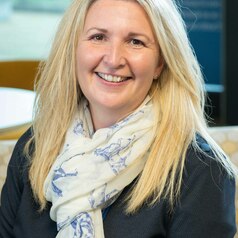
Professor of Anthropology, University of Minnesota Kieran McNulty is a professor of anthropology at the University of Minnesota, where he was awarded the McKnight Land-Grant Fellowship 2008, named Scholar of the College in 2017, and has received multiple teaching awards. His principal interests are in the evolution of apes and humans, pursued simultaneously through laboratory research on the morphogenesis of skeletal anatomy and through paleontological fieldwork in eastern Africa. Kieran conceived of and directs the NSF-funded REACHE project, a collaborative network that coordinates field research at all of the Early Miocene fossil ape sites in eastern Africa, working in close association with the National Museum of Kenya and Uganda National Museum. His research has been funded by the National Institutes of Health, Wenner-Gren Foundation, and Leakey Foundation. He also serves as (senior) associate editor for the flagship publication American Journal of Biological Anthropology.
Associate Professor of Geosciences, Baylor University Understanding the terrestrial ecosystem and its response to global climate change is critical for assessing the impacts of current and future climate change. However, we still know relatively little about the way terrestrial ecosystems actually respond to climate change. My research is focused on understanding how environmental change drives evolutionary processes in plants and animals. Specifically, my lab’s research is focused on reconstructing ancient climates and ecosystems through time in North America and eastern Africa, and on developing better and more accurate paleoclimate and paleoecological proxies. To do this we integrate methods in paleobotany, ecology, paleoclimatology, sedimentology, stratigraphy, and paleomagnetism. Results from this research address a broad spectrum of questions aimed at understanding the underlying dynamics of environmental, biotic, and climatic change through time.
Professor of Anthropology, University of Michigan I am a paleoanthropologist interested in understanding the relationship between biological form and function, with research foci on primate locomotor evolution, and hominoid (ape and human) origins. Most of my field work has been conducted at 19-21 million-year-old sites in northeastern Uganda, which record evidence of the earliest known fossil apes. The arboreal habitat of primates poses unique challenges, including substrate gaps and complex and unstable supports, which have led to the evolution of diverse forms of locomotion. Although humans are terrestrial, we still bear the hallmarks of prior arboreal specializations. A major evolutionary event among our hominoid relatives was the adoption of frequent upright postures (orthogrady) and suspensory (below branch) behavior from more monkey-like branch walking. These novel behaviors opened new niches, and selected for a body with a stable lower back that was (arguably) modified for habitual upright posture and bipedality in one hominoid group, the human lineage. The investigation of the locomotor adaptations of our ape predecessors, and the nature of their behavioral transitions, which also include dietary and body size changes, is a centerpiece of my research program. In order to test hypotheses generated from paleontological studies, I also study the locomotion of wild chimpanzees in the Kibale Forest, Uganda.
Chercheur en socioéconiomie (CERMi, ULB), Université Libre de Bruxelles (ULB) Chercheur en socioéconomie, membre du CERMi à l'Université Libre de Bruxelles et post-doctoral fellow de la Fondation AXA pour la recherche.
Assistant Professor, Interdisciplinary Studies, Carleton University Dr. Evelyn Namakula Mayanja is an Assistant Professor at Carleton University in the Institute of Interdisciplinary Studies. She teaches courses on Political repression and Human Rights. Her research focuses on natural resource extraction, peace, security and development in Africa. She received the SSHRC New Frontiers in Research Fund and the Insight Development Grant (2021-2025).
Senior lecturer| Professional Lead. School of Paramedical, Peri-Operative and Advanced Practice. Faculty of Health Sciences., University of Hull Registered to the Nursing and Midwifery Council (Adult Nurse; SCPHN; Community Practitioner Nurse Prescriber). Jayne began her career as a registered Adult Nurse in 1996, before progressing into Midwifery in 1999. Jayne's clinical practice then transitioned to become a Specialist Community Public Health Nurse (Health Visitor) in 2005. Jayne successfully qualified as a Practice Teacher (P.G.C.E.) in 2012. Jayne has an MSc in Health Studies (Leadership and Education). Jayne has been a Lecturer in the Faculty of Health Sciences at the University of Hull since 2017 and is a Senior Fellow of the Higher Education Academy. Jayne is a Fellow of the Institute of Health Visiting and iHV Perinatal Mental Health and Infant Mental Health Champion. She is actively involved as a steering panel member for the local Schwartz Rounds, which is a forum for healthcare staff to address personal, emotional and social challenges associated with working in Healthcare, and caring for patients. Jayne works directly with student groups from all levels of academic study alongside external partners to ensure the training and study delivered is of a high standard. Jayne has extensive experience and knowledge of designing, delivering, assessing and evaluating Programmes of study. Jayne is involved in the development and implementation of organisational policies, procedures and guidance, which reflects national standards of practice. Jayne has worked collaboratively with the Local Authority and Clinical Commissioning Groups to evaluate service provision for vulnerable community groups. This has led to further collaborations and service evaluations within the Acute Trust and within Primary Care settings.