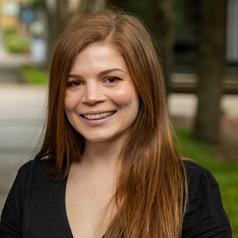
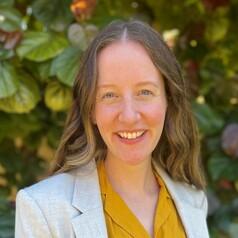
Post doctoral research fellow, Institute for Health & Sport, Victoria University Dr Patrice Jones is a Postdoctoral Research Fellow in the Genetics, Epigenetics and Exercise group at the Institute for Health and Sport (IHeS) Patrice's research interests are in examining biological differences in exercise responses and related epigenetic and metabolic processes. Her current work focuses on examining the effects of gender affirming hormone therapies on physiological and molecular measures of muscle health and performance in trans individuals. This work aims to advance our understanding of the functional impacts of GAHT and inform evidence-based exercise programs and guidelines aimed at improving physical activity in trans Australians Patrice completed her PhD in the area of nutrigenomics in 2020, at the University of Newcastle, and also undertook a predoctoral training fellowship at NIEHS/NIH (USA) in 2019 exploring the molecular effects of sex hormones in breast tissue. She has published 20 manuscripts (9 as lead author and 5 as second author), and two editorial letters (1 as lead author, 1 as second author).
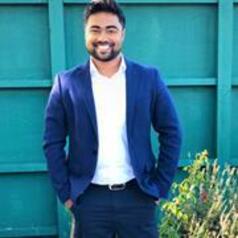
Senior Lecturer in Engineering, University of Waikato Kris is currently a Senior Lecturer in Civil Engineering at the University of Waikato (UoW). He obtained his PhD in Civil Engineering from the University of Auckland and masters in Earthquake Engineering from the Indian Institute of Technology Roorkee (IIT Roorkee). Before joining the UoW, he was a Lecturer at the University of Auckland. After the completion of his master’s degree, Kris spent one year working for Geodata Spa, one of the world’s leading engineering firms for underground structures. During this time, he specialized in tunnel portal design, steel construction, seismic design of steel structures, and the designing of underground structures. After obtaining his PhD degree, Kris spent a further two years at the Kiwi Steel Holding LTD as a Research and Development Manager before joining the University of Auckland as a Lecturer. Over the last 8 years, his research has continued to revolve around thin-walled structures, covering a wide range of topics, such as modular construction, built-up columns and beams, modal decomposition, cold-formed steel connections, cross-section optimization of single and built-up sections, numerical methods, stainless steel, aluminium structures, steel and aluminium claddings, corroded steel members, 3-D printed structures, durability of cold-formed steel members, weathertightness of metal claddings, design methodologies, general stability and inelastic buckling. Kris’s current research interests are fire performance of cold-formed steel structures, application of Artificial Intelligence and Machine Learning for the structural prediction of cold-formed steel members, sustainability and life cycle analysis of structures. More recently, he is developing environmental models for life cycle assessment of steel structures and working towards developing methodologies for calculating the Embodied carbon (carbon footprint) of different structural materials.
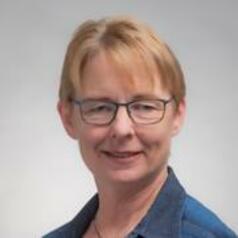
Researcher at the Institute for Evolutionary Medicine, University of Zurich Dr. Shevan Wilkin is an expert in ancient protein research, exploring subsistence through ancient human/animal/plant interactions.
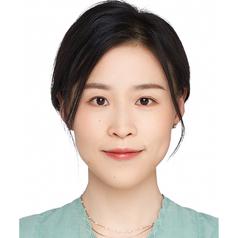
Doctoral researLi Tang is a doctoral researcher at the Max Planck Institute. Her current work investigates high-altitude adaptations of the dietary economy on the prehistoric Tibetan Plateau by the application of proteomics, isotope, and archaeobotany. cher, Max Planck Institute for the Science of Human History
Research Development Manager, Telethon Kids Institute Sarah Pillar is the Research Development Manager at CliniKids, at the Telethon Kids Institute. Her role revolves around the intersection between clinical and research work - getting research into clinical practice, and shaping clinical questions into research projects. Sarah is a Speech Pathologist by background and she developed a passion for supporting autistic children and their families through working directly with families in metropolitan and country WA. Sarah has been involved in a number of research projects at the Telethon Kids Institute, including CliniKids breakthrough research into pre-emptive intervention for infants, which supports the development of social-communication skills prior to the child receiving a diagnosis. Sarah was also a member of the team that developed Australia's first National Guideline for Supporting Autistic Children in Australia.