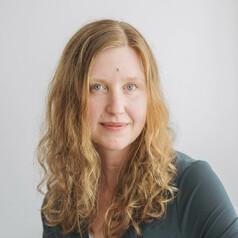
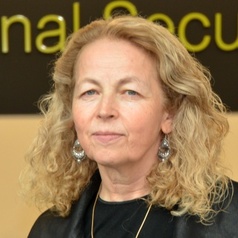
Lecturer in Interior Architecture, UNSW Sydney Demet Dincer is a lecturer in the UNSW Faculty of Built Environment, Interior Architecture Program. She received her B.Sc. in Architecture from Yildiz Technical University (2007) as the highest-ranking honour student and M.Sc. in Architectural Design from Istanbul Technical University (2010). She was enrolled in the Urban Design Program in TU Delft for her M.Sc. studies (2009). Demet went to Columbia University as a Fulbright Visiting Researcher for her doctoral studies (2013-14) and received her PhD from Istanbul Technical University (2016). She has worked as a post-doctoral researcher at IKEA x UTS Future Living Lab at the University of Technology Sydney (2018-19) and as an Assistant Professor at Istanbul Kultur University, affiliated with architecture and design studies. Most of her research has been funded by the Scientific and Technological Research Council of Turkey, and she has also been an executive board member of the Fulbright Alumni Association Turkey.
Senior Lecturer, School of Cybernetics, Australian National University Elizabeth Williams completed her PhD in experimental nuclear structure at Yale University in 2009. She completed post-doctoral work at Yale and CSIRO in Sydney, worked in nuclear reaction dynamics at the ANU, and began working with the ANU's 3A Institute (now within the School of Cybernetics) in 2018. Her current work aims to contribute to the creation of a new branch of engineering to help scale technology safely, responsibly and sustainably.
Adjunct professor, Flinders University Professor Anne-Marie Grisogono is a complex systems scientist and Adjunct Professor in the College of Science and Engineering at Flinders University. She holds a PhD in Mathematical Physics, and has worked in experimental and theoretical atomic and molecular physics, and lasers and nonlinear optics in various universities, followed by 20 years of applied R&D in the Defence Science and Technology Organisation (now DST Group), working on systems design, modelling and simulation, and future concept development and experimentation. Professor Grisogono led the development of DSTO’s Synthetic Environment Research Facility. Subsequently appointed Research Leader, she raised an enabling research program into complex systems science for defence, winning a prestigious DSTO Long Range Research Fellowship for 3 years. She worked closely with Army leaders to incorporate research results into their doctrine, operations, organisational design and reframing of their approach to strategic research and development planning. Professor Grisogono has held several national and international leadership roles within DSTO, in NATO and in The Technical Cooperation Program, in the fields of simulation, systems engineering and systems science, human sciences and complexity science. Professor Grisogono has delivered many keynotes, conducted workshops for the US Office of the Secretary of Defense (Personnel and Readiness), lectured at the US Army’s School of Advanced Military Studies, the Institute of Defense, the US Marine Corps Training and Education Command and the Potomac Institute. She was invited join the US Strategic Multilayer Assessment program, which supports the development of the US strategy in Afghanistan. Professor Grisogono has regularly taught at the Australian Defence College’s Command & Staff College, and the Centre for Defence and Strategic Studies, as well as many Army units. Professor Grisogono was appointed to the Australian Research Council’s College of Experts in 2013. In 2015 she joined the faculty of SigmaCamp, a unique US maths and science summer camp for gifted students, organised by researchers from SUNY (Stony Brook), Brookhaven National Laboratory and Harvard Medical School, teaching a course on wicked problems. Her current research interests include fundamental questions of complexity science and improving the methodologies and tools that can be applied to dealing with complex problems. She holds a Bachelor of Science (Hons) and a PhD from the University of Adelaide.
Emeritus Professor of Complex Systems Science, Crawford School of Public Policy, Australian National University Roger Bradbury leads the Strategy and Statecraft in Cyberspace research program for the National Security College at the Australian National University. He is a complex systems scientist, trained originally as a zoologist. His research interests lie in the modelling and simulation of the dynamics of coupled social and natural systems. In recent years he worked in the Australian Intelligence Community on the strategic analysis of international science and technology issues. He is particularly interested in cyberspace as a strategic domain. He was Chief Scientist in the Bureau of Resource Sciences in the 90s and leader of the Marine Systems Group and Deputy Director at the Australian Institute of Marine Science in the 80s. He is a Fellow of the CSIRO Centre for Complex Systems Science, and, in the past, has held adjunct positions at the Fenner School of Environment and Society, the Resource Management in Asia-Pacific Program (both at the ANU), the School of Integrative Biology at the University of Queensland, and the Faculty of Architecture, Building and Planning at the University of Melbourne.
Associate Professor, Media Arts & Production, University of Technology Sydney Alex Munt is a screenwriter/director and academic. He leads the Creative Practice Research Group in the Faculty of Arts & Social Sciences at UTS.