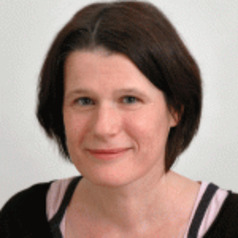
Professor of Microbiology, Boston University I have a long-standing research interest in studying highly pathogenic hemorrhagic fever viruses, including Ebola and Marburg viruses which belong to the filovirus family. Filoviruses cause a severe disease in humans with high case fatality rates. Due to the high pathogenicity of these viruses, they are classified as biosafety level 4 (BSL-4) pathogens. My lab studies different aspects of the filovirus infection cycle. One focus of our work is to dissect the mechanisms of filovirus genome replication and transcription with the goal to identify determinants of virulence. This includes work on Lloviu virus, a new member of the filovirus family, whose pathogenicity in humans is not known. Tools we use for this work include minigenome systems and recombinant viruses. Another focus of our research is centered around the host response to filovirus infection. To mimic the events in infected patients, we mainly use human primary cells for our infection studies. This includes macrophages and monocyte-derived dendritic cells isolated from blood, as well as human immune and liver cells generated from induced pluripotent stem cells (iPSC). The iPSC-derived infection platforms are developed in collaboration with tissue engineers at BU’s Center for Regenerative Medicine (CReM). We use these platforms to analyze the host response to filovirus infection, including inflammatory signatures, cell damage and antiviral defense mechanisms. The information we obtain from these studies will help us to determine virulence factors and identify targets for antiviral therapeutics.
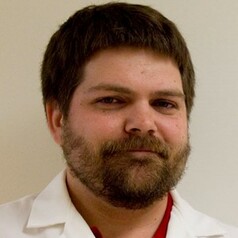
Research Assistant Professor of Microbiology, Boston University Which viruses a threat to human health? New viruses are being discovered at a rapidly increasing rate by virtue of next generation sequencing of wildlife samples, including many viruses closely related to some of the deadliest emerging and reemerging viruses. In just the last dozen years, 9 new filoviruses have been discovered, all with unknown pathogenic potential. One of my main research interests involves characterizing differential host responses to pathogenic viruses and closely related non-pathogenic viruses to both be able to assess the possible pathogenicity of novel viruses as well as to try to target host response pathways involved in these divergent responses as potential points of therapeutic intervention. My work focuses on some of the deadliest human pathogens, most notably filoviruses such as Ebola and Marburg viruses. Owing to the devasting disease and high mortality rates they cause, study of these viruses requires a Biosafety Level 4 (BSL4) laboratory such as the BSL4 facility we have at the NEIDL. Studying uncultured viruses One roadblock to the study of these new viruses related to highly pathogenic emerging and reemerging viruses is that most of these viruses have not yet been cultured. While creating recombinant viruses through reverse genetics approaches would seem to be a solution to this issue, a second barricade to these studies often prevents this: most viral genomes identified by next generation sequences lack terminal genomic sequences. These portions of the genome typically include sequences necessary for viral genomic replication and transcription, making rescue impossible in the absence of these sequences. Lloviu virus, a filovirus first discovered in 2011 by sequencing of bat carcasses found in caves in Spain in 2002, represents such a virus. While Lloviu virus was recently isolated from Schreibers bats in Hungary (Kemenesi et al., 2022), it had not been cultured previously and sequence was missing from both ends of the genome. Using reverse genetics tools, including a previously developed Lloviu virus minigenome system, we were able to complement missing genomic sequences and rescue recombinant Lloviu virus and begin to study this virus (Hume et al., 2022) prior to it being cultured. As with all filovirus work, these studies were performed in our BSL4 facility. Importantly, we are now comparing our recombinant Lloviu virus to see how well it mirrors wild-type Lloviu virus. If these viruses behave similarly, this could provide a new blueprint for rescuing and determining the pathogenic potential of many viruses which may pose a risk to human health should a spillover event occur. Human systems While animal models have undoubtedly provided important information with regards to viral pathogenesis and transmission, the fact that there are many antiviral drugs and therapies that have been shown to be effective in animals but not in humans has made the need to develop and use human systems to study virus-induced host responses and correlates of pathogenicity self-evident. To this end, my research is focused on using these systems, including human primary cells, primary-based human organoids, and induced pluripotent stem cell (iPSC)-derived cells and organoids to study viral replication and pathogenesis. Collaborating with tissue engineers including researchers at Boston University’s Center for Regenerative Medicine (CReM), we have begun to explore how viruses manipulate these systems. Using transcriptional and phosphoproteomic approaches to study these systems, we are uncovering key pathways necessary for viral replication, allowing for targeted small molecular inhibition of host pathways to block viral replication. Using viruses of differing pathogenicity, we hope to also identify virulence markers in order to assess the potential pathogenicity of novel viruses which have not yet been known to spill over to the human population.
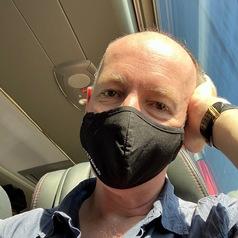
Professor of Computer Science, UMass Lowell I am Associate Dean for Teaching, Learning and Undergraduate Studies at UMass Lowell. I am interested in a collection of themes around what I call “Engaging Computing”: - Engaged computing means computational processes that are engaged with the world—think embedded systems. I’m creating computationally-active, physical-media design environments for an unusual set of users, including children, artists, and other non-engineers. - Engaging computing means the design processes that people use when they are creating, building, and debugging. I’m specifically interested in environments that allow people to perform ultra-rapid prototyping, to exploring their ideas by implementing them immediately, getting feedback from seeing them in action, and then iterating, repeating the process. A negotiational process rather than a planned one. I am also working on building novel tools and approaches for student to gain fluency with data. We’ve built the iSENSE collaborative data visualization platform, and a build of MIT App Inventor with extensions for publishing data to iSENSE. We are also working on CS Pathways, to integrate computer science into middle schools based on kids building apps for social good.
Associate Professor in Psychology, University of East Anglia Dr Martin Doherty joined UEA as an Associate Professor in Psychology in 2013. He studied physics for a year at Bristol before deciding Psychology was the way forward. After an MSc in Cognitive Science at Warwick, he took his PhD in Developmental Psychology at the University of Sussex, supervised by Professor Josef Perner. After postdoctoral work in Japan and Stirling, he worked as a lecturer in Stirling. His research interests include theory of mind, visual illusions, and children’s understanding of eye gaze.
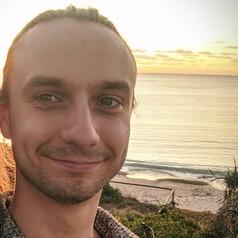
PhD Candidate & Tutor, Media Department, University of Adelaide After completing my double degree and my Honours in Media in 2015 I have been consistently employed as a casual tutor and course coordinator at the University of Adelaide across a range of Bachelor of Media subjects. In 2020 I commenced my PhD, aiming to look at the cycles of influences between awards shows, filmmaking industries, and their audiences. The working title is "Oscar Bait: Exploring Links Between Oscar's Identity and Perceptions of Oscar-Worthiness".