Professor Intelligence and Security Studies, Charles Sturt University Professor Patrick F Walsh is a Professor, Intelligence and Security studies at the Australian Graduate School of Policing and Security, Charles Sturt University, Australia. He consults to government and his research focuses on a range of intelligence capability issues including governance, leadership, intelligence and ethics, biosecurity, health security and cyber. He is the author of Intelligence and Intelligence Analysis, Routledge, UK 2011; Intelligence, Biosecurity and Bioterrorism, Palgrave Macmillan, UK, 2018; and Intelligence Leadership and Governance. Building Effective Intelligence Communities in the 21st Century, Routledge, 2020
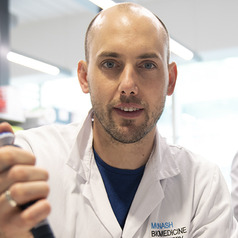
Lab Head, Biomedicine Discovery Institute, Monash University Rhys heads the Grinter lab at Monash University in the Biomedicine Discovery Institute. Originally from South Australia, Rhys earned his PhD from the University of Glasgow. He relocated to Monash University in 2015 working as a research fellow in labs Prof. Trevor Lithgow and A/Prof. Chris Greening, before founding the independent Grinter lab in 2021. Rhys has diverse interests in the molecular physiology of bacteria and has strong experience in applying a combination of structural biology, molecular cell biology and chemical biology to resolve important questions in this area.
PhD Student, Biomedicine Discovery Institute, Monash University Ash is a PhD student in the Grinter lab primarily working on elucidating the structure and function of the hydrogenases in Mycobacterium smegmatis. She completed her undergraduate, Honours, and Masters of Philosophy degrees at the University of Melbourne/WEHI, writing her thesis on the structural and functional role of specific human kinases that are involved in numerous cancers. In late 2019, Ash joined the Greening lab at Monash as a research assistant and then began her PhD in the Grinter lab in February 2022.
Lecturer, News & Media Research Centre, University of Canberra Jee Young Lee is a Lecturer at the Faculty of Arts & Design, University of Canberra. Her research focuses on social and cultural impacts of digital communication and technologies, including emerging digitally excluded social groups in developed communities, young people's digital engagement and growing technology adoption in emerging markets, such as Asia-Pacific regions, and its effects on individuals and societies. She is a core member of the data and editorial team of the Digital News Report: Australia. She teaches postgraduate and Honours-level Social Research Methods units.
Professor and Gerry Higgins Chair in Positive Psychology, Centre for Wellbeing Science, The University of Melbourne Professor Dianne Vella-Brodrick (PhD) holds the Gerry Higgins Chair in Positive Psychology and is Director and Head of Research at the Centre for Wellbeing Science at the Melbourne Graduate School of Education, University of Melbourne. She is the inaugural Director of the Master of Applied Positive Psychology program (2013 – 2015) and is a registered psychologist and a Member of the Australian Psychological Society and College of Health Psychologists. She founded the Positive Psychology Network in Australia and has previously served as Treasurer and Secretary of the International Positive Psychology Association (IPPA) and is currently on the IPPA Council of Advisors and was made an IPPA Fellow in 2019. Dianne has been an inaugural Editor in Chief of the Psychology of Well-Being:Theory, Research and Practice journal (2011-2016) and has Co-Directed the 2008, 2010 and 2014 Australian Positive Psychology and Well-being Conferences. She serves on numerous research advisory boards, regularly reviews scientific papers for leading journals and has received over $3 million funding for her research. Dianne’s research interests include the development and evaluation of well-being programs, particularly in the areas of positive education and performance optimisation. Her work draws on innovative mixed method designs which utilise the latest technology, experience sampling method and biological indices of well-being. Dianne served as the Ethics Chair at the Melbourne Graduate School of Education from (2014 - Feb 2020). She has been involved in the development of numerous well-being measures and programs including the Wuzzup and MoodPrism apps, the Wellbeing Profiler and more recently she founded the Bio-Dash wellbeing and optimal performance program (bio-dash.com).