Environmental Scientist, University of the Witwatersrand Prof. Mulala Simatele is an Environmental Scientist by training and specialized in Geographies of the Environment and Sustainability. He holds a DPhil in Environmental Management and Sustainability from the University of Sussex in the UK. Prior to joining Wits, Mulala worked for the University of St. Andrews in Scotland where he was part of the team which established the St Andrews Sustainability Institute. His main areas of research interest revolves around community based natural resource management with a special focus on water management, education for sustainability, climate change adaptation, environmental justice, environmental impact assessments, marine resource management and disaster risk management. In additional to academic engagement, Mulala is one of three technical advisors to the International Development Research Centre (IDRC) and the Australian Center for International Agricultural Research (ACIAR) on the Cultivate Africa Programme. He is also a board member for Hanell International and has diverse experiences working with policy related institutions notably on environmental management, climate change adaptation and environmental sustainability. Notable among these institutions include: The World Bank; The Scottish Environmental Think Tank, and the Ford Foundation. He has also served as an environmental consultant for different governments; the government of Bolivia; Botswana, Ghana, Jamaica, Kenya, Malawi, Namibia, Tanzania, Sweden, Zambia and Zimbabwe. He has also worked with various NGOs on environmental and climate change issues including community development. Mulala is very passionate about research and working with students from diverse backgrounds. Since arriving at Wits in 2013, he has successfully supervised 20 PhD students and over 80 Masters and honours students.
Lecturer/Research Scientist, University of Ghana Dr. Marian Selorm Sapah is a Lecturer and Research Scientist at the Department of Earth Science, University of Ghana. She obtained a Bachelor of Science degree in Geology from the University of Ghana and subsequently a Ph.D. in Earth Chemistry from The Australian National University, Canberra, Australia, as a trained Cosmochemist. As a Lecturer, she teaches courses in Geochemistry and Cosmochemistry, Geochemical analytical techniques, and Environmental geochemistry. Her main research interest is focused on investigating processes occurring in our Solar system by studying meteorite samples (i.e. rocks from space). Her other research interests and activities involve the application of geochemical tools in the exploration of mineral, water and oil resources, environmental monitoring, assessment and mitigation, and investigating the effects of Geology on public health. Marian is a published academic author whose work has been published in various peer reviewed journals https://www.researchgate.net/profile/Marian-Sapah. Marian is an active member of various professional organizations including the Ghana Institution of Geoscientists (GhIG), Meteoritical Society, Geological Society of Africa (GSAf), the Ghana Science Association (GSA), and the Organization for Women in Science for the Developing World (OWSD). She is also a founding member of the Africa Initiative for Planetary and Space Science (AFIPS) and a member and mentor of the Space Generation Advisory Council (SGAC). She is also currently a member of the selection committee for the Geochemical Society Capacity-Building Grant program. Dr. Sapah delights in mentoring and educational outreach. She wants to be able to contribute meaningfully to research and teaching endeavours in Ghana especially in the field of Planetary and Space Science. In her spare time, Marian enjoys spending time with family and friends, travel and sightseeing, sky gazing as well as crafting.
Research and Teaching Associate, Purdue University I am an applied economist focusing on and the interactions of climate change adaptation, disaster risk management, food security, and gender. I currently consult for the World Bank HQ and UN Food and Agriculture Organization. I was a Vulnerability Analysis and Mapping Officer at UN WFP Bangladesh office, and contributed in the Rural Sectors division of Katalyst, a market development based project. I obtained a PhD from the Department of Agricultural Economics, Purdue University, USA.
Postdoctoral Fellow in Microbiology, Colorado State University After obtaining a DVM, I started a postdoctoral training program at Colorado State University with a two year Clinical Microbiology Residency, followed by a research fellowship in translational science. Currently working towards a second graduate degree (PhD) in Microbiology.
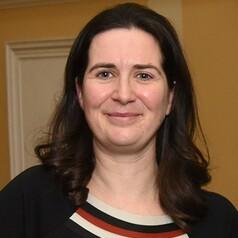
Senior Lecturer, RCSI Graduate School of Healthcare Management, RCSI University of Medicine and Health Sciences Niamh is a Senior Lecturer in the RCSI Graduate School of Healthcare Management. She has been researching health workforce issues for the past 17 years and currently leads a HRB-funded research project focused on hospital doctor retention and emigration.
Professor of Science and Technology Policy, UCL Jack Stilgoe is a professor of science and technology policy at University College London. He is the author of 'Who's Driving Innovation?' (Palgrave). He led the Driverless Futures project from 2018-2022, funded by the Economic and Social Research Council. This project was looking to anticipate the politics of self-driving cars. He worked with EPSRC and ESRC to develop a framework for responsible innovation, which is now being used by the Research Councils. Jack is also a fellow of the Alan Turing Institute. He previously worked in science and technology policy at the Royal Society and the think tank Demos.