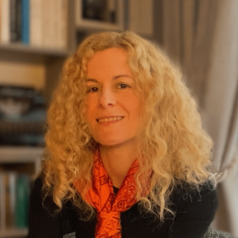
Research Associate Professor, National Centre for Scientific Research (CNRS), Université Paris 2 Panthéon-Assas Catharine Titi, Dr iur., FCIArb, is a tenured Research Associate Professor at the French National Centre for Scientific Research (CNRS) and the CERSA, University Paris-Panthéon-Assas. For more information, visit http://catharinetiti.com.
Reader in Astrophysics, Imperial College London At Imperial College London, Dr Clements carries out research into extragalactic far-infrared and submillimetre astronomy, space-based astronomy, the star formation history of the universe and dust in galaxies. He also studies ultraluminous infrared galaxies and the quasar-galaxy connection, and astrobiology in our own Solar System. He has won several awards for his research, including the ESO Fellow from European Southern Observatory in 1994, the Douglas Visiting Scholar at the Steward Observatory at University of Arizona in 1998 and the Gruber Prize for Cosmology from the Gruber Foundation in 2018. He is a fellow of the Royal Astronomical Society and a member of the American Astronomical Society (AAS). He also teaches undergraduate courses at Imperial College London.
Astronomy Group Lead, Space Operations Division at RAL Space and visiting fellow, The Open University Chris is the astronomy group lead in the space operations division at RAL Space. He combines astrophysics research with the development and operation of space missions. My PhD was in “Galaxy Evolution and Cosmology" at Imperial College London. After working in Japan for seven years on infrared space telescopes, he moved back to the UK to work for RAL Space, working on the SPIRE instrument that flew on the Herschel Space Observatory. He also works on the Ariel exoplanet mission and the Square Kilometre Array (SKA). The SKA is the largest scientific facility ever to be built. It consists of a giant array of radio telescopes built in the deserts of South Africa and Australia. On SKA, Chris manages two of the software teams that are developing something called the science data processor. This software will process the vast amounts of data that will come in once the telescope array becomes operational. The job at RAL Space allows Chris to participate in both astronomy research and the development of spacecraft missions.
Professor of Earth and Environmental Sciences, Northern Arizona University Darrell is a Regents’ Professor in the School of Earth and Sustainability. He has been researching the Quaternary geology and paleoclimatology of Alaska for over 30 years. He has a special interest in geochronology and in coordinating large collaborative science synthesis projects. His research group studies geologic records of environmental changes to understand how the Earth system responds to natural and anthropogenic forcings on millennial time scales. It focuses on lake sediments from Alaska, geochronology, and proxy climate syntheses.
Postdoctoral Research Associate in Climate Science, University of Arizona Ellie Broadman is a climate scientist who specializes in reconstructing past climate and environmental change using lake sediments, tree rings, and variety of field, laboratory, and data analytical methods. She is a Postdoctoral Research Associate in the Spatio-Temporal Interactions between Climate & Ecosystems Lab and the Laboratory of Tree Ring Research at the University of Arizona in Tucson.
Senior Lecturer, Clinical Microbiology, RCSI University of Medicine and Health Sciences Healthcare-associated infections (HCAI) are those that occur in patients receiving medical treatment in a hospital, long-term care facility or as an outpatient. These infections increasingly involve bacteria that are resistant to most antibiotics and are therefore difficult to treat. The organisms that represent the most risk to human health, and for which we have limited treatment options are the ESKAPE pathogens (Enterococcus faecium, Staphylococcus aureus, Klebsiella pneumoniae, Actinetobacter baumannii, Pseudomonas aeruginosa, Enterobacter Spp.). My main areas of interest are the molecular epidemiology, transmission and pathogenesis of HCAIs, particularly ESKAPE pathogens and Clostridium difficile. Our group explores how these aspects of HCAIs can underpin the development of more effective infection control strategies and novel anti-infective therapeutics.Past and current projects have investigated:The significance of the host immune response and bacterial virulence to the clinical outcome of bloodstream infections caused by S. aureus including methicillin-resistant S. aureus (MRSA).The patterns and transmission of antibiotic-resistance genes in Gram-negative pathogens that produce extended spectrum beta-lactamases (ESBL).The potential contribution of horizontal gene transfer within biofilms to the evolution of S. aureus.Detection and transmission of antibiotic-resistance pathogens such as Klebsiella pneumoniae and vancomycin resistant enterococci (VRE) in the clinical environment adjacent to patients.The effectiveness of targeted antimicrobial peptides and other novel agents, against specific infections involving antibiotic resistant pathogens such as MRSA (catheter-associated and wound infection), ESBL-producers (urinary tract and bloodstream infections)and P. aeruginosa (chronic respiratory infections) and infections involving multiple organisms (diabetic foot infections).