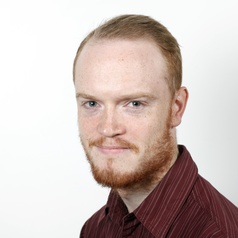
Lecturer in Law, City University London Dr Luke McDonagh is Lecturer in Law at City University. Before taking up this position in September 2015 he was a Lecturer at Cardiff University Law School from 2013-2015 and LSE Fellow in the Law Department at the London School of Economics (LSE) for the period 2011-2013. For the academic year 2014-15 he was a Visiting Scholar at Waseda University Law School, Tokyo, Japan. Luke holds a PhD from Queen Mary, University of London (2011), an LLM from the London School of Economics (LSE) (2006-7) and a BCL degree from NUI, Galway (2002-05). Luke's research primarily involves using empirical and theoretical insights to shed light on interesting (and sometimes controversial) aspects of intellectual property law, such as the interplay between property owners and users in free-sharing creative environments (such as those of theatre, open-source software and traditional music). His PhD research (2007-11) focused on the empirical analysis of the relationship between Irish traditional music and copyright using interviews and survey data gathered from traditional musicians. He recently completed an article - now published in The Modern Law Review - investigating copyright in the world of theatre, whereby I interviewed playwrights, directors and actors about the relationship between their theatrical practices and the norms of copyright. He also conducts quantitative and qualitative empirical research in the area of patent litigation. His latest article - on trade marks, brands and anthropological marketing - will be published in the Journal of Law and Society in December 2015. In the past he has written comment pieces for The Guardian and Dissent Magazine, as well as a number of law blogs. His research into the issue of patent troll litigation in the UK was cited in a House of Commons debate in March 2014: http://www.publications.parliament.uk/pa/cm201314/cmhansrd/cm140320/text/140320w0002.htm#14032098000031 He was also quoted in this February 2014 BBC article concerning copyright and piracy of satellite TV broadcasts http://www.bbc.co.uk/news/uk-england-london-26052012 He tweets at https://twitter.com/DrLukeMcDonagh
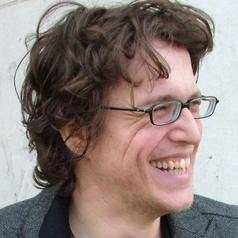
Lecturer (teaching and research), Cardiff University Andy Williams is a lecturer at Cardiff School of Journalism, Media and Cultural Studies. He was previously the RCUK Research Fellow in Risk, Health and Science Communication (2008-10). He has a number of research interests which intersect journalism studies and cultural studies. His current major research interests relate to news sources and the influence of public relations on the UK media, especially in the area of science, health and environment news. Andy has provided expert opinion and advice to a number of government bodies, media groups, and professional associations including the BBC, the Department of Business, Innovation and Skills, the Expert Group on Science and the Media, the National Union of Journalists, and the Welsh Assembly’s Broadcasting Subcommittee. He regularly contributes to the UK national and regional press and broadcast media (recent media input includes Times Higher Education, Nature News, the New Statesman, national BBC Breakfast News, the Guardian Unlimited, Press Gazette, OpenDemocracy, and BBC Wales television and radio news). In addition to this he is committed to disseminating research findings in a variety of other contexts: - he regularly carries out media training workshops across the UK with scientists who want to gain a deeper insight into how science journalism works; - he has formed partnerships with Bryncelynnog Comprehensive in Beddau (his old school), and Treorchy Comprehensive in the Rhondda, where he speaks to media studies and science pupils about his research; and - he has contributed lectures in collaboration with the University of the Third Age (U3A).
Senior Lecturer in Media and Communication, Bath Spa University Dr Matthew Freeman is Senior Lecturer in Media and Communication at Bath Spa University, where he is also Director of the Media Convergence Research Centre. He completed his PhD in Culture, Film and Media at the University of Nottingham and holds an MA and a BA (Hons) in Film and Television Studies, both from the University of Warwick. Before taking up his post at Bath Spa University in 2015, he taught at the University of Nottingham and in the School of Media at Birmingham City University. His research concentrates on cultures of production across the borders of media and history, writing extensively on the industrial history of transmedia storytelling. He has also published on such topics as media branding, convergence cultures, and methodological approaches to media industry studies. Matthew is the author of Historicizing Transmedia Storytelling: Early Twentieth-Century Transmedia Story Worlds (Routledge, 2017), Industrial Approaches to Media: A Methodological Gateway to Industry Studies (Palgrave Macmillan, 2016), and the co-author (with Carlos A. Scolari and Paolo Bertetti) of Transmedia Archaeology: Storytelling in the Borderlines of Science Fiction, Comics and Pulp Magazines (Palgrave Pivot, 2014). His research can also be found in journals such as The International Journal of Cultural Studies, Historical Journal of Film, Radio and Television, and International Journal of Communication.
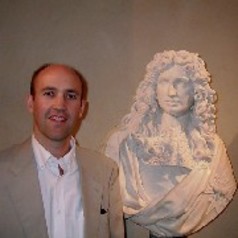
Professor of History, University of St Andrews Guy Rowlands’ research interests lie principally in late seventeenth- and eighteenth-century military, naval, financial and French history. His first book, The Dynastic State and the Army under Louis XIV. Royal Service and Private Interest, 1661 to 1701 (Cambridge University Press, 2002), used political, social, cultural and military approaches to examine how Louis XIV and his ministers were able to increase the size of the French army five-fold over a period of 30 years, and it stressed the importance of integrating the multiple private interests of noble families into calculations of how to organise the state. This book was co-winner of the Royal Historical Society’s Gladstone Prize in 2003. His recent work has been on early eighteenth-century financial history. His second book, entitled The Financial Decline of a Great Power. War, Influence, and Money in Louis XIV's France (Oxford University Press, 2012), places military paymasters and suppliers at the centre of an explanation of how and why the French state’s financial situation deteriorated dramatically during the War of the Spanish Succession. Louis XIV bequeathed a legacy of debt generated in this war to his successors that made an ultimate breakdown of government much more likely. The book focusses, as no book on early modern state finances has done before, on the full range of state financial activity – taxation, borrowing, monetary policy, the appropriations system and expenditure – to explain how things went so badly wrong. His third book, Dangerous and Dishonest Men: the International Bankers of Louis XIV’s France (Palgrave, 2014), follows up the previous study by looking at the extraordinary but damaging role played by foreign exchange and international bankers in France’s eighteenth-century troubles. At the start of the eighteenth century Louis XIV needed to remit huge sums of money abroad to support his armies during the War of the Spanish Succession. This book explains how international bankers moved French money across Europe, and how the foreign exchange system was so overloaded by the demands of war that a massive banking crash resulted. Prof. Rowlands is currently in negotiation with a major press for the production of a work of grand synthesis on “War and the State in the Early Modern European World”. He is planning a bid to funding councils for a major project on the emerging western European states, military power and the civilian contractors who serviced and supplied their armed forces in the period 1660-1730. In recent decades the defence establishments of the NATO powers have employed civilian contractors for logistical tasks on a very large scale once again, but there seems to be a real lack of appreciation that so many of these arrangements have been tried before, and particularly so once the state started to emerge in a recognisably modern form after the mid-seventeenth century. As part of this he is already working on another book on arms, artillery and absolute monarchy in Louis XIV’s France. In the longer term he is working towards a comprehensive, international history of logistics from the mid-17th century to the present day. Prof. Rowlands also has extensive interests in European international and transnational relations between the 1660s and the outbreak of the French Revolution (1789), and he maintains an interest in Jacobitism on the continent between 1688 and 1720.
Lecturer in Applied Geomorphology (Geography), University of Sussex John Barlow completed his BSc (hons) and MES at Wilfrid Laurier University. His honours and masters theses focused on mass movements along the Niagara Escarpment in Ontario. John received his PhD from the University of Calgary for research into the automated detection of rapid mass movements using digital data. Upon completion of his doctoral research, John did post doctoral work at both the University of Saskatchewan and Durham University. He joined the University of Sussex as Lecturer in Applied Geomorphology in 2011.
Emeritus Professor in Public Health, University of Sydney Simon Chapman AO PhD FASSA HonFFPH(UK) is Emeritus Professor in Public Health at the University of Sydney. He has published over 500 articles in peer reviewed journals and 19 books and major reports. His H index is 53 and he has over 10,500 citations. In 1997 he won the World Health Organisation's World No Tobacco Day Medal and in 2003 he was voted by his international peers to be awarded the American Cancer Society’s Luther Terry Award for outstanding individual leadership in tobacco control. In 2008 he won the NSW Premier’s Cancer Researcher of the Year medal; the Public Health Association of Australia’s Sidney Sax medal; and was a NSW finalist in Australian of the Year. He was deputy editor (1992-1997) then editor (1998-2008) of the British Medical Journal's, Tobacco Control and is now its Editor Emeritus. He was made an Officer in the Order of Australia in 2013 and was named Australian Skeptic of the Year His recent research involves examining policy how health and medical issues are covered in the news media; how people stop smoking unaided; the psychogenic aspects of wind farms and health; and characteristics of public health research (and its dissemination) which impact on public health policy.