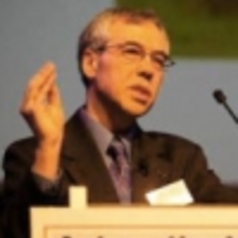
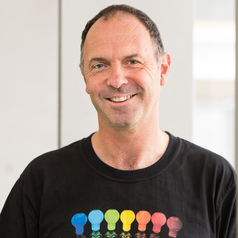
Paul Nieuwenhuis was born in the Netherlands and studied in Australia, Belgium, Spain and Scotland, where he obtained his PhD from Edinburgh University. After a spell in consultancy, carrying out projects for most of the world’s car and truck makers and acting as a special advisor on state aid in the automotive industry to the European Commission (DGIV), he joined the Centre for Automotive Industry Research (CAIR) at Cardiff University in 1990. CAIR specialises in the economic and strategic aspects of the world automotive sector, giving it a rare overview of the industry. The centre has attracted contracts from car manufacturers, suppliers and governments, world-wide. Here he also developed his special interest in the problems of making personal mobility compatible with the need for sustainability. In 2001 he became a founder member of the ESRC-funded Centre for Business Responsibility, Accountability, Sustainability and Society (BRASS) at Cardiff University. He co-created an innovative course in Motoring Journalism together with the highly regarded Cardiff University School of Journalism, Media and Cultural Studies and is also a director – in partnership with colleagues at the Cardiff School of Engineering – of the Electric Vehicle Centre of Excellence at Cardiff University.
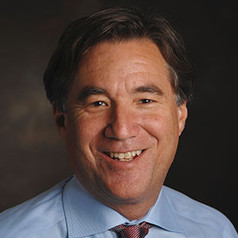
Katherine Levine Einstein joined the department in 2012 after receiving her Ph.D. in Government and Social Policy at Harvard University. Her research and teaching interests broadly include American public policy, racial and ethnic politics, political geography, and urban politics and policy. Her first book Do Facts Matter? Information and Misinformation in Democratic Politics (with Jennifer Hochschild) explores the harmful effects of misinformation on democratic politics. It will be published in 2015 (University of Oklahoma Press). Her current book project (supported by a Russell Sage Foundation grant) Divided Regions: Racial Inequality, Political Segregation, and the Splintering of Metropolitan America examines how America’s stark racial segregation creates politically divided metropolitan jurisdictions and consequent sharp metropolitan cleavages across a number of important policies. In addition, her work has been published or is forthcoming in Political Behavior, the British Journal of Political Science, and several edited volumes.
Eric Segall graduated from Emory University, Phi Beta Kappa, Summa Cum Laude, and from Vanderbilt Law School where he was the Research Editor for the Law Review and member of Order of the Coif. He clerked for the Honorable Charles Moye, Jr., Chief Judge for the Northern District of Georgia, and Albert J. Henderson of the Eleventh Circuit Court of Appeals. After his clerkships, he worked for Gibson, Dunn & Crutcher, and the United States Department of Justice, before joining the GSU faculty in 1991. Professor Segall teaches federal courts and constitutional law I and II. He is the author of the book Supreme Myths: Why the Supreme Court is not a Court and its Justices are not Judges. His articles on constitutional law have appeared in, among others, the Stanford Law Review, the UCLA Law Review, the George Washington Law Review, the Washington University Law Review, the University of Pennsylvania Journal of Constitutional Law, the Northwestern University Law Review Colloquy, and Constitutional Commentary. He has served on the Executive Committee of the AALS section on federal courts, and has given numerous speeches both inside and outside the academy on constitutional law questions and the Supreme Court. He appears regularly on the national XM Radio show StandUp with Pete Dominick talking about the Supreme Court and constitutional law.
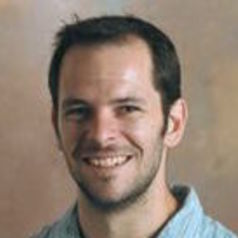
I am Henry Rutgers Term Chair in Data Science and Associate Professor in the Department of Mathematics and Computer Science at Rutgers - Newark. I am also affiliated with the Institute for Data Science, Learning and Applications (I-DSLA) and have appointments in Psychology, Rutgers Business School, and the Center for Molecular and Behavioral Neuroscience (CMBN) at Rutgers. I lead the CoDaS lab. The goal of my research is to bridge Cognitive Science and Data Science by understanding human perception and cognition and developing more cognitively natural machine learning and data science tools.
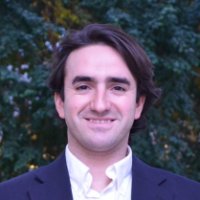
I only own 2 suitcases, a fully stamped passport, a small part of a start-up business and a college degree. I am passionate about building companies, marketing and learning foreign languages. I also code a little. Previously I worked for Barclays Accelerator and Techstars in London, UK. Went to Lund University in Sweden and Rollins in Florida, USA.
I am a Professor of Chemistry at the University of Melbourne. I am interested in nanoscale materials and the use of these novel materials in new technologies such as solar cells.