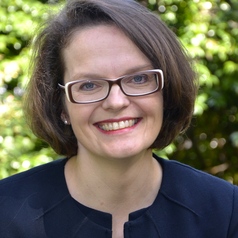
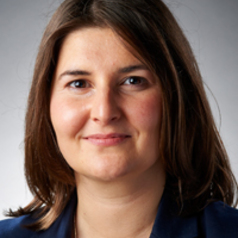
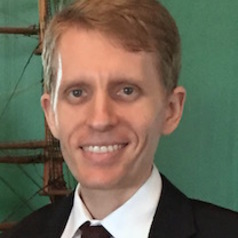
Principal Fellow, Faculty of Business & Economics/Melbourne Business School, University of Melbourne Prof Gabriele Suder is Principal Fellow at FBE/Melbourne Business School. She is expert at the European Union, UNCTAD and JETRO (IDE). She has also served as professor of International Business at SKEMA Business School and as visiting fellow or expert at other leading business schools including the Australian National University (ANU/ANUCES) and Aalto University, and for ESCP Europe, GGS and other leading universities. Gabriele is Director, International Relations, at the University of Melbourne, Australia. Her work has been presented at venues reaching from Harvard Kennedy School to the United States Congress, UNCTAD, OECD, WEF and the European Commission. She has been working with and advising multinationals (in particular, in the IT, automobile and engineering sectors) as well as numerous SMEs in this field, from the USA to India and China, from Finland to Japan and Australia. She is author of ten international business books, that have won several book awards. She is also author of award-winning case studies, media and research articles, and of the YouTube/DailyMotion video series 'Doing Business in Europe' and the iTunes series 'Multicultural Management'. Her main research interests focus on internationalisation, regionalisation/market integration impacts on corporate location strategy, LoF and public affairs management. She has published in media including Le Figaro, Business Week, The Japan Times and The Hindu, and speaks at live TV debates such as "Ce Soir ou jamais" (France 3). Professor Suder is known for her avant-gardist research into the impact of global crisis on international business strategy. She has conducted research projects studying the impact of terrorism, in Europe, the USA and Afghanistan.
Senior Lecturer in International Relations, University of Bath Prior to joining Bath in 2014, I was a Marie Curie International Fellow at the NCRE, University of Canterbury (New Zealand) and the University of Nottingham. During this time I conducted research on the various free trade agreement strategies of global economic powers in the region, and the effects of strategic competition on their strategies. Previously, I lectured at Birkbeck College, London and the University of Nottingham. I have been also been a visiting fellow at ANUCES, Australian National University, Monash University in Melbourne, the University of Salzburg and ULB in Brussels. My current projects include a book on the divergent free trade agreement strategies of large (China, USA, EU) and small economies (Singapore, Chile, New Zealand) in Asia-Pacific and their effects on the development of future economic governance in the region. Alongside Annick Masselot of the University of Canterbury, I am investigating Asian resistance to European norm promotion through free trade agreements. Research interests: International trade and economic governance EU-USA trade negotiations (TTIP) and Transpacific Partnership negotiations (TPP) EU-Asia, EU-China, EU-Australasia and EU-Latin America Relations Regional integration and inter-regionalism Societal impacts of trade agreements/ Values and trade International Political Economy
Assistant Professor of Psychology, Rose-Hulman Institute of Technology I’m a cognitive scientist and Assistant Professor of Psychology at Rose-Hulman Institute of Technology. I use computational models and behavioral experiments to study how people think and reason. My primary research interest is social cognition: how people think about other people. I am also interested in how people learn and use concepts, and how people revise their beliefs after seeing new evidence.
Executive Vice President for Academic Affairs and Provost, Binghamton University, State University of New York Donald G. Nieman, a historian whose specialty is law and race relations and civil rights in the United States, became dean of Harpur College of Arts and Sciences in 2008, after serving as dean of arts and sciences at Bowling Green State University in Ohio for eight years. An Iowa native, he is a Phi Beta Kappa graduate of Drake University. He earned his PhD at Rice University, where he developed a passion for teaching and research and a deep commitment to balancing discovery and mentoring. Nieman taught at Kansas State University, Hunter College, Brooklyn College and Clemson University before becoming professor and chair of the History Department at Bowling Green in 1994. He was promoted to dean there in 2000. He has authored two books and edited four others. In 1991, Oxford University Press published his book Promises to Keep: African-Americans and the Constitutional Order, 1776 to the Present, which has been called the first Afrocentric history of the U.S. Constitution.
Professor of International Relations, Keele University My research and publications cover two interrelated strands- the first relates to the social and political history of the post-WWI settlements; and the second to contemporary issues and political economy of resources in Eurasia. Through my work I have set out to marry macro historical analysis with contemporary micro dynamics of political economy by employing a 'globalist' perspective. Since the outbreak of global financial and economic crisis in 2007-08, I have been writing on the historical/ long-term origins of the crisis and the overall structure of the global economy, using a particular perspective which can be described as the ‘global shift model’. My recent book, The Fall of the US Empire: Global Fault-Lines and the Shifting Imperial Order (co-authored with Vassilis Fouskas), Pluto Press, 2012, is a good example to this, analysing the changing balance of global power, the hegemonic shift from the global "West" to the global "East/ South". The decline of the US hegemony, the rise of China and other Emerging Powers, and the nature of contemporary global economy are issues of paramount importance for understanding HOW THE WORLD WORKS, the current crisis and Where Do We Go from Here. I joined Keele in 1996 from Wolfson College, Cambridge, where I had been a postdoctoral Research Fellow for the previous three years. Before coming to Keele, I taught at the Birkbeck College-London, University of North London, and at the University of Cambridge. I am the founder and the Managing Editor of the Journal of Global Faultlines. My books include The Politics of Caspian Oil by Palgrave in 2001; Eastern Europe Since 1970 by Longman in 2005 (second edition in 2006), The New American Imperialism: Bush's War on Terror and Blood for Oil, co-authored with Vassilis K. Fouskas, published by Greenwood Publishing Group in 2005; SOVIET EASTERN POLICY AND TURKEY, 1920-1991 by Routledge in 2006, Politics of Oil – A Survey, by Routledge in 2006; Unholy Alliance: Muslims and Communists in Post-Transition States (with Ben Fowkes) by Routledge, 2011; The Fall of the US Empire. , Global Fault-Lines and the Shifting Imperial Order, co-authored with Vassilis K. Fouskas, published by Pluto Press, June 2012. (GlobalFaultlines- interview)
Director of the Curtin Not-for-profit Initiative & Author of the National Disability Costing and Pricing Framework, Curtin University David Gilchrist is director of Curtin University's Curtin Not-for-profit Initiative. He is an accountant and an historian with over twenty years experience in the Not-for-profit and charitable sector in Australia and the UK. David has worked in government, not-for-profits and in commerce and researches and writes on governance, sustainability, outcomes measurement, accountability and reporting in the public and not-for-profit sectors. Currently David is chairman of Nulsen Disability Services, chairman of the Kimberley Individual and Family Support Association, he sits on the Australian Charities and Not-for-profits Commission Advisory Board and on the national Not-for-profit committee of Chartered Accountants Australia and New Zealand. He is also a member of the Australian Accounting Standards Board Academic Advisory Panel.