Professor of Music, Rice University A man whose music is described as “infectious, loud, and fun,” (Gramophone Magazine) and “fascinatingly strange,” (BBC Music Magazine) award-winning composer Arthur Gottschalk is Professor of Music Composition at Rice University’s Shepherd School of Music, where he founded and directed the school’s electronic music laboratories until 2002 and chaired the composition and theory department for 15 years. He was given the Meritorious Service Award by the Association of Rice Alumni in 2016, and in 2023 he was given the Presidential Award for Mentoring. Gottschalk’s early work as a studio musician led to his co-founding of Modern Music Ventures, Inc., a company which held a recording studio complex, a record production division, four publishing firms, and an artist management division, and for whom he produced records for the PolyGram and Capitol labels, among others. Still conducting occasional work as an expert witness and forensic musicologist in music business trials, Gottschalk serves as a judge for many prominent competitions, including the Marvin Hamlisch International Music Award, the Cintas Foundations Awards, the McKnight Fellowships, the Grawemeyer Award, and the Piazzola International Music Competition, among others. Gottschalk is a recipient of the Charles Ives Prize of the American Academy of Arts and Letters, annual ASCAP Awards since 1980, and has been a Composer-in-Residence at the famed Columbia/Princeton Electronic Music Center, the Piccolo Spoleto Festival, and a Visiting Artist at the American Academy in Rome. He received the Gold Medal and Record of the Year in Music Composition from the Global Music Awards, for his Requiem: For the Living, and was honored with a prestigious Bogliasco Fellowship, as well as the First Prize of the Concorso Internazionale di Composizione Originale of Corciano, Italy for his Concerto for Violin and Symphonic Winds. The Association of Rice Alumni honored him with their Meritorious Service Award, the highest honor given to a non-graduate of Rice University. In 2018, Gottschalk’s music was presented at Carnegie Hall by a group of Italian virtuosi; he was featured composer at the Thailand International Festival and was a Fellow at The MacDowell Colony. He was a featured composer at the 2019 China-ASEAN Festival in Nanning, China and guest clinician and composer for the 2019 International Trombone Festival. His work for baritone soloist, choir, and orchestra, Tebe Boga, was premiered in 2020 in Carnegie Hall’s Stern Auditorium. With his catalog now containing over two hundred compositions, his music is regularly performed domestically and overseas, with over 45 recordings on such labels as Navona, Crystal, Naxos, Amirani (Italy), and RMN Classics (United Kingdom). His orchestral works have been performed by the symphony orchestras of Charleston, New Jersey, Vienna, Bratislava, Galicia (Spain), Fargo-Moorehead, Indianapolis, Houston, Pacific, Atlanta, Thailand, Moscow, St. Petersburg, Guangxi (China), and more. His music is published by Subito Music, Shawnee Press, European American Music Distributors, the International Horn Society, Potenza Music, SMP Press, Alea Publishing, TrevCo Music, The Spectrum Press, and Delage Music (France). Now entering its second edition, Gottschalk’s book, Functional Hearing, is published by Routledge Press, a division of Taylor & Francis. He was a student of renowned American composers William Bolcom, Ross Lee Finney, and Leslie Bassett, and studied with Mario Davidovsky and Aaron Copland. Gottschalk explores the interstices between popular and art music, between the sacred and profane.
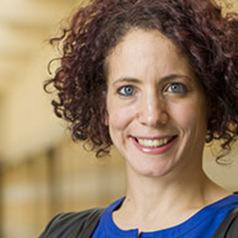
Professor of Biology, Framingham State University Dr. Liebert's research has focused on the behavior, ecology, and genetics of social insects. She currently works with undergraduates to better understand native pollinator communities in urban and suburban habitat. Dr. Liebert also serves as an advisor for students training to be high school biology teachers and as an advocate for campus sustainability.
Professor of Religion, Conflict and Peace Studies, University of Notre Dame Atalia Omer is Professor of Religion, Conflict, and Peace Studies at the Kroc Institute for International Peace Studies and at the Keough School of Global Affairs at the University of Notre Dame. She earned her PhD in Religion, Ethics, and Politics (November 2008) from the Committee on the Study of Religion at Harvard University. Her research focuses on religion, violence, and peacebuilding, Palestine/Israel, Jewish studies, decoloniality and religion, and religion and politics. She was a 2017 Andrew Carnegie Fellow resulting in Decolonizing Religion and Peacebuilding (Oxford University Press, 2023). Conversing with decolonial scholarship across multiple fields of study, this book examines, through an extensive empirical work in Kenya and the Philippines, how and why the practices of religion and peacebuilding/development both reinforce and exceed global structural, neocolonial, and epistemic forms of violence. The book traces why a consolidation of the industry of religion and peacebuilding (or the “harmony business”), in the intersection of neoliberalism and an orientalist security discourses, disempowers religious action at the same time that it empowers religious actors. It exposes another ironic insight: “more is less,” meaning that rather than enhancing religious literacy, the “harmony business” diminishes hermeneutical horizons. Even as a growing focus in the policy world on the “global engagement with religion” bills itself as a paradigm shift away from a secularist ignorance of the causal capacities of religious actors, meanings, networks, and institutions, this increased investment in “engaging” with religion is utilitarian. It focuses much more on function or doing religion or being religious as a matter of communal boundaries rather than on content or knowing religious traditions as living and contested sites of interpretations and reimagining. Yet, the decolonial and intersectional lens cannot obscure the existence of the multiple religious actors in the global South and their participation in projects of survival, which includes investing in interreligious and intercultural peacebuilding actions. Such religious actors generate decolonial openings regardless of being firmly grounded in closed rather than hermeneutically open or fluid accounts of their religiosity and communal narratives. They should not be theorized away. Analyzing their work offers an opportunity to rethink the study of religion, violence, and peace practices, their relevance to theory, and theory’s relevance to them. Omer’s first book, When Peace is Not Enough: How the Israeli Peace Camp Thinks about Religion, Nationalism, and Justice (University of Chicago Press, 2015) examines the way the Israeli peace camp addresses interrelationships between religion, ethnicity, and nationality, and how it interprets justice vis-à-vis the Palestinian conflict. This work scrutinizes the “visions of peace” and the “visions of citizenship” articulated by a wide spectrum of groups, ranging from Zionist to non-Zionist and secular to religious orientations. Omer’s second solo-authored book project, Days of Awe: Reimagining Jewishness in Solidarity with Palestinians (University of Chicago Press, 2019) explores why divergences in conceptions of national identity between “homeland” and “diasporas” could facilitate the proliferation of loci of analysis and foci of peacebuilding efforts which are yet under-explored both in peace studies and specific scholarship addressing the relations between diasporas and conflict. As a locally situated, distant issue movement, Jewish Palestine solidarity offers a grassroots critique and a transformative agenda for the local Jewish-American landscape while also critiquing Israeli policies and Zionist interpretations of Jewish identity. This book examines the intentional participation of this movement in intra-traditional work that seeks to provincialize Zion from Jewish identity and inter-traditional work that seeks to undo the intersections between Islamophobia in the U.S. and the marginalizing and silencing of lives in Palestine. Inter-traditional work is also examined as pivotal to the movement’s efforts to deconstruct the conflation of critique of Israeli policies with anti-Semitism. Likewise, the movement participates in a broader, intersectional solidarity analysis that connects Palestinian struggles with other sites of injustice, both locally and globally, from #BlackLivesMatter to protests against the wall between the U.S. and Mexico. Omer has also edited and co-edited multiple volumes including The Oxford Handbook of Religion, Conflict, and Peacebuilding (Oxford University Press, 2015). She has published articles in, among other venues, the Journal of the American Academy of Religion, the Journal of Religious Ethics; Soundings: An Interdisciplinary Journal; the Journal of Political Theology, the Study of Nationalism and Ethnicity, the International Journal of Peace Studies, Critical Sociology, Critical Theory of Religion, The Review of Faith and International Affairs, and Method & Theory in the Study of Religion. Omer was awarded an Andrew Carnegie Fellowship in 2017. She is also a Senior Fellow at Harvard Divinity School’s Religion and Public Life’s Religion, Conflict, and Peace Initiative. She was the recipient of a research fellowship from the Notre Dame Institute for Advanced Studies (Fall 2011), Charlotte W. Newcombe’s Doctoral Dissertation Fellowship (2007), and Harvard University Merit Fellowship (2006). She was a doctoral fellow at the Center for the Study of World Religions at Harvard University (2002-2004) and a Graduate Associate at the Weatherhead Center for International Affairs at Harvard University (2006-2008).
International Postdoctoral Fellow, University of St.Gallen Antje is a social movement scholar, ethnographer and International Postdoctoral Fellow at the Chair of Media and Culture at the University of St. Gallen. Her research focusses on transnational social movements and maritime civil society in Europe, investigating what it means to act politically beyond and outside of the nation-state in times of border-crossing challenges relating to migration, environmental issues and digital capitalism. Antje studies transnational resistance in different contexts. In the Human Error project, her particular focus is on how civil society actors build collective agency in the face of ever more present algorithmic decision making as well as questions regarding data justice, data feminism and the transnational alliances of civil society. In her current position as International Postdoctoral Fellow at the University of St Gallen, Antje also investigates ocean activism and what it means to act politically at sea, with a particular focus on civil sea rescue in the Mediterranean and marine environmental activism the European Atlantic.
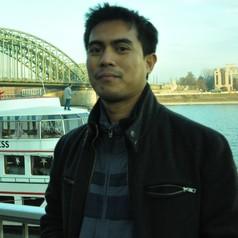
Lecturer, Universitas Islam Negeri Raden Intan Lampung Islamic Studies, Anthropology of Religion, New Media Technology, Popular and Visual Culture, Islamic Film.
PhD Candidate, Deakin University Aviya is an ecologist with an interest in ecosystem processes. Her research is cross-disciplinary, and her passion lies in bringing together researchers, land managers and communities to work towards common conservation goals. Aviya’s PhD at Deakin University focuses on understanding ecological interactions between mammals, plants, soils, and fungi. Her research explores how we apply this knowledge to conservation projects aimed at restoring ecosystem function.