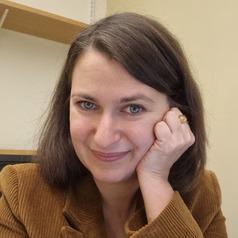
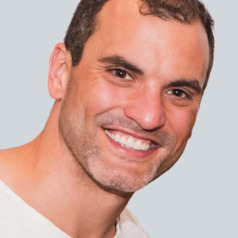
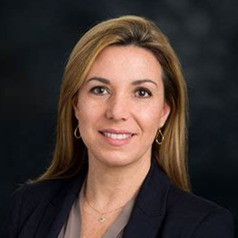
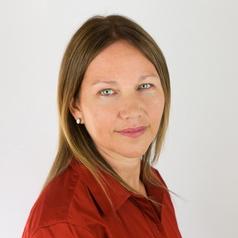
Associate Professor of Biology, University of Richmond A cell constantly alters the expression of its genes (and thus the proteins it makes) in order to respond to its environment or change its function. Gene expression can be modulated at many levels, from the birth of a messenger RNA (mRNA) to its destruction. Once it enters the cytoplasm, an mRNA can have various fates? it can be translated, translationally repressed, or degraded. The function of the mRNA is dictated by the proteins that associate with it to form an mRNP (mRNA-protein complex). For example, a translating mRNA associates with the ribosome, which will use the mRNA to make a protein. Alternatively, a non-translating mRNA associates with translational repressors or decay factors that sequester the mRNA from the ribosome or destroy the mRNA. The mRNP composition is dynamic, which allows the mRNA to move among translation, storage, or decay complexes. Dr. Hilliker's lab studies how mRNPs alter their composition to change the translatability of the mRNA. She uses budding yeast and a combination of genetics, cell biology, and biochemistry to understand how a cell determines the fate of an mRNA. This type of regulation of translation is important in all cells, but is especially important early in development, during stress, and in learning and memory.
Assistant Research Professor of Nutrition, Tufts University Anastasia Marshak’s research at Feinstein International Center aims to make humanitarian programming more appropriate and impartial by showing the value of and advocating for more data- and evidence-driven approaches. Her main body of work focuses on improving the field’s understanding of the drivers of malnutrition in complex contexts. As part of this she develops and applies improved methods to identify those drivers. Anastasia also supports improved programming in the areas of early marriage and the long-term impact of conflict on livelihoods and access to services applying a variety of methods, including program evaluations. Recently, Anastasia studied the effects of human rights abuses that took place during attacks on IDP camps in northern Uganda as part of a trial for the International Criminal Court (ICC). In addition to her research, Anastasia teaches introductory and intermediate statistics at the Friedman School. Anastasia has expertise in quantitative analysis, research design, and nutrition. Prior to joining Feinstein, Anastasia worked for the MIT Poverty Action Lab and the World Bank in Sierra Leone. She holds a B.S. in quantitative economics and international relations from Tufts University and an M.A. in economics from Boston University. She holds a Ph.D. from the Friedman School of Nutrition in the Food Policy and Nutrition Program, with a focus on humanitarian assistance.
Executive Director of the Immigration Policy Lab, Stanford University Adam received his PhD from the University of California, Berkeley, and he is an affiliated scholar at the Institute for the Study of International Migration at Georgetown University. He has published various studies on forced displacement, conflict, and evidence-based interventions in journals such as International Organization, the British Journal of Political Science, Political Geography, and Economics & Politics, along with media outlets like the Washington Post and Foreign Policy. Prior to joining IPL, Adam led research teams and projects for the humanitarian NGO Mercy Corps; served as a senior conflict advisor for the World Bank; taught courses on migration and conflict at Berkeley and Yale University; and worked as a research analyst for USAID’s Office of Transition Initiatives in Syria. His approach to research, leadership, and management is informed by his deep policy engagement and close collaboration with local researchers, non-profits, and displaced populations in more than a dozen countries.
Professor of Dental Medicine, University of Pittsburgh Dr. Ariadne Letra is a professor in the Departments of Oral and Craniofacial Sciences, Endodontics, and a member of the Center for Craniofacial and Dental Genetics. She is a dentist-scientist, with a certificate and MS degree in endodontics, and a PhD degree in oral biology. Dr. Letra first came to Pitt Dental Medicine as a postdoctoral fellow in 2006 and in 2009 became assistant professor in the Department of Oral Biology. Dr. Letra’s research focuses on understanding the cellular and molecular mechanisms underlying complex craniofacial and oral disorders and diseases. Her primary work involves gene discovery studies of cleft lip/palate, tooth agenesis, and apical periodontitis. By combining human genetics with in vitro and in vivo model systems, work from Dr. Letra’s group has elucidated numerous molecular players underlying these conditions. Another aspect of Dr. Letra’s work focuses on identifying shared genetic variants potentially contributing to oral health-systemic health connections. Her research has been funded by the National Institutes of Health, American Association of Endodontists Foundation (AAEF), and American Association of Orthodontists Foundation. Dr. Letra is a member of the American Association of Endodontists (AAE) and former chair of the AAE Research and Scientific Affairs Committee. She is a member of the American Association for Dental, Oral, and Craniofacial Research (AADOCR), International Association for Dental Research (IADR), American Dental Education Association (ADEA) in which she serves/has served on numerous committees and leadership roles. She is also a member of the American Association of Human Genetics (ASHG) and the European Society of Human Genetics (ESHG). Dr. Letra is associate editor for the Journal of Endodontics and is on the editorial board team of the Journal of Dental Research and the Journal Dental Research Clinical and Translational Research, as well as other scientific journals in the dental and medical fields. From 2011-2022, Dr. Letra was on faculty at UTHealth School of Dentistry at Houston Department of Diagnostic and Biomedical Sciences, Endodontics, and Center for Craniofacial Research.
Professor and Canada Research Chair in Gender, Work, and Care, Brock University Andrea Doucet is a Canada Research Chair in Gender, Work, and Care, Professor in the Department of Sociology and Centre for Gender and Women’s Studies at Brock University and Adjunct Research Professor in Sociology at Carleton University and the University of Victoria. She has published widely on care/work practices and responsibilities, fathering, parental leave policies, feminist and ecological onto-epistemologies, narrative analysis, research ethics, and genealogies of concepts. She is the Project Director and Principal Investigator of the SSHRC Partnership program, Reimagining Care/Work Policies and Co-Coordinator of the International Network of Leave Policies and Research.
PhD Candidate, Department of Sociology and Social Anthropology, Dalhousie University Alyssa Gerhardt is a PhD Candidate in the Department of Sociology and Social Anthropology at Dalhousie University. She is a mixed method researcher specializing in Economic Sociology. Her research examines the everyday experiences of people living with personal debt, and considers how debt is a factor shaping experiences of social inequality.