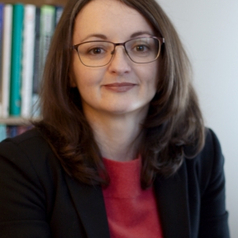
Lecturer in Economics and the Environment, The Open University I joined the OU Economics Discipline as a Lecturer in January 2022. Prior to that, I was Senior Editor at the journal Nature Sustainability before launch and during its first years. I've taught environmental policy, economics and methods since 2013, mostly at the Department of Land Economy, University of Cambridge, where I'm also Senior Fellow. I've published research on a range of sustainability policies from environmental and ecological economics perspectives, such as environmental and conservation programs in rural areas in Mexico and South Africa, deforestation drivers at large scales, peatland fires in Indonesia, and public policy for sustainable transport to industrial estates. I use a range of methods and tools, including R statistical language, Q methodology, econometrics, multi-criteria decision methods, Geographic Information Systems (GIS) and data visualisation. Research focused on challenges for implementation and effectiveness of environmental and sustainability governance across scales, particularly on two areas: understanding the diversity of views on controversial or conflictual issues, and the spatial variability of impacts. This includes adoption and diffusion of sustainable land-use practices, social implications of biodiversity indicators and drivers and motivations of behavioural change. I approach these questions using a pluralistic methodological approach. Topics include, among others, the social and economic implications of a large wetland restoration program in South Africa, the political economy of rural livelihood change in Mexico, discourses about peatland fire solutions in Indonesia, the adoption of sustainable agricultural practices in the tropical forest frontier, and multi-criteria evaluation of sustainable transport policies. Recent work includes analysing acceptability of waste-to-energy facilities (with Univ. of Basque Country), barriers for sustainable aquaculture certification (with Univ. of Tokyo), and the sustainability of post-pandemic recovery policies.
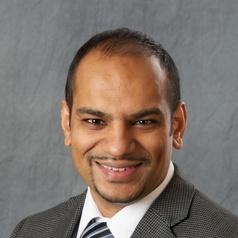
Visiting Fellow in International Climate Governance, Columbia University Mr Husain-Naviatti is a Visiting Fellow at Columbia University in the City of New York and Writer on international climate governance. He has over 25 years of international experience at the UN and World Bank on sustainable development in multiple field and development contexts. He was educated at Oxford (Musicology) and Columbia Universities (Economic Policy Management) He is an expert on multilateral governance in highly politicised development contexts, with particular interest in reconciling conflicting development and political objectives. He has high-level strategic and diplomatic experience in the UN as an intergovernmental convener, negotiator and relationship builder, and as a multilateral and interagency coordinator between UN member states, civil society, private sector and other institutions, on a broad range of sustainable development issues, led by governments. His previous career highlights include appointment as Secretary of the Advisory Commission on UNRWA (a Commission of the UN General Assembly), and Head of Secretariat for eight years. This was a senior management role at the heart of the Middle East conflict situation. He was noted for guiding divergently opposing viewpoints towards consensus on strategic, policy, operational and financial issues in a politicised and volatile context. He was previously appointed Senior Adviser to UN Secretary-General Kofi Annan on AIDS in the Executive Office of the Secretary-General, United Nations. This was the Secretary-General’s legacy issue, at a noted time of sea change in the international fight against AIDS, much being attributed to the Secretary-General’s leadership and Call to Action under Mr Husain-Naviatti’s management and coordination. His experience on climate change includes sustainable forestry in Latin America, coastal zone damage mitigation in the Pacific (an economic perspective linking with social challenges), water resources management in the Middle East (riparian agreements with peace and stability connotations) and a range of interagency climate change, environmental management and disaster response issues in the Philippines. He is also an International LEAD Fellow on Sustainable Development, which incorporated leadership training on climate governance and green energy. He currently holds select directorships including Barboteca Corporation on sustainable forestry in Central America, and is Chair of Directors of the Mylnhurst Group including the highest-achieving independent Preparatory School in the region, according to the Sunday Times ranking. He has recently published academic and policy commentaries on international climate governance through the Alternative Policy Solutions project under the auspices of the American University of Cairo among others and is a columnist contributor on climate to the Yorkshire Post. Mr Husain-Naviatti is married with two children. He is an avid pianist in his spare time, and lucky enough in his youth to have performed in concerts, on television in the UK and a tour of Japan in 1983. He was awarded an arts grant by Grotrian-Steinweg in the form of a full-size concert grand piano at the age of 16.
Associate Vice President for Research and Bighley Chair and Professor of Pharmaceutical Sciences, University of Iowa Dr. Aliasger Salem is the Associate Vice President for Research for the University of Iowa, Bighley Chair and Professor of Pharmaceutical Sciences and an elected member of the American Association for Pharmaceutical Scientists (AAPS) Board of Directors. Dr. Salem is Leader of the Experimental Therapeutics Program at the Holden Comprehensive Cancer Center and co-director of the Nanotoxicology core at the Environmental Health Sciences Research Center. He was educated in applied chemistry at Aston University of Science and Technology, Birmingham, UK (BSc 1998; 1st class honors). He received his Ph.D. in Pharmacy at the University of Nottingham, UK in 2002. He then received postdoctoral training at Johns Hopkins School of Medicine until 2004. He is an elected fellow of the AAPS, an elected fellow of the Controlled Release Society (CRS), an elected fellow of the American Association for the Advancement of Science (AAAS) and an elected fellow of the American Institute for Medical and Biological Engineering (AIMBE). His research interests are primarily focused on advanced drug delivery systems. He is the author of over 250 peer-reviewed scholarly publications and has published in journals that include Science Advances, Nature Nanotechnology, Nature Materials, Nature Reviews Urology and Science Translational Medicine. Dr. Salem regularly serves on international and national grant review panels for organizations that include the American Cancer Society, the National Institutes for Health (NIH), and the Department of Defense: Congressionally Directed Medical Research Programs. For example, he is currently a chartered member of the NIH Advancing Therapeutics study section. In 2020, Dr. Salem was awarded the Hancher-Finkbine Medallion and the Leadership in Research Award by the University of Iowa for life-time achievements in drug delivery research over his career to date.
Senior Research Associate, Global Biosecurity, UNSW Sydney Ashley is a Senior Research Associate with the Kirby Institute’s Biosecurity Program, led by Professor Raina MacIntyre. She is the Epi Team Lead for EPIWATCH, which is an open-source intelligence tool which harnesses the power of AI and open-source data to capture early epidemic signals globally and rapid epidemic detection, leading to the prevention of global spread. Prior to joining the Biosecurity Program, she managed a clinical research organization in Australia and has worked extensively on rapid diagnostic measures for infectious diseases, predominantly XDR and MDR-TB. She received her BSc, BSC Hons and MSc in South Africa.
Senior Lecturer in Politics, University of Bath Aurelien Mondon (he/him) is a Senior Lecturer in politics at the University of Bath. His research focuses predominantly on the impact of racism and populism on liberal democracies and the mainstreaming of far-right politics through elite discourse. His first book, The Mainstreaming of the Extreme Right in France and Australia: A Populist Hegemony?, was published in 2013 and he recently co-edited After Charlie Hebdo: Terror, racism and free speech published with Zed. Reactionary democracy: How racism and the populist far right became mainstream, co-written with Aaron Winter, was published with Verso in 2020. The Ethics of Researching the Far Right, co-edited with Antonia Vaughan, Joan Braune and Meghan Tinsley will be out in March 2024 with Manchester University Press. His work has been published in various mainstream and expert outlets around the world, including CNN, The Guardian, The Independent, Libération, Newsweek, Le Soir, Mediapart and Al Jazeera.