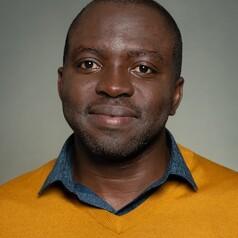
Lecturer in Global Agri-food Supply Chains, Newcastle University I am food and agricultural economist with an interest in food choice, carbon and animal welfare. I studied agriculture (agricultural economics major) at the University of Ghana in Accra. I moved to Saskatoon, Canada to study for an Msc degree at the University of Saskatchewan before joining the PhD program at the Department of Resource Economics and Environmental Sociology (REES), University of Alberta (U of A), in Edmonton. While at the U of A, I was an inaugural Teaching Fellow at the Peter Lougheed Leadership College. From Alberta, I moved down south to the University of Wisconsin-River Falls as Assistant Professor in 2017. In 2023, I joined the Applied Social Science Group at the Centre Of Rural Economy, Newcastle University, England as Lecturer (US- assistant professor rank) in global agri-food supply chains. My research focuses on understanding stakeholder incentives in the uptake of sustainable innovations in food supply chains, consumer decision-making pertaining to ethical food attributes and the design of emerging carbon offset schemes. I enjoy teaching and learning, and have designed and taught courses in leadership, food marketing, agribusiness management, trade and supply chains, and natural resource economics.
Professor of Political Science, University of Michigan Andrew Murphy joins the Political Science Department after appointments at Virginia Commonwealth University, Rutgers University, Valparaiso University, and the University of Chicago. His research takes up the intersections between politics and religion, in both historical and contemporary contexts. He is particularly interested in the emergence of religious liberty and liberty of conscience in early modern England and America, and the ongoing ramifications of these debates as they continue to unsettle American politics. In recent years, Murphy has focused on the life, career and political thought of William Penn, a figure who brought political theory and practice together in the early modern British Atlantic. He is the author of William Penn: A Life (Oxford, 2019) and Liberty, Conscience, and Toleration: The Political Thought of William Penn (Oxford, 2016); and co-editor (with John Smolenski) of The Worlds of William Penn (Rutgers, 2019). An edition of Penn's political writings, for the Cambridge Texts in the History of Political Thought series, appeared in 2021. His work on Penn continues the exploration of these topics begun in his first book, Conscience and Community: Revisiting Toleration and Religious Dissent in Early Modern England and America (Penn State, 2001). His more contemporary interests are reflected in his co-authored book (with David S. Gutterman, of Willamette University) Political Religion and Religious Politics: Navigating Identities in the United States (Routledge, 2015), and his Prodigal Nation: Moral Decline and Divine Punishment from New England to 9/11 (Oxford, 2008). He brings together historical and contemporary political reflection in “The Past and Present (and Future?) Politics of Religious Liberty,” The Forum 17 (2019): 45-67. Murphy's current research continues to bring together the political and the religious. His next project explores the concept of political martyrdom and the ways in which studying politically-charged deaths can help us make sense of the complex interplay of death, religion, politics, collective memory, and symbolic power.
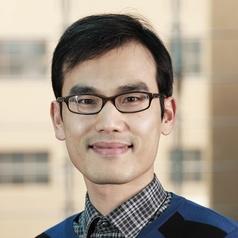
Associate Professor, School of Economics and Public Policy, University of Adelaide A/Prof. Alec Zuo is an applied economist specialising in agricultural, environmental, and resource economics. Alec’s research has addressed issues and questions that are fundamental to UN World Development Goals and Australian National Research Priorities. His research has contributed significantly to understanding the impact of climate change and resources on irrigation farming, farmer adaptation strategies, and market-based instruments for water resource management. His research has been published in leading international journals (e.g., Global Environment Change, American Journal of Agricultural Economics, European Review of Agricultural Economics, Energy Economics, etc.) and he has collaboration with researchers from over 20 organisations worldwide on agricultural, resource, environment and development issues across 11 countries in four continents. Alec has substantial experience in initiating and managing large research projects. His research has been funded by the Australian Research Council (currently an ARC Future Fellow), the Australian National Commission for UNESCO, the National Climate Change Adaptation Research Facility, the federal Department of Agriculture, Fisheries and Forestry, the Australian Centre for International Agricultural Research, the Australian Consumer & Competition Commission, and the Murray Darling Basin Authority.
Doctorant en Relations Internationales, Universitat Ramon Llull Doctorant en Relations Internationales à l'Université Blanquerna Ramon Llull de Barcelone, spécialisé dans les extrêmes droites au Parlement Européen.
Director, Centre for Human Rights Research and Distinguished Professor, History and Women's and Gender Studies, University of Manitoba Adele Perry is a settler historian who has been based at the University of Manitoba since 2000.
Director of the Jenner Institute, University of Oxford Adrian Hill is a Professor of Human Genetics at the Jenner Institute, University of Oxford. He trained in medicine at Trinity College Dublin and the University of Oxford, qualifying in 1982. He undertook a DPhil with Sir David Weatherall and John Clegg at the MRC Molecular Haematology unit on the molecular population genetics of thalassaemia in Pacific Islanders. Following further clinical posts in London he returned to the newly opened Institute of Molecular Medicine in 1988 to study genetic susceptibility to malaria as a Wellcome Trust Senior Fellow. In 1995 he was awarded a Wellcome Trust Principal Research Fellowship and in 1996 the title of Professor of Human Genetics. He participated in the founding of the Wellcome Trust Centre for Human Genetics in 1994, and in 2003 co-founded the Oxford Centre for Clinical Vaccinology and Tropical Medicine, which he now chairs. In 2004 he participated in the restructuring of the Edward Jenner Institute for Vaccine Research and in 2005 was appointed director of the new Jenner Institute. He is a Fellow of the Royal College of Physicians, of Magdalen College, Oxford, and of the UK Academy of Medical Sciences. Research Dr Hill’s detailed analyses of HLA polymorphism and malaria susceptibility in African children led to an interest in vaccine development, particularly assessing T cell-inducing vaccines against malaria. In murine studies he identified the enhanced T cell immunogenicity of non-replicating poxviruses as boosting agents in vaccination protocols. This led to phase I clinical trials of both DNA and MVA vaccines for malaria starting in 1999. His group showed the first T cell mediated protection of human vaccinees by using DNA-MVA and fowlpox-MVA prime-boost regimes against malaria. To achieve greater levels of protective efficacy his group is currently developing more immunogenic prime-boost regimes involving recombinant adenoviruses are priming agents and MVA as a boosting agent. This regime has shown excellent immunogenicity in pre-clinical studies in mice and macaques. More immunogenic vectored vaccines are being developed as part of a major grant from the Foundation for NIH and the Gates Foundation addressing one of the Grand Challenge in Global Health. In this work several internal adjuvants have been identified that enhance the immunogenicity of vectored vaccines. To avoid the problem of anti-vector immunity associated with use of common human serotypes of adenovirus as vaccine vectors, extensive studies of simian adenoviruses have been undertaken. This has led to the identification of a lead simian vector that entered phase I clinical trials in 2007 using the ME-TRAP insert. Studies of correlates of immunity in both vaccinated and challenges volunteers and natural immunity in field studies have identified memory T cells to TRAP as a correlates of immunity in humans and the TRAP antigen has been found to be more immunogenic for T cell induction in clinical trial of vectored vaccines than the circumsporozoite protein. Detailed studies of blood-stage antigens have shown that vectored vaccines can also induced substantial protection against blood-stage malaria when used in heterologous prime-boost regimes. This protection is mediated by high titre antibodies against the blood-stage as well as T cell immune responses against the liver-stage parasite. Clinical trials of blood-stage antigens in adenovirus and MVA vectors are planned for 2008 to evaluate this new approach. Prof Hill’s immunogenetics programme currently focuses on genome-wide association studies of bacterial diseases, particularly tuberculosis and pneumococcal disease, and he is a participant in the Wellcome Trust case-control consortium that aims to identify new susceptibility genes using large scale approaches.