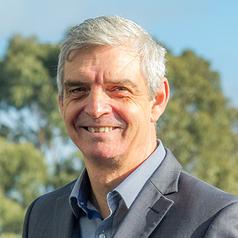
Lecturer in Management, Federation University Australia Alan Labas is a management lecturer in the Global Professional School, Federation University Australia. Alan’s research focuses on knowledge management with an emphasis on regional business advisory knowledge transmission. Specifically, he has examined the relationship between professional business advisor (PBA) knowledge and the knowledge transmission actions undertaken by such advisors when addressing the knowledge requirements of businesses. He has also collaborated on research in tourism, marketing, event management and circular economy solutions. Alan undertakes a practical application of the Critical Realist research paradigm to explain how human agency, social structures, and mechanisms interact in the process of causing an event.
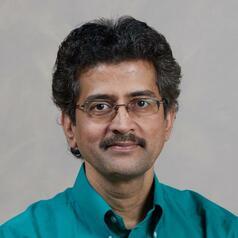
Professor of Physics, Clemson University Apparao Rao is currently the R. A. Bowen Professor of Physics and a former Associate Dean for Discovery in the College of Science. He is a Fellow of four prestigious societies: the American Physical Society and American Association for the Advancement of Science, National Academy of Inventors, and the Materials Research Society. He received his PhD in physics from University of Kentucky in 1989 and subsequently served as a post-doctoral research associate at MIT until 1991. Later, he joined University of Kentucky as a research assistant professor before coming to Clemson in 2000. His laboratory is dedicated to understanding the atomic, magnetic, electrical, optical, and biophysical/biochemical properties of micro- and nano-structured materials. Rao’s research interests include the characterization and applications of carbon nanotubes, semiconducting nanobelts, nanowires and thermoelectric materials. His group's strength lies in the ability to synthesize several nano-structured materials (using various growth techniques such as electrical arc, chemical vapor deposition and pulsed laser vaporization) and explore the fundamental physics in nanostructured systems (using a wide range of characterization techniques such as Raman scattering, infrared, UV-visible, fluorescence, non-linear optical spectroscopy, harmonic detection of resonance method, atomic force microscopy, electron microscopy and electrical transport measurements). Recently, his team has been developing energy harnessing and energy storage technologies, and he has served as the principle investigator on grants funded by NSF, NASA, SC EPSCoR and industry.
Professor of Human Resource Management, Newcastle University Alan was awarded his DPhil from Nuffield College, Oxford University in 1986. His thesis was about how management strategies, power and skill played out in Clydeside shipyards and factories between the wars. The politics of skill remains one of his key interests, both historically and in the contemporary world of work. Over the years Alan has researched and written about historical and contemporary management strategy and practices; unionisation; and new forms of work and organisation. He has examined these issues in many settings, from a Motorola factory making mobile phones, to Ford car factories and television studios. In the last five years Alan has published articles in Business History: Protestantism and the rise of capitalism; writing gender into business history; competitive capabilities in jute; and management development in Tata after 1947. He has also published book chapters and articles on governmentality and strategy, accounting and management, and networks and project organising in British television production. His most recent book is a political biography, Jimmy Reid: A Clyde built man, which was published by Liverpool University Press in September 2019.
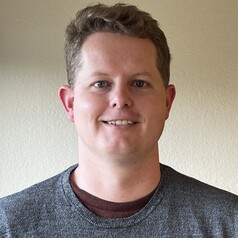
Research Fellow in Physics, University of Otago I am currently a Research Fellow in the Department of Physics at the University of Otago in Dunedin, New Zealand. Previously I completed my PhD in Atmospheric Sciences: Advanced Data Science at the University of Washington in Seattle, USA. My PhD was partly supported by a Fulbright New Zealand Science and Innovation Award. My research has focused on studying the climate of Antarctica and the Arctic through the use of global climate models. I have published research on the impact of freshwater from Antarctic ice shelves on Antarctic sea ice, the effect of changes in Antarctic ice sheet topography on climate, the efficacy of Arctic sea ice geoengineering, and the impact of volcanic eruptions on polar climate. I am also interested in open source software and software development for studying climate. While completing my PhD I did an internship at the Allen Institute for Artificial Intelligence where I was part of a team rewriting an atmosphere model in Python, which allowed the model to run on CPUs or GPUs without changes to the model code.
Professor, GIBS, University of Pretoria Prof Alicia Fourie is a full-time faculty member at the Gordon Institute of Business Science (GIBS) and lectures in macroeconomics and microeconomics. Prior to joining GIBS, she lectured at the North-West University for 10 years in economics and acted as subject convenor for introduction to micro-and macroeconomics for many years. Prof Fourie was also involved with the distance education programme UNIVPREP. During her time at the North-West University, she received numerous teaching awards from the university and Media24. Prof Fourie has a PhD in economics education and has several peer-reviewed articles published in national and international journals relating to economics education, tourism economics and behavioural economics. Currently, she is focusing her research on behavioural economics and the informal labour market. Prof Fourie was part of Green Bubbles (2015-2019), which was an EU-funded project dedicated to sustainable scuba diving. The Green Bubbles project has received funding from the European Union’s Horizon 2020 research and innovation programme under the Marie Sklodowska-Curie grant agreement. Furthermore, she was part of a project to use tourism as a tool for poverty reduction in Southern Africa (2018-2019). This project was funded by the British Academy through the Newton Mobility Grant Scheme.
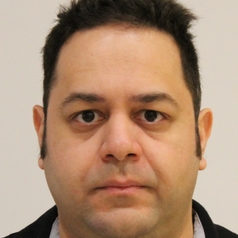
Sessional lecturer and researcher, The University of Melbourne Dr. Ali Akbar is a researcher and sessional lecturer at the University of Melbourne, where he received his PhD in Islamic Studies. He publishes books and articles in areas of religion, politics and Middle Eastern studies. His books include: Contemporary Perspectives on Revelation and Qur’anic Hermeneutics (Edinburgh University Press, 2020), Contemporary Approaches to the Qur’an and Its Interpretation in Iran (with Abdullah Saeed, Routledge, 2020) and Iran's Soft Power in Afghanistan and Pakistan (with Zahid Ahmed, Edinburgh University Press, 2023). He has also published extensively in journals including Iranian Studies, Culture and Religion, Islam and Christian-Muslim Relations, British Journal of Middle East Studies, Oxford Journal of Law and Religion, Mediterranean Politics, Third Word Quarterly and Political Theology.