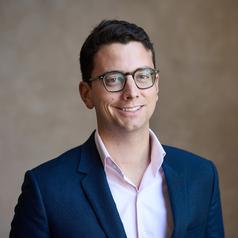
Associate professor in finance, University of Birmingham Dr Anandadeep Mandal is an applied mathematician with both theoretical and empirical interests in the field of quantitative finance. He also has a keen interest in formulating strategies through ‘data-driven problem solving’ approach. His research underpins a desire to learn, understand and explain the complex dynamics of the key issues in the society ranging from financial economics to healthcare.
Research Manager, Chaplaincy Innovation Lab, Brandeis University Amy completed her PhD in sociology at the University of Connecticut. Her research interests focus on the potential and paradox of religious pluralism in the United States, the cultural production of the sacred, and meaning-making in both religious and (non)religious belief systems. Her dissertation examined the practice of donor memorial ceremonies, which are memorial services held by medical schools to commemorate and honor whole-body anatomical donors.
Honorary Fellow, School of Cybernetics, Australian National University Dr Alex Fischer is an Honorary Research Fellow at the ANU School of Cybernetics. He brings his interdisciplinary training and global cross-sector experiences to pressing questions about how technology is being designed to accelerate progress across the Sustainable Development Goals. His policy and practice interests include how smart-monitoring technologies are shaping rural drinking water services, how Bayesian analytic approaches are enabling adaptive design aimed at improving intergenerational societal health and how new data flows are changing policy and accountability pathways ranging from community to watershed to national scales. His academic research explores how competing media and policy narratives interact to shape public priorities and how to design polycentric institutions by considering the way information systems link to decisions and performance outcomes. Alex was previously the Head of Research at the Paul Ramsay Foundation. Prior to that, he supported Bangladeshi colleagues to launch SafePani, a community owned rural water service leveraging blended public-private finance and use of smart monitoring technologies to improve safety and reliability of public and private water points. During his time at the Center for Earth Science Information Networks (CIESIN) and the Earth Institute at Columbia University, he established the Fragile States Policy Program and co-led the Environmental Security Research Program. He is a founding member of the United Nations Sustainable Development Solutions Network’s expert group on Thematic Research on Data and Statistic.
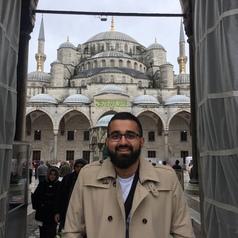
PhD candidate, Western Sydney University Ali Hammoud is a PhD candidate at Western Sydney University. He is broadly interested in Shīʿīsm and Islamicate intellectual history. His doctoral project examines Maḥbūb al-Qulūb, a little-known doxography authored by 17th century Shīʿī philosopher Qutb al-Dīn Ashkivarī. He has published “Interpretations of Qurʾānic Violence in Shīʿī Islam,” in Violence and Peace in Sacred Texts: An Interreligious Perspective, edited by Maria Power and Helen Paynter, 165-186, Basingstoke: Palgrave Macmillan, 2023 and “That I May Unfold The Pain Of Yearning.” Sydney Review of Books, 2023.
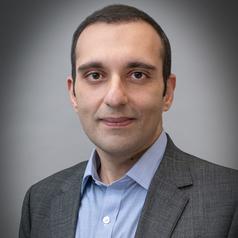
Assistant Professor, Mechanical and Aerospace Engineering, Carleton University Professor Ahmed Abdulla joined the CU Mechanical and Aerospace Engineering faculty on July 1, 2020. Prof. Abdulla investigates energy system design for deep decarbonization—focusing on the role of disruptive energy technologies that sit at a low level of technical readiness, including energy storage systems, advanced nuclear power, and negative emissions technologies. Prof. Abdulla employs process modeling, systems engineering, engineering economics, and quantitative risk and decision analysis in his research. He also pays special attention to integrating insights from public policy and behavioural science in his models in order to optimize the design and deployment of truly sustainable technologies—ones that are both techno-economically viable and socio-politically acceptable.
Visting Reseach Fellow in Environmental Systems, Cranfield University Adrian’s career started with research into waste management and progressed into a wide range of experimentally-based agri-environmental research including: biological treatment systems, silage conservation, gaseous emission measurement and control, and improved manure management methods. He later concentrated on mathematical modelling, initially using process models, leading to work in whole-farm agri-environmental and systems modelling, and systems-based, environmental Life Cycle Assessment (LCA). This addressed subjects from individual food commodity production to changing national diets and the implications for the environment. He also explored, with LCA, the benefits of improving cattle health on GHG emissions and comparing cattle production systems with a range of intensities. Recent work focussed on the LCA of GHG removal (or net emissions technology – NET), particularly using soil management, along with the valuation of the environmental impacts of scientific activities.