
Alberto Domínguez
Investigador en Astrofísica, Universidad Complutense de Madrid
Investigador en Astrofísica, Universidad Complutense de Madrid
1 articlesOur contributors
Meet the researchers, writers and practitioners bringing perspective to the global conversation.
Join the conversation1462 contributors · A
Investigador en Astrofísica, Universidad Complutense de Madrid
Investigador en Astrofísica, Universidad Complutense de Madrid
1 articles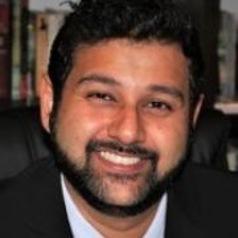
Research Fellow, Queensland Brain Institute, The University of Queensland, The University of Queensland
Research Fellow, Queensland Brain Institute, The University of Queensland, The University of Queensland Azhar is a behavioural, experimental and applied economist with a keen interest in addressing issues of societal disadvantage and inequality. He especially seeks opportunities to explore real-world problems in the field of education and matters relating to Australia's Aboriginal and Torres Strait Islander population. Azhar has a strong understanding of, and experience in using, empirical research methods to evaluate programs and administrative data. He has developed an extensive aptitude for designing and implementing experimental studies in field and lab settings alike, as well as using sound econometric analysis techniques to evaluate the outcomes of such experiments. Azhar completed his Ph.D. from the Queensland University of Technology in 2019, and his research was aimed at assessing the framing effects of different incentive structures and student commitments on educational outcomes of Indigenous Australian high school students. Prior to his Ph.D. work, Azhar spent an extended period living and working in remote Indigenous communities on Queensland's Cape York where he designed and implemented financial literacy programs for the benefit of socially-disadvantaged residents. This experience was a key driving factor in his decision to study and address real-world issues. Azhar is particularly passionate about bridging the gap between academic research and industry. For a social organisation working on matters affecting disadvantaged people in the real world, incorporating a strategic research component into their work is crucial in his eyes and he strives to develop such collaborative links and networks.
0 articles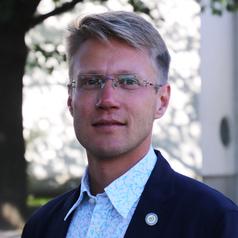
Assistant Professor, Sociology, University College Dublin
Assistant Professor, Sociology, University College Dublin Alexander Sasha Kondakov, PhD, is an assistant professor at the School of Sociology, University College Dublin, Ireland. His truly international experience includes holding positions in the University of Helsinki’s major research centre in Russian and Eurasian studies, Aleksanteri Institute, and Russia's liberal European University at St. Petersburg, as well as research jobs at the Woodrow Wilson Center for Scholars in Washington, DC, and the University of Wisconsin-Madison in the United States. Alexander studied sociology of law at the International Institute for the Sociology of Law in Spain. Kondakov’s work is primarily focused on law and sexuality studies, more specifically on queer sexualities. His latest research on violence against LGBT people in Russia has gotten attention in the international and Russian media. Kondakov’s studies were published in such journals as Sexualities, Social & Legal Studies, Feminist Legal Studies, and European Journal of Criminology. The research on anti-queer violence concluded with an open-access book 'Violent Affections: Queer sexuality, techniques of power, and law in Russia'. The book is available for free download on UCL Press website, as well as in other formats for various prices.
0 articles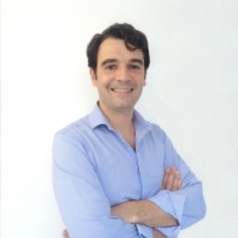
Associate professor, Law School at PUC-Rio University & Marie Curie Fellow at IRIS/EHESS Paris & MSCA Fellow at the Columbia Center for Contemporary Critical Thought (CCCCT) w/ the HuDig19 Project, Université Paris Nanterre – Université Paris Lumières
Associate professor, Law School at PUC-Rio University & Marie Curie Fellow at IRIS/EHESS Paris & MSCA Fellow at the Columbia Center for Contemporary Critical Thought (CCCCT) w/ the HuDig19 Project, Université Paris Nanterre – Université Paris Lumières Associate Professor at the Law School of the Pontifical Catholic University of Rio de Janeiro, Brazil. Marie Curie Fellow at EHESS/IRIS (2021-23 Visiting Professor at the University Paris Nanterre / CREDOF (Centre de Recherches et d'Etudes sur les Droits Fondamentaux) Antonio is trained as a political scientist (Sciences-Po) and has received a Ph.D in Law (Carlos III University of Madrid) His scholarship explores the politics of Human Dignity, the History of Human Rights, and Ethics of New Technologies.
0 articles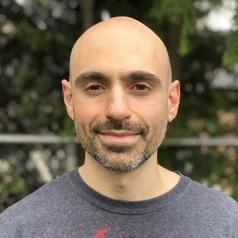
Research Associate - Faculty of Health Sciences, University of Lethbridge
Research Associate - Faculty of Health Sciences, University of Lethbridge Dr. Alessandro Manduca-Barone is a Research Associate in the Faculty of Health Sciences at the University of Lethbridge. His academic background is in economics, philosophy, and biomedical ethics. He has had the opportunity to work in various health and health policy arenas, including as a Policy Analyst for the College of Physicians and Surgeons of Ontario, and as a Strength, Conditioning and Injury Recovery Specialist for those with complex health issues. He currently sits on the Board of Directors as the Vice Chair for the Stonegate Community Health Centre. His research interests have included: ethical issues pertaining to consent and capacity, competency assessments, clinical research with terminally ill subjects, medical assistance in dying, and care issues for those living in a continuing care context.
0 articles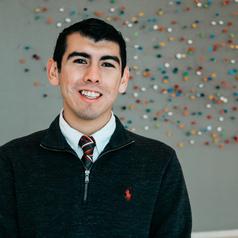
Assistant Professor of Higher and Postsecondary Education, Arizona State University
Assistant Professor of Higher and Postsecondary Education, Arizona State University Antonio Duran (he/him/él) is an assistant professor of higher and postsecondary education in the Mary Lou Fulton Teachers College. His research broadly examines how historical and contemporary legacies of oppression influence college student development, experiences, and success. Connected to this central thread, he is also interested in how scholar-practitioners use the above knowledge in their practice. He primarily uses critical frameworks (e.g., intersectionality, queer of color critique, quare theory, jotería studies) to complicate the field’s understanding of racism, heterosexism, trans oppression, and other forms of marginalization on college campuses.
0 articles