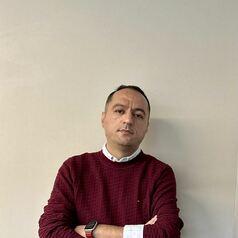
PhD candidate at Alfred Deakin Institute for Citizenship and Globalisation, Deakin University Amin Naeni is a Ph.D. candidate at Alfred Deakin Institute, Deakin University, working on the rise of digital technologies in Iran, with a focus on the footprint of Information and Communication Technologies (ICTs) on political developments in Iran's society. His work also includes investigating the cooperation between the Islamic Republic with Russia and China to expand internet censorship in Iran. He completed his M.A. in Middle East and North Africa Studies at the University of Tehran in 2018. Also, he worked on two funded projects at the University of Tehran’s Center for Central Eurasia Studies between 2019 and 2021. The projects focused on developments in Iran-Russia relations and the impact of Russia-US rivalry in the Middle East on Iran’s regional interests. Since 2020, he has published several analytical pieces in some of the world’s leading think tanks, either as a single author or in co-authorship. His publications discuss both the domestic and foreign policies of Iran.
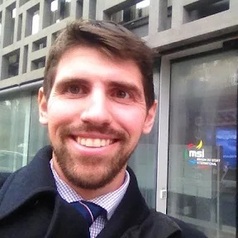
Graduate Student, International Centre for Olympic Studies, Western University Alan Oldham completed his undergraduate degree at McMaster University, Hamilton, Canada in 2007 and attended teacher's college at the University of Toronto, graduating in 2009. Since then he has worked in sport as a professional coach and also in communications as a regular contributor of content for World Rowing. In 2021 Alan began graduate school in philosophy of sport (focusing on sport ethics) under the supervision of Dr. Angela Schneider at Western University, London, Canada. He has a keen interest both professionally and academically in international and Olympic sport, the obligations of athletes, coaches and administrators, and the ethics of sport categorization.
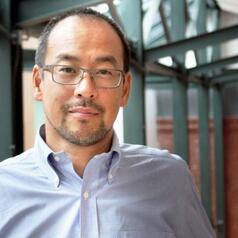
Dr. Anthony Paik is Professor of Sociology and serves currently as the Faculty Senate Secretary at the University of Massachusetts-Amherst. He is also affiliated with the Data Analytics and Computational Social Science Program and the Computational Social Science Institute. He previously served as the Director of the Bachelor’s Degree with Individual Concentration and as the Chair of Sociology. Prior to joining UMass-Amherst in 2014, he was a member of the faculty at the University of Iowa for more than a decade. His research focuses on several areas, including social networks, social demography, and the legal profession. His journal articles have appeared in outlets such as the American Sociological Review, Law and Social Inquiry, and Social Science Research. Currently, Dr. Paik is a principal investigator on a longitudinal study of diversity and networking in law school, funded by the AccessLex Institute and the National Science Foundation. He received his BA, MA, and PhD from the University of Chicago.
Andrea is an early career researcher for the Brain and Mind Centre at the University of Sydney. Her research interests are in the area of health economics and economic evaluation, focussing on supporting effective policymaking to develop healthier, wealthier and more equitable communities. Her current research involves co-developing decision-support tools using systems modelling and simulation to guide investments in sustained, coordinated and digitally enhanced youth mental health care. The aim is to help investment in best-value policies and models of care. Her previous research concentrates on investigating cost-effective strategies for the management of sleep health in primary care settings as part of her PhD in collaboration with the National Centre for Sleep Health Services Research (NHMRC Centres of Research Excellence) team at the Adelaide Institute for Sleep Health and economic evaluation analysis of Nerve Transfer Surgery in Tetraplegia for the Transport Accident Commission (VIC, AU).
Dr Anna Bryson is a Senior Lecturer in the School of Law and a Fellow at the Senator George J. Mitchell Institute for Global Peace, Security and Justice. Her most recent research has developed at the intersection of socio-legal studies, transitional justice and oral history. She is currently working on two RCUK funded projects - 'Enhancing Democratic Habits: An Oral History of the Law Centre Movement' (AHRC-funded collaboration with colleagues at the Centre for Socio-Legal Studies, University of Oxford, and the British Library) and 'Apologies and Dealing with the Past' (Principal Investigator on ESRC Impact Acceleration grant). In addition, her recently awarded British Academy Mid-Career Fellowship is supporting the completion of her fifth book titled ‘Conflict and Civility: Memory, Identity and Dealing with the Past in Northern Ireland’. Anna has previously been co-Investigator on a number of externally funded research projects including ‘Apologies, Abuses and Dealing with the Past: A Socio-Legal Analysis’ (ESRC) and ‘Brexit and Northern Ireland: The Constitutional, Conflict Transformation, Human Rights and Equality Consequences’ (ESRC). The co-authored monograph (with K. McEvoy and L. Mallinder) arising from an ESRC-funded international comparative project on ‘Lawyers in Conflict and Transition’ was published by Cambridge University Press in March 2022. Prior to her appointment to QUB Law in 2014, Anna was involved in a series of research projects exploring various aspects of the history and legacy of conflict (including the €1.1million EU-funded ‘Peace Process: Layers of Meaning’ project she co-directed with S. McConville). She has significant expertise in the theory and practice of oral history and has to date conducted more than 200 substantial interviews with a wide range of individuals including victims and survivors, former security force personnel, ex-combatants and former prisoners, lawyers, politicians and senior government officials. She is the Northern Ireland representative for the Oral History Society and provides accredited training on behalf of the organisation. In 2020 Anna was elected as Chair of the independent human rights organisation, the Committee on the Administration of Justice. She is also a member of the AHRC Peer Review College. In 2021 she was a Visiting Scholar at the Centre for Socio-Legal Studies at the University of Oxford. In recognition of her successful delivery of a range of modules at undergraduate and post-graduate level and the fact that her career is grounded in 'an integrated approach to teaching and research leadership' she was appointed Senior Fellow of the Higher Education Academy in July 2021. As Impact Champion for the School of Law, Anna works closely with colleagues at School and Faculty level to help cultivate world-leading research that addresses both local and global challenges. She is the QUB staff representative for the Knowledge Exchange Seminar Series at Stormont and she was recently elected to the Board of the Socio-Legal Studies Association (and the Impact Award committee). Drawing on her previous experience as Chair of the QUB Law ethics committee she was appointed to the Royal Irish Academy’s ‘Ethical, Political, Legal and Philosophical Studies Committee’ for the 2022-26 term. Anna was co-author (with K. McEvoy and L. Mallinder) of a REF 2021 4* Impact Case Study on Dealing with the Past in Northern Ireland. This reflected intense and sustained engagement with colleagues from QUB Law, the Committee on the Administration of Justice and a former senior Foreign and Commonwealth Office lawyer to inform key debates on dealing with the past in Northern Ireland and in particular to provide accessible legal and policy commentary to a wide range of stakeholders. Outputs from the collaboration have included authoring over 30 policy documents and blogs, drafting ‘model legislation’, writing responses to government consultations and providing free technical legal and policy advice to key stakeholders in Northern Ireland (victims and survivors, civil society organisations, the British and Irish governments, political parties, veterans, former combatants, the British Army, the PSNI, religious leaders, politicians) as well the British and Irish governments and international actors e.g. Council of Europe, US Congress and the United Nations. During this time the Model Bill Team organised twenty public seminars and six major conferences (attended by senior representatives of the British and Irish governments). Anna has given expert evidence to the Joint Oireachtas Committee on the Good Friday Agreement (2018), the Northern Ireland Affairs Committee (2020, 2022) and the US House Foreign Affairs sub-committee on Europe (2022) and has contributed extensively to media analysis of issues relevant to her research (television, radio, blogs). In 2016 Anna was awarded a QUB Vice-Chancellor's Research Impact Prize for her work on the Oral History Archive proposed under the Stormont House Agreement. Further information regarding her work on legacy issues is available at: https://www.dealingwiththepastni.com/.
Dr Alix Woolard has a Ph.D. in Psychology and researches ways to better understand and treat childhood trauma. Dr Woolard is a senior researcher at Embrace at Telethon Kids.