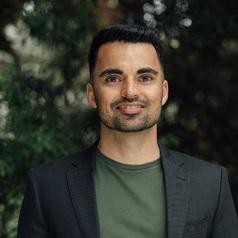
Lecturer, University of Tasmania Dr Amrinder Khosa is a passionate educator and active researcher. He believes in creating an active learning environment that supports and nurtures student learning. Dr Khosa has worked in the higher education sector for over 13 years, with a predominant focus on teaching financial and management accounting courses. Prior to joining University of Tasmania, he worked at Monash University and La Trobe University. With strong links to and involvement with industry, he not only supports students to prepare for industry careers, he also communicates the role of accounting to a broader business environment and community through scholarly activities. He is directly involved in applied research, focusing on the enhancement of educational outcomes and well-being in the higher education sector. His research interests include the impacts of performance standards in the tertiary sector, student and academic conceptions of learning, and doctoral education.
Graduate Research Assistant, Boise State University Allison is finishing her PhD in Materials Science and Engineering from Boise State University. She holds undergraduate degrees in Environmental Chemistry and in Political Science, and has a passion for applying her technical skills to tackle sustainability problems.
Ph.D. Candidate in Innovation and Entrepreneurship, Max Planck Institute for Innovation and Competition My areas of interest include Economics of Innovation, Industrial Organization, Competition Economics, Applied Econometrics, Digitalization, Artificial Intelligence and Data Science.
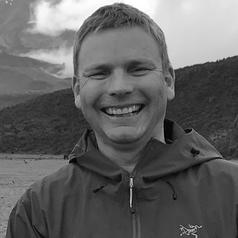
Professor & Head, School of Earth Atmosphere and Environment; expert on glaciers and ice sheets, Monash University Andrew is Head of the School of Earth, Atmosphere and Environment. He is known for his research on the large-scale interactions between glaciers, ice sheets and the climate system. He has worked on the Antarctic Ice Sheet and New Zealand glaciers, as well as the Greenland Ice Sheet and glaciers in Iceland and South America. His work has led to new understanding of glacier response to anthropogenic and natural climate variability, as well as providing new insights into the physical mechanisms that are causing rapid and potentially irreversible changes in ice sheets today.