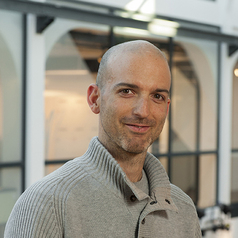
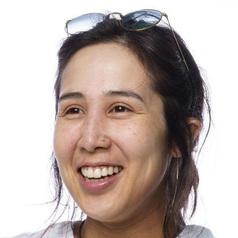
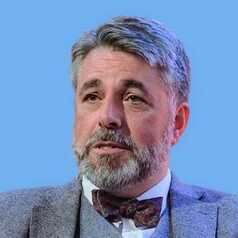
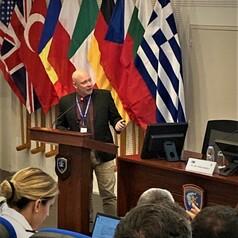
Adjunct Senior Research Fellow, The University of Western Australia Adrian Wayne is a Senior Research Scientist (Forest Fauna Ecology) with Department of Biodiversity, Conservation and Attractions (and its predecessor agencies CALM, DEC & DPAW) and has led the Forest Ecology Research Team since 1997. In 1994 he co-rediscovered the Gilbert’s potoroo - previously thought extinct. Based in Manjimup, Western Australia, he researches the ecology of forest vertebrate fauna (frogs, reptiles and mammals), focusing on work relevant to the conservation and management of threatened and sensitive species. This has included investigating fauna responses to timber harvesting and prescribed burning, and the ecology of the koomal (common brush-tail possum) and the ngwayir (western ringtail possum) in the jarrah forest, mammal declines with a focus on the woylie, and introduced predator ecology and management. Providing scientific, ecological and biological expertise to biodiversity conservation and management is also an important part of his role
Enseignant à l’École des Ponts, ingénieur de recherche au Laboratoire Ville Mobilité Transport, École des Ponts ParisTech (ENPC) Les travaux de recherche d’Alexis Poulhès portent sur la modélisation de l’affectation des usagers dans des réseaux de transport et ses applications économiques et environnementales. Il s’intéresse également à la modélisation et l’évaluation environnementale de la mobilité à l’échelle du quartier, les conséquences des pratiques de mobilité dans les villes de taille moyenne sur l’environnement et l’évaluation de politiques publiques environnementales.
Ph.D. Candidate in Psychology, Wayne State University A second-year doctoral candidate working with Dr. Hannah Schacter and the ARC lab, Alexandra has an M.S. in Clinical Research Methods from Fordham University and a B.S. of Cell & Molecular Biology from Tulane University. Her research interests include stress and inflammatory markers in contexts as well as relationships as protective factors.
Assistant Professor of Psychology, Cornell University In my research, I investigate three primary questions as they pertain to adolescent development. How do social identities develop and change over time? Adolescence is considered to be a time of great change and development of social identities in the lives of adolescence. This line of research examines how social identities (e.g., ethnic-racial, gender, or sexual orientation) are changing over time and what contextual factors and socializing agents could be influencing this change. How are social identities related to mental health, well-being, and academic motivation? Research has generally shown social identities are positively associated with more adaptive outcomes?. However, there is still much to be known about what influences these associations and in what contexts. We are working to close this gap by investigating these relations and moderators across various contexts. How can social identities be leveraged as assets to promote positive youth development and outcomes? Research around social identities has exploded in the past 15 years, demonstrating at a stronger, more positive sense of self on the basis of various social identities promotes a host of adaptive outcomes. Surprisingly, little research has begun to develop ways to enhance and leverage these identities to foster better outcomes for youth. We are aiming to close this gap by developing interventions to shape identities to be congruent with positive youth development and outcomes.
Professor, Department of Computer Science, University of Surrey Alan began as a physicist. However, he developed an interest in computing early on through signal processing for gamma ray burst detectors, and so switched to engineering after his BSc. His post graduate research at the Institute of Sound and Vibration Research (ISVR), University of Southampton, was in adaptive filtering, and novel methods of recovering corrupted signals. Alan also worked on novel methods of noise cancellation, both passive and active. After leaving the ISVR Alan worked for the UK government for many years and subsequently provided advice for some years. He has particular expertise in, and continues to conduct research into, cyber security, covert communications, forensic computing and image/signal processing. Alan has been involved in some of the most significant advances in computer technology which have seen him elected as a Fellow and chartered member of the British Computer Society, Institute of Physics and the Royal Statistical Society. In addition to his academic and government work, Alan has run businesses focussed on various aspects of Information Technology (IT). In 2000 Alan was pivotal in the flotation of Charteris plc on the London Stock Exchange. He remained a director until 2008 at which point he began to focus back on his academic interests. Alan continues to be a director on businesses involved in IT. Although Alan has been at the leading edge of technology development for many years, he is primarily a particularly good communicator. He is known for his ability to communicate complex ideas in a simple, yet passionate manner. He not only publishes in the academic and trade journals but has articles in the national press and comments on TV and radio. Despite the length of his experience, his hands-on ability with emerging technologies contributes significantly to the respect he is repeatedly shown when he leads teams where technology is involved.
Associate Professor (Research), Coventry University Dr. Adam James Fenton is a Marie Sklodowska-Curie Research Fellow at Coventry University’s Centre for Trust, Peace and Social Relations (CTPSR). His current research project STRAITSECURITY: Hybrid threats to Maritime Security, is an assessment of cyber and cyber-physical vulnerabilities in the world's busiest shipping lanes, and received funding from the European Union's Horizon 2020 research and innovation program under a MSCA research grant. He has published multiple articles about maritime security, international law, piracy, terrorism and maritime technology. In addition to being admitted to practice as a barrister and solicitor in Australia, he has worked in border protection as a Fisheries Officer in Foreign Compliance Operations with the Australian Fisheries Management Authority.