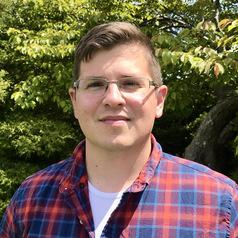
Teaching Assistant Professor, Memorial University of Newfoundland Dr. Andrew Coombs is a Teaching Assistant Professor at Memorial University (Newfoundland & Labrador). Andrew’s research programme focuses on understanding the factors shaping early career teachers’ assessment practices and assessment learning needs. He teaches courses at both the undergraduate and graduate level including research design, quantitative research, curriculum theory, and classroom assessment.
Senior Lecturer in Psychology, University of Huddersfield Dr Andrew Denovan is a Senior Lecturer in Psychology at the University of Huddersfield. His research primarily centres on aspects of differential psychology, including personality traits (e.g., Dark Triad, resilience). To this end, Andrew has an active interest in the development and evaluation of psychological measures, and research methods including psychometrics and statistical modelling. This has resulted in a number of recent publications focusing on the evaluation of psychological scales. His research is also concerned with wellbeing, stress, and psychopathology. Andrew possesses a strong publication record and a good record of knowledge exchange. He is also certified with the British Psychological Society as a Test User of Ability (formerly Level A) and Personality (formerly Level B).
Research Assistant Professor of Microbiology, Boston University Which viruses a threat to human health? New viruses are being discovered at a rapidly increasing rate by virtue of next generation sequencing of wildlife samples, including many viruses closely related to some of the deadliest emerging and reemerging viruses. In just the last dozen years, 9 new filoviruses have been discovered, all with unknown pathogenic potential. One of my main research interests involves characterizing differential host responses to pathogenic viruses and closely related non-pathogenic viruses to both be able to assess the possible pathogenicity of novel viruses as well as to try to target host response pathways involved in these divergent responses as potential points of therapeutic intervention. My work focuses on some of the deadliest human pathogens, most notably filoviruses such as Ebola and Marburg viruses. Owing to the devasting disease and high mortality rates they cause, study of these viruses requires a Biosafety Level 4 (BSL4) laboratory such as the BSL4 facility we have at the NEIDL. Studying uncultured viruses One roadblock to the study of these new viruses related to highly pathogenic emerging and reemerging viruses is that most of these viruses have not yet been cultured. While creating recombinant viruses through reverse genetics approaches would seem to be a solution to this issue, a second barricade to these studies often prevents this: most viral genomes identified by next generation sequences lack terminal genomic sequences. These portions of the genome typically include sequences necessary for viral genomic replication and transcription, making rescue impossible in the absence of these sequences. Lloviu virus, a filovirus first discovered in 2011 by sequencing of bat carcasses found in caves in Spain in 2002, represents such a virus. While Lloviu virus was recently isolated from Schreibers bats in Hungary (Kemenesi et al., 2022), it had not been cultured previously and sequence was missing from both ends of the genome. Using reverse genetics tools, including a previously developed Lloviu virus minigenome system, we were able to complement missing genomic sequences and rescue recombinant Lloviu virus and begin to study this virus (Hume et al., 2022) prior to it being cultured. As with all filovirus work, these studies were performed in our BSL4 facility. Importantly, we are now comparing our recombinant Lloviu virus to see how well it mirrors wild-type Lloviu virus. If these viruses behave similarly, this could provide a new blueprint for rescuing and determining the pathogenic potential of many viruses which may pose a risk to human health should a spillover event occur. Human systems While animal models have undoubtedly provided important information with regards to viral pathogenesis and transmission, the fact that there are many antiviral drugs and therapies that have been shown to be effective in animals but not in humans has made the need to develop and use human systems to study virus-induced host responses and correlates of pathogenicity self-evident. To this end, my research is focused on using these systems, including human primary cells, primary-based human organoids, and induced pluripotent stem cell (iPSC)-derived cells and organoids to study viral replication and pathogenesis. Collaborating with tissue engineers including researchers at Boston University’s Center for Regenerative Medicine (CReM), we have begun to explore how viruses manipulate these systems. Using transcriptional and phosphoproteomic approaches to study these systems, we are uncovering key pathways necessary for viral replication, allowing for targeted small molecular inhibition of host pathways to block viral replication. Using viruses of differing pathogenicity, we hope to also identify virulence markers in order to assess the potential pathogenicity of novel viruses which have not yet been known to spill over to the human population.
PhD Researcher in English Literature, York St John University I am a PhD researcher in English Literature at York St John University. My research focuses on space and memory in women's indie music memoirs. In 2018, I was the winner of the Wilko Jonson Writing Award. My work has been published in The Line Between Two Towns (2017), Fan Club (2019), and Venue Stories (2023).
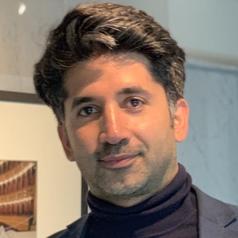
Associate Professor (Senior Lecturer) in Middle East Politics & International Relations at Keele University, Keele University Dr Afshin Shahi is an associate professor (senior lecturer ) in Middle East politics and International Relations at Keele University. He obtained both his MA and PhD from the School of Government and International Affairs at Durham University. Prior to joining the School of Social, Political, and Global Studies in 2023, he worked at the universities of Durham, Exeter, and Bradford. In 2018 he was a visiting research fellow at the European University Institute in Florence. His research interests encompass Iranian politics, climate change and conflict, sectarianism, and political Islam in the Middle East. His articles have appeared in scholarly outlets including the Middle East Journal, the British Journal of Middle Eastern Studies, and the Journal of the Royal Society for Asian Affairs. He is the author of the Politics of Truth Management in Saudi Arabia (Routledge, 2013) and the co-author of a forthcoming book, Iran: the Shia State and the Sunni Minority. He has been part of various editorial boards and for about four years he was an associate editor of the British Journal of Middle Eastern Studies. He is a regular contributor to national and global media outlets including the BBC and Aljazeera. His opinion pieces have appeared in various publications including Forbes magazine, Foreign Policy magazine, and the Conversation. He also actively works with both practitioners and stakeholders in his field. In 2017, he was a recipient of the Vice Chancellor’s Award for Outstanding Achievement at the University of Bradford. His research interests include Middle East politics & security, political Islam and religious sectarianism. He is the author of 'The Politics of Truth Management in Saudi Arabia' and a number of peer-reviewed articles. He has contributed to international media outlets including, Al Jazeera, Washington Post, Bloomberg Business, the Telegraph, National Public Radio (US) ITV, Sky News and the BBC.
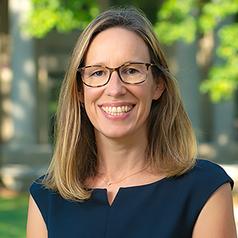
Associate Professor of Management, American University Professor Mislin’s research focuses on negotiation and conflict management. She studies how aspects of social exchange (e.g., trust, reciprocity, emotions) influence cooperation and conflict. Her work bridges the fields of management, experimental economics, and social psychology, leading to scholarly as well as practical insights on organizational life. Alexandra (Alex) Mislin’s interdisciplinary research is premised on the view that negotiated agreements alone do not lead to desired outcomes. She studies how trust violations and repair, the tracking of obligations, and social curiosity motivate cooperation. Her research has been published in leading academic journals including Administrative Science Quarterly, Organizational Behavior and Human Decision Processes, Journal of Applied Psychology, Psychological Science, and the Journal of Economic Psychology. Her courses focus on negotiation strategy and conflict management.