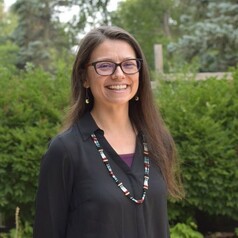
Assistant Professor, Department of Family & Community Medicine, University of North Dakota Allison Kelliher, MD, is Koyukon Athabascan, Dena, from Nome, Alaska. She is the Director of the American Indian Collaborative Research Network (AICoRN), a Practice-Based Research Network at the University of North Dakota School of Medicine and Health Sciences where she is also an Assistant Professor. She also serves as faculty at the University of Washington School of Medicine and University of Alaska Anchorage and serves on the Board of Directors for the Association of American Indian Physicians. She is the first and only physician trained as a Traditional Healer in a Tribal Health setting and weaves this into her practice as a Family and Integrative Physician. She is a board member for the Association of American Indian Physicians, and University of Alaska Fairbanks Alumnus of the year. She recently published a chapter in a textbook Walking Together, Working Together Engaging Wisdom for Indigenous Well-Being.
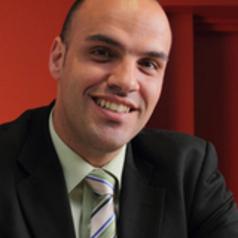
Postdoctoral Researcher in the Human Development and Violence Research Centre, Federal University of Pelotas Andreas holds a bachelor’s degree in Psychology from the University of Vienna (Austria) and a master’s degree in Psychiatric Research from King’s College London (UK). He completed his PhD in Psychology at the University of Bath (UK) examining the relationship between childhood trauma and antisocial behaviour, using data from Brazil, South Korea, and the UK. As a postdoctoral researcher in the Human Development and Violence Research Centre (DOVE) in Brazil, he continues to investigate the effects of childhood adversities on mental health outcomes in young pepole. Andreas is particularly interested in examining these associations using longitudinal data analysis, structural equation modelling, and systematic reviews.
Professor and Clinical Psychologist, Michael Crouch Chair in Child and Youth Mental Health, University of Sydney Professor Adam Guastella is the Michael Crouch Chair in Child and Youth Mental Health. His position is based at both Sydney Children's Hospital at Westmead and the Brain and Mind Centre, University of Sydney. His work aims to build collaborative partnerships between researchers, clinicians, and services to ensure that children and families receive the best available assessments and treatments to support well-being. As part of this role, he is the co-lead of the Child-Neurodevelopment and Mental Health Team for the University of Sydney. This team aims to solve complex problems for children with neurodevelopmental dconditions and their families with a team of multi-disciplinary professors across the university. Professor Guastella also has an established track record in human translational neuroscience. His primary interest is in using neuroscience to inform and develop novel treatments for young patients with mental health problems. This research has led him to study the neurobiology of social behaviour, its development in early life, and how this neurobiology relates to symptoms that cause distress and impairment. His research may also take the form of cognitive-experimental investigations and he has developed a number of mental health programs to support wellbeing for adults on the spectrum.
Epidemiologist, Epidemiological Modelling Unit, School of Public Health and Preventive Medicine, Monash University Angus is an epidemiologist with a medical background. His interest is understanding and applying the epidemiology and public health aspects of infectious diseases to support the development of mathematical models of disease transmission, with a focus on assisting public health response and disease control.
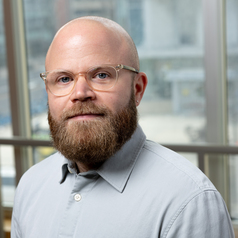
Assistant Professor of Epidemiology, Drexel University Dr. Scheim is a social epidemiologist interested in understanding (and ultimately, transforming) the impacts of social, policy, and healthcare environments on the health of stigmatized populations. He conducts community-engaged research with LGBT populations and people who use drugs, as well as methodological research on measuring intersectional social positions and experiences of discrimination. Currently, Dr. Scheim leads community-based participatory research surveys with transgender populations in India and Canada funded by the National Institutes of Health and the Canadian Institutes of Health Research. He is also PI of an NIH-funded study to cognitively and psychometrically evaluate intersectional discrimination measures in English and Spanish. Dr. Scheim holds adjunct appointments in the Centre on Drug Policy Evaluation at St. Michael’s Hospital (Toronto, Canada) and in the Department of Epidemiology and Biostatistics at Western University (London, Canada). Dr. Scheim received a PhD in Epidemiology and Biostatistics (2017) from Western University in Canada where he was a Pierre Elliott Trudeau Foundation and Vanier Canada Graduate Scholar, and completed postdoctoral training at the University of California, San Diego as a Canadian Institutes of Health Research Fellow.