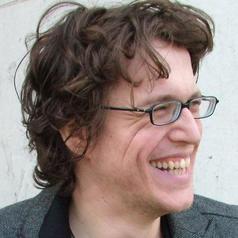
Ph.D. Candidate in Media, University of Adelaide I am a Ph.D. candidate and lecturer at the University of Adelaide, where I am writing a thesis about the use of comics in education. I teach media policy and law and media research methods. My academic writing has been published in Media International Australia, Digital Humanities Quarterly, Composition Studies, The Comics Grid, and Comics Forum. I am also a founder and co-organiser of Inkers and Thinkers Symposium, Australia's largest academic conference about graphic narratives, sponsored by the J.M. Coetzee Centre for Creative Practice.
Medical Doctor; Co-Founded NCDFREE and festival21; Associate Researcher, University of Copenhagen Dr Demaio trained and worked as a medical doctor at The Alfred Hospital in Australia. While practising as a doctor he completed a Masters in Public Health including fieldwork in Cambodia to develop and evaluate a community-based, culturally appropriate health intervention for noncommunicable diseases, particularly diabetes. In 2010, Alessandro relocated to Denmark where he completed a PhD with the University of Copenhagen, focusing on noncommunicable diseases. His doctoral research was based in Mongolia, working with the Ministry of Health. He designed, led and reported a national epidemiological survey, sampling more than 3500 households to better understand national knowledge, attitudes and practices on noncommunicable diseases and risk factors and provide policy recommendations to address them. Alessandro held a Postdoctoral Fellowship at Harvard Medical School from 2013 to 2015, and was assistant professor and course director in global health at the Copenhagen School of Global Health, in Denmark. He has established and led the PLOS blog Translational Global Health, and has served on the Advisory Board of the EAT Initiative: the global, multi-stakeholder platform for food, health and environmental sustainability. To date, he has authored over 20 scientific publications and more than 80 blog articles. In his pro bono work, Dr Demaio co-founded NCDFREE, a global social movement against noncommunicable diseases using social media, short film and leadership events – reaching more than 2.5 million people in its first 18 months. Then, in 2015, he founded festival21, assembling and leading a team of knowledge leaders in staging a massive and unprecedented, free celebration of community, food, culture and future in his hometown Melbourne. In November 2015, Alessandro joined the Department of Nutrition for Health and Development at the World Health Organization (Geneva), as Medical Officer for noncommunicable conditions and nutrition. While a staff member of the World Health Organization, Alessandro alone is responsible for the views expressed in this column, and they do not necessarily represent the decisions or policies of the World Health Organization.
Director Enterprise Risk Management, Macquarie University He is an emergency and risk management expert. Andrew has performed various senior executive roles in the emergency management and social services sectors, including as the Deputy Chief Officer of the Victoria State Emergency Service. Andrew is an experienced crisis leader having held senior state-wide leadership roles during some of Australia’s most significant natural disasters such as the ‘Pasha Bulka’ Storm (2007), Black Saturday Bushfires (2009), and the Victorian Floods (2010/11). He has been author of state-wide disaster plans, policies and resilience strategies, for which he has received several awards. Andrews’s significant professional experience is complemented by his academic achievements having completed a Masters of Science (Honours) Degree and a Bachelor of Economics Degree.
Emeritus Consultant, St Vincent's Hospital, Darlinghurst Dr Alex Wodak AM was Director of the Alcohol and Drug Service, St. Vincent's Hospital, Sydney (1982-2012) but is now an Emeritus Consultant. Dr. Wodak is President of the Australian Drug Law Reform Foundation, and a Director of Australia21 and was President of the International Harm Reduction Association (1996-2004). He helped establish the first needle syringe programme and the first medically supervised injecting centre in Australia (when both were pre-legal) and often works in developing countries on HIV control among injecting drug users.
Lecturer (teaching and research), Cardiff University Andy Williams is a lecturer at Cardiff School of Journalism, Media and Cultural Studies. He was previously the RCUK Research Fellow in Risk, Health and Science Communication (2008-10). He has a number of research interests which intersect journalism studies and cultural studies. His current major research interests relate to news sources and the influence of public relations on the UK media, especially in the area of science, health and environment news. Andy has provided expert opinion and advice to a number of government bodies, media groups, and professional associations including the BBC, the Department of Business, Innovation and Skills, the Expert Group on Science and the Media, the National Union of Journalists, and the Welsh Assembly’s Broadcasting Subcommittee. He regularly contributes to the UK national and regional press and broadcast media (recent media input includes Times Higher Education, Nature News, the New Statesman, national BBC Breakfast News, the Guardian Unlimited, Press Gazette, OpenDemocracy, and BBC Wales television and radio news). In addition to this he is committed to disseminating research findings in a variety of other contexts: - he regularly carries out media training workshops across the UK with scientists who want to gain a deeper insight into how science journalism works; - he has formed partnerships with Bryncelynnog Comprehensive in Beddau (his old school), and Treorchy Comprehensive in the Rhondda, where he speaks to media studies and science pupils about his research; and - he has contributed lectures in collaboration with the University of the Third Age (U3A).
Research Fellow, Swinburne University of Technology I'm a theoretical astrophysicist and cosmologist, investigating how galaxies form, the nature of dark matter and the large scale properties of the Universe. To study the evolution of galaxies and their interaction with dark matter, I create billion-particle model universes on supercomputers around the world. This has resulted in numerous refereed research articles, public interviews and presentations at both Universities/Conferences and public outreach events ranging from planetarium shows to pubs. I am particularly excited by spreading the latest discoveries to as wide an audience as possible.