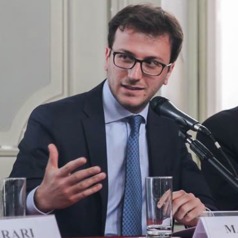
Angelo Martelli is a Ph.D. Candidate in Political Economy in the European Institute at LSE, where he also works as Research Assistant and Graduate Teaching Assistant in the Economics Department. Before joining the LSE he pursued graduate studies at Pompeu Fabra University (MSc and Master of Advanced Studies in Economics) and completed a Bachelor’s degree in International Economics and Management at Bocconi University. His research is in applied labour economics, in particular his PhD work examines the evolution of employment structures in Europe over the last three decades, looking in particular at the role of labour market institutions and reforms on job and wage polarization. At the LSE he is the President of the Italian Society and since 2009 has served in the Advisory Board of the MILMUN Association in Milan. Angelo has published articles in major newspapers such as The Wall Street Journal, wrote for influential blogs and was interviewed and quoted in media outlets such as The Guardian, Handelsblatt Global Edition, The Times Higher Education, La Repubblica, RAI.
Amanda Scardamaglia is a Senior Lecturer and Deputy Department Chair at Swinburne Law School. Her area of research and expertise is intellectual property law, especially trade mark law and its history. Amanda is currently a State Library of Victoria Creative Fellow and author of the book: 'Australian Colonial Trade Mark Law: Narratives in Lawmaking, People and Place'.
Dr Angela Daly recently joined QUT Law as Vice Chancellor’s Research Fellow. She is a socio-legal scholar of technology with expertise in intellectual property, human rights (privacy and free expression), and competition and regulation. She is also the author of ‘Socio-Legal Aspects of the 3D Printing Revolution’ (2016, Palgrave), based on her postdoctoral research at the Swinburne Institute for Social Research and ‘Private Power, Online Information Flows and EU Law’ (2017, Hart), based on her doctoral research at the European University Institute.
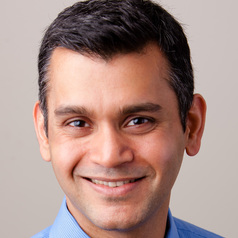
Dr. Vishwanath studies the “people problem” of cyber security. His research focuses on improving individual, organizational, and national resilience to cyber attacks by focusing on the weakest links in cyber security—all of us Internet users. His particular interest is in understanding why organizational insiders willingly exfiltrate sensitive organizational data; why people become unintentional insiders by falling prey to social engineering attacks that come-in through email and social media; and on ways we can harness this understanding to secure cyber space. He also examines how various groups–-criminal syndicates, terrorist networks, hacktivists–-utilize cyber space to commit crime, spread mis-information, recruit operatives, and radicalize others. Dr. Vishwanath’s research on improving cyber resilience against online social engineering has been funded by the National Science Foundation. He has written and published over two-dozen articles on technology users and cyber security issues and my research has been presented to principals at national security and law enforcement agencies around the world. His research has also been featured on CNN, USA Today, Bloomberg Business Week, Consumer Reports and hundreds of other national and international news outlets.
Amanda D. Lotz is professor of Communication Studies and Screen Arts & Cultures at the University of Michigan. She is the author of The Television Will Be Revolutionized (New York University Press, 2014, 2007), Cable Guys: Television and American Masculinities in the 21st Century (New York University Press, 2014), and Redesigning Women: Television After the Network Era (University of Illinois Press, 2006), and editor of Beyond Prime Time: Television Programming in the Post-Network Era (Routledge, 2009). She is co-author, with Timothy Havens, of Understanding Media Industries (Oxford University Press, 2017, 2011) and, with Jonathan Gray, of Television Studies (Polity, 2011).
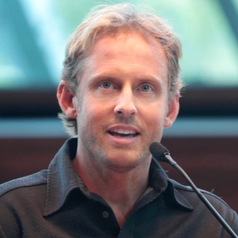
Anthony James is an educator, facilitator, advisor, writer, speaker and musician. He teaches a range of sustainability related courses including post-graduate studies at Swinburne University, and short courses at the Understandascope. Anthony publishes analysis and music on both the physical and metaphysical aspects of sustainability. He has worked within a range of industries (including education, media, music, health, construction, retail and fashion) in both the public and private sectors, particularly in Australia and Central America. His qualifications include a Master of International and Community Development from Deakin University, a Graduate Certificate in Sustainability from Swinburne University of Technology, and a Bachelor of Business Systems from Monash University.